YSRCP Seeks Retired Judge-Led Panel to Oversee Andhra Pradesh Local Body Elections
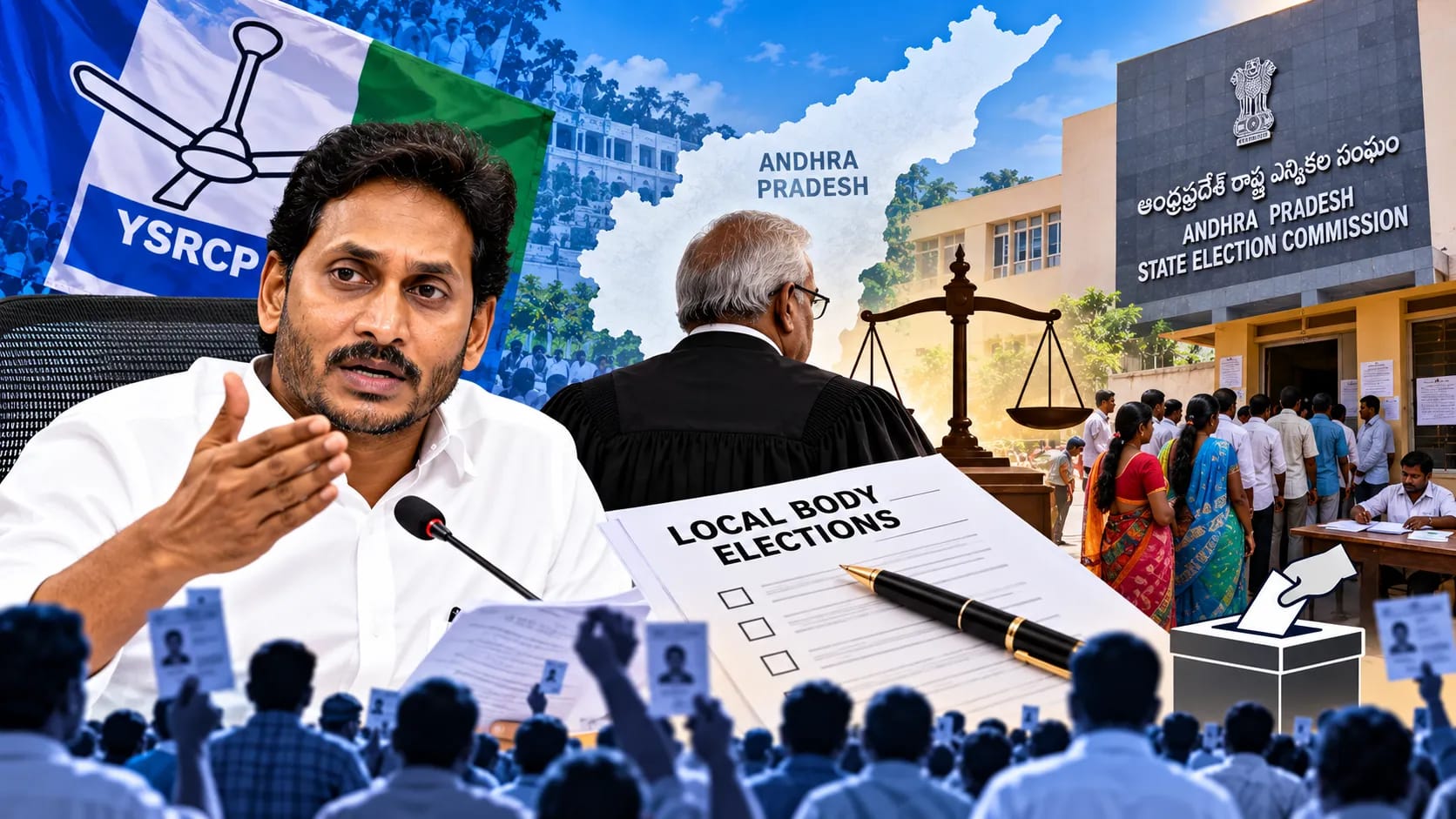
The Yuvajana Sramika Rythu Congress Party (YSRCP), the principal opposition party in Andhra Pradesh, has sought additional intervention from the Supreme Court over the state’s ongoing local body election process. In an additional application reported on October 26, the party asked the court to consider appointing a committee headed by a retired judge to oversee the proceedings.
The party has also requested directions preventing the State Election Commission from declaring candidates elected unopposed. The application represents a new step in the dispute over the conduct of local elections, but the requests should not be mistaken for directions already issued by the court.
What the YSRCP is asking for
According to reports, the YSRCP wants an independent oversight mechanism to supervise the election process. It has asked the Supreme Court to consider a retired judge-led panel and to restrict unopposed declarations while its concerns are addressed.
The party’s application comes amid wider disagreement over nominations, election procedures and the conditions under which candidates can participate. The YSRCP has previously alleged that some of its candidates faced obstruction when attempting to file nominations. Such allegations must be evaluated through supporting material and the responses of the relevant authorities.
The party’s latest application indicates that it wants the dispute to be examined at a higher level rather than relying solely on the existing state-level process.
Why unopposed elections are being questioned
A candidate may be declared elected without a contest when the legal requirements for an unopposed result are met. Such outcomes are not inherently evidence of wrongdoing. However, disputes can arise if a candidate alleges that rivals were prevented from filing nominations, withdrew under pressure or were otherwise denied a fair opportunity to contest.
The distinction is important. An unopposed result can be lawful, but allegations about the circumstances surrounding nominations may warrant investigation by the competent election authorities.
The YSRCP’s request seeks to address these concerns through judicial oversight. Whether the proposed mechanism is legally justified and necessary is a matter for the court to consider.
The political context
The dispute has become part of the larger contest between the ruling Telugu Desam Party (TDP)-led government and the YSRCP. Both parties have competing political interests in local bodies, which can influence grassroots organisation and future electoral mobilisation.
Local elections matter because they shape representation at the municipal and village levels. They also provide political parties with an opportunity to test their organisation, candidate networks and local support before larger electoral contests.
For the opposition, a fair nomination process is central to its ability to compete. For the election administration, the challenge is to ensure that complaints are examined without allowing political disagreements alone to disrupt the process.
What happens next
The Supreme Court’s response to the additional application will be an important development. It may seek further submissions, issue directions or decide that particular issues should be addressed through existing election procedures. Until the court acts, the YSRCP’s requests remain requests rather than established legal requirements.
The State Election Commission’s handling of complaints and any judicial directions will be important to follow.
Conclusion
The YSRCP’s application brings election oversight and the conditions for unopposed results into focus in Andhra Pradesh. The dispute highlights the importance of protecting candidates’ ability to participate while preserving the authority of election institutions. Its resolution will depend on the evidence presented, the applicable legal framework and the court’s response—not on political claims alone.

Join the discussion
Comments (0)