Election Commission Defends SIR Decisions Before Supreme Court as Electoral Transparency Debate Intensifies
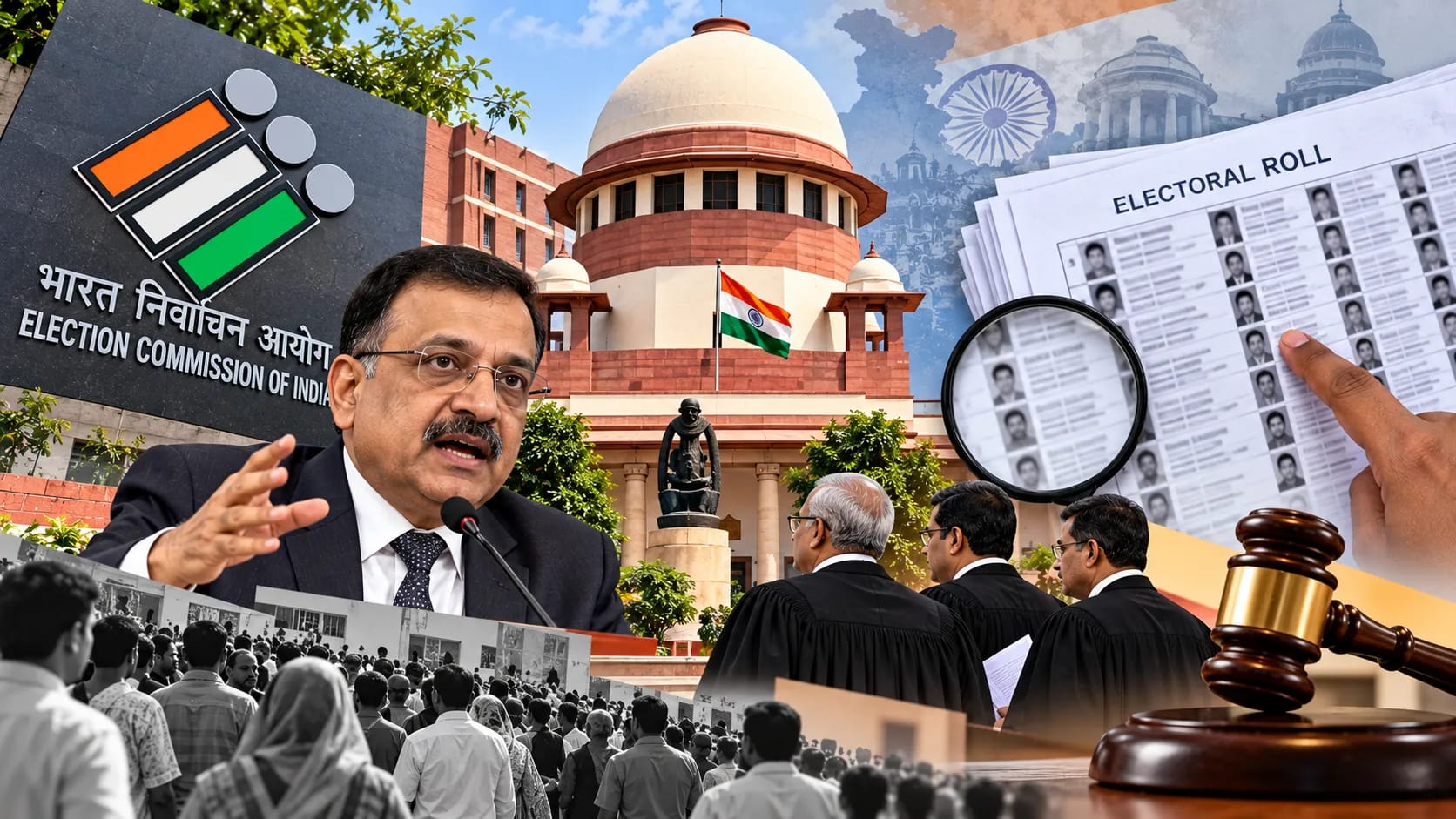
The Election Commission of India (ECI) has defended its decision-making process concerning the Special Intensive Revision (SIR) of electoral rolls in an affidavit filed before the Supreme Court. The submission comes amid legal challenges questioning aspects of the Commission’s functioning and the process used to revise voter-registration records.
According to reports published on October 26, the Commission maintained that the three orders governing the SIR exercise were approved unanimously by Chief Election Commissioner Gyanesh Kumar and Election Commissioners Sukhbir Singh Sandhu and Vivek Joshi. The Commission also denied that it had amended Form 6, the statutory form used for the inclusion of new voters.
What the Election Commission has said
The Commission’s affidavit states that the SIR-related orders, issued on June 24, 2025, October 27, 2025, and May 14, 2026, reflected unanimous decisions. The ECI has disputed allegations that the Chief Election Commissioner acted unilaterally despite objections from the other commissioners.
On Form 6, the Commission argued that it had not changed the statutory form through its SIR orders. It explained that the additional declaration used during the revision was intended to help establish applicants’ links with earlier electoral rolls. The Commission acknowledged that the online application process could give the impression that Form 6 had been modified. It said the online process was separated into the Form 6 application and a distinct declaration from October 21.
These are the Commission’s submissions to the court. They should be distinguished from any judicial finding on the issues raised by the petitioners.
Why the dispute matters
The case raises questions about how an independent constitutional institution documents its decisions and communicates changes affecting voters. The ECI is responsible for maintaining accurate electoral rolls, while political parties and petitioners have a legitimate interest in understanding whether procedures comply with the applicable legal framework.
Opposition leaders have raised concerns about the revision process and the Commission’s internal decision-making. The ECI has rejected key allegations and argued that its decisions were lawful and collective. The Supreme Court’s examination provides a forum for assessing the legal questions through the parties’ submissions.
The dispute also highlights the importance of clear instructions for people applying to register as voters. Any uncertainty about forms, declarations or supporting documents can create confusion, making accessible guidance and transparent procedures especially important.
The political implications
For opposition parties, the case is part of a broader campaign seeking accountability over electoral administration. Their challenge is to support concerns with specific evidence and explain the remedies they want.
For the Commission, the priority is to demonstrate that its procedures follow the law and that voters can understand how registration decisions are made. Its affidavit represents its defence, but the final legal position depends on the court’s consideration of the case.
What happens next
The Supreme Court hearing scheduled for October 27 is an important procedural development. The court’s questions, directions and any subsequent orders will determine the next stage of the legal process. The filing of an affidavit alone does not resolve the dispute.
Conclusion
The SIR proceedings are about more than a disagreement between political parties. They concern the legal framework for electoral-roll revision, the transparency of institutional decisions and public confidence in voter registration. The central issues should be assessed through the official record, the parties’ arguments and the court’s eventual findings rather than political claims alone.





Join the discussion
Comments (0)