Elections
Elections are a central part of India's democratic system. They provide citizens with the opportunity to choose their representatives at the national, state and local levels. India's modern electoral system developed through the constitutional framework adopted after independence and has evolved significantly through changes in election laws, technology and administration. The Election Commission of India was established as a constitutional authority to administer elections to Parliament, State Legislative Assemblies and the offices of the President and Vice-President.
Current vs. Opposition

National Democratic Alliance (NDA)
Ruling coalition
View profile Opposition Alliance
INDIA Bloc
Opposition alliance
View profileAbout the Process
Elections Before Independence
The roots of electoral institutions in India can be traced to the period of British rule. During this period, legislative councils were gradually introduced to provide limited representation to selected sections of the population. However, voting rights were restricted by conditions such as property ownership, income, taxation and other qualifications. As a result, the majority of Indians did not have the right to participate in elections.
The Indian Councils Act of 1909 introduced changes to legislative representation and provided for separate electorates for certain communities. The Government of India Act, 1919 introduced a bicameral legislature at the central level, consisting of the Council of State and the Legislative Assembly. It also expanded provincial legislative councils and increased the number of people eligible to vote, although the franchise remained limited.
The Government of India Act, 1935 introduced further constitutional reforms, expanded provincial autonomy and broadened the electorate. Elections were held under these arrangements, but voting rights were still available to only a portion of the population. These developments provided experience with legislative elections and representative institutions, while demands for broader political participation continued to grow during the independence movement.
The experience of these earlier institutions contributed to discussions about representative government, political equality and the future electoral system. Following independence, India's Constitution established a democratic framework based on the principle that eligible adult citizens should be able to participate in choosing their representatives.
The Constitution and Universal Adult Suffrage
After independence in 1947, the makers of the Constitution chose universal adult suffrage as a fundamental principle of India's electoral democracy. This decision established the foundation for a representative system in which eligible citizens could vote without restrictions based on wealth, property ownership, gender or educational qualifications.
Article 326 of the Constitution provides that elections to the Lok Sabha and State Legislative Assemblies are based on adult suffrage, subject to the constitutional and legal conditions governing voter eligibility. This gave eligible citizens a direct role in choosing their representatives and helped establish electoral participation as a central feature of Indian democracy.
The adoption of universal adult suffrage was particularly significant because India had considerable social, linguistic, cultural and economic diversity. Instead of limiting political participation to privileged groups, the constitutional framework recognised the importance of including eligible citizens across different sections of society in the electoral process.
The Constitution also established provisions relating to electoral administration, representation and the conduct of elections. These provisions created the legal foundation for regular elections, the formation of representative legislatures and the peaceful transfer of political power through constitutional procedures.
India's first general election was held between 1951 and 1952. It marked the practical implementation of universal adult suffrage on a nationwide scale and involved extensive arrangements for voter registration, polling stations, ballot papers and election administration. The election established an important precedent for subsequent parliamentary and state assembly elections.
Establishment of the Election Commission
The Election Commission of India was established on 25 January 1950 under Article 324 of the Constitution. It is a constitutional authority responsible for the superintendence, direction and control of elections to Parliament, State Legislative Assemblies, and the offices of the President and Vice-President of India.
The establishment of the Commission provided an institutional framework for administering elections under constitutional provisions. Its responsibilities include overseeing electoral rolls, announcing election schedules, supervising election procedures and monitoring compliance with applicable election laws and regulations. The Commission also issues instructions and guidelines for election officials and political participants within its legal authority.
The Commission plays a role throughout the electoral process, from preparations before polling to the completion of voting and counting procedures. It coordinates with election officials and relevant authorities to organise polling stations, manage election schedules, appoint observers where required and address complaints concerning election-related matters.
Over time, India's electoral administration has developed to manage elections across a large population and a wide geographical area. Electoral procedures have evolved through changes in voter registration, election monitoring, voting technology and public information. Electronic Voting Machines and Voter Verifiable Paper Audit Trail systems are now used in elections according to established procedures.
The Commission also undertakes voter-awareness activities to inform citizens about registration, polling procedures and participation in elections. National Voters' Day is observed annually on 25 January to mark the establishment of the Election Commission of India and promote awareness of the importance of voting.
Together, the constitutional principle of universal adult suffrage and the establishment of the Election Commission created the foundation for India's modern electoral system. These arrangements support the conduct of parliamentary and state assembly elections and provide a framework for eligible citizens to participate in choosing their representatives.
Party-wise Composition
Elections News
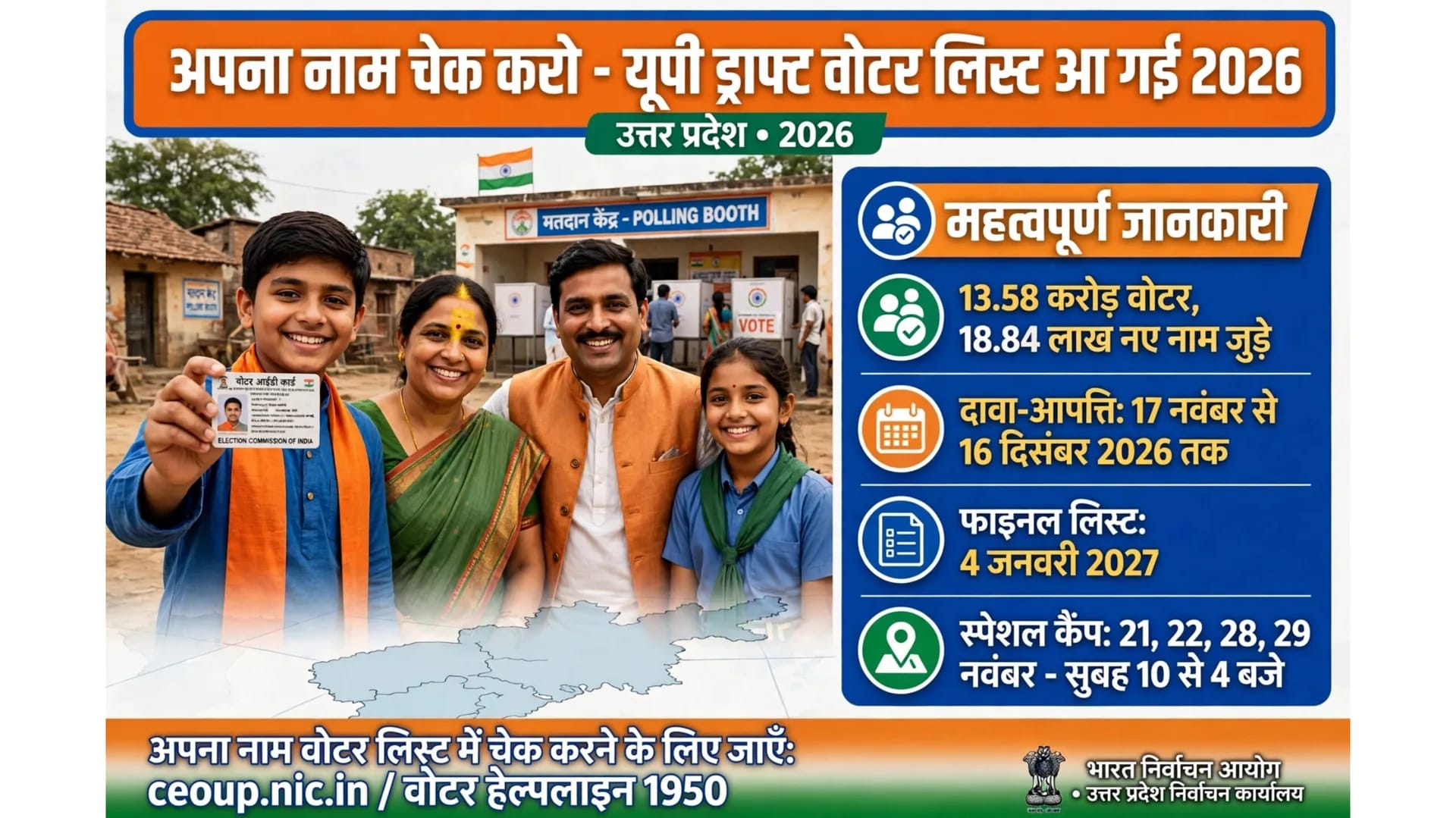
यूपी ड्राफ्ट वोटर लिस्ट 2026 अपना नाम ऐसे चेक करें 13.58 करोड़ मतदाता, 18 लाख नए नाम जुड़े
उत्तर प्रदेश की ड्राफ्ट मतदाता सूची 17 नवंबर को जारी हो गई है। 13.58 करोड़ मतदाता हैं। अपना नाम कैसे देखें, नाम कटा है तो क्या करें, पूरी सही जानकारी यहाँ पढ़ें।
By Karishma • 8 views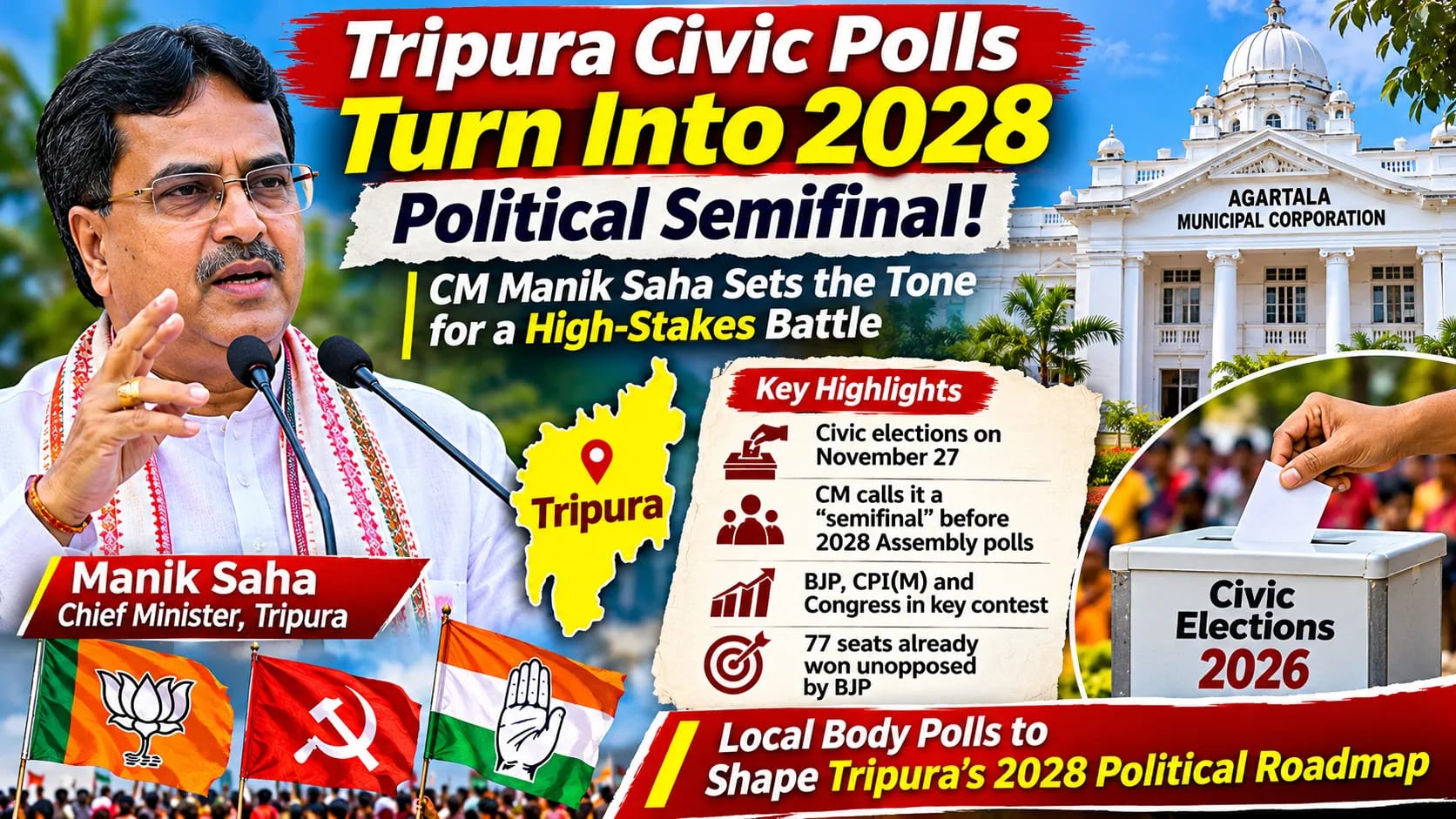
Tripura Civic Elections 2026: Manik Saha's BJP Semifinal Strategy Ahead of 2028 Polls
Tripura's political temperature is rising ahead of the November 27 civic elections. Chief Minister Manik Saha has described the polls as a semifinal before the crucial 2028 Assembly elections, turning local civic contests into an important test of political strength for the BJP, CPI(M) and Congress.
By Sucharita Mohanty • 38 views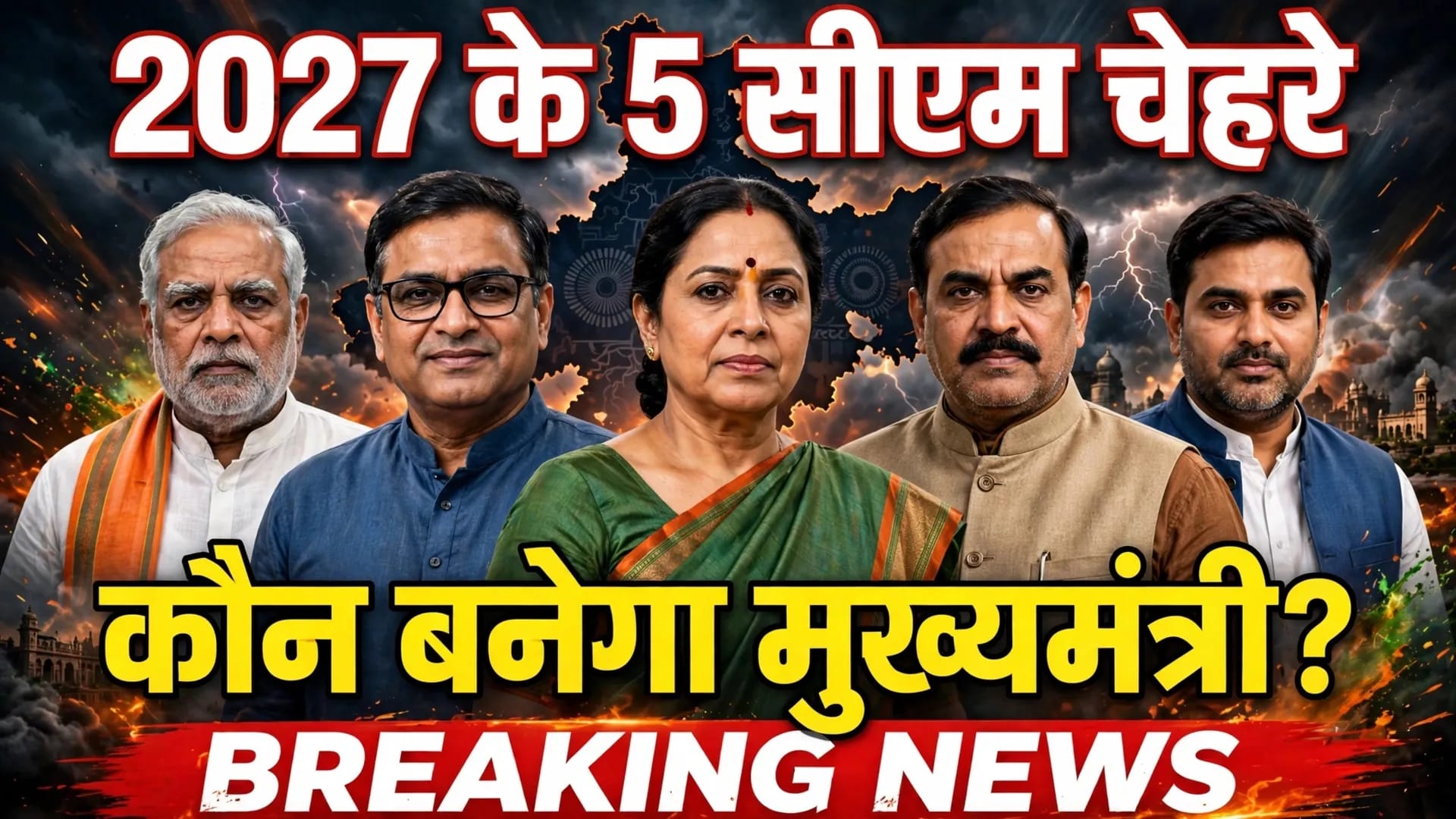
2027 के 5 सीएम चेहरे उत्तर प्रदेश में कौन बनेगा मुख्यमंत्री
यूपी चुनाव 2027 में 5 चेहरे सबसे आगे हैं। योगी, अखिलेश, मायावती, चंद्रशेखर आज़ाद और प्रियंका गांधी कौन मारेगा बाज़ी
By Karishma • 13 views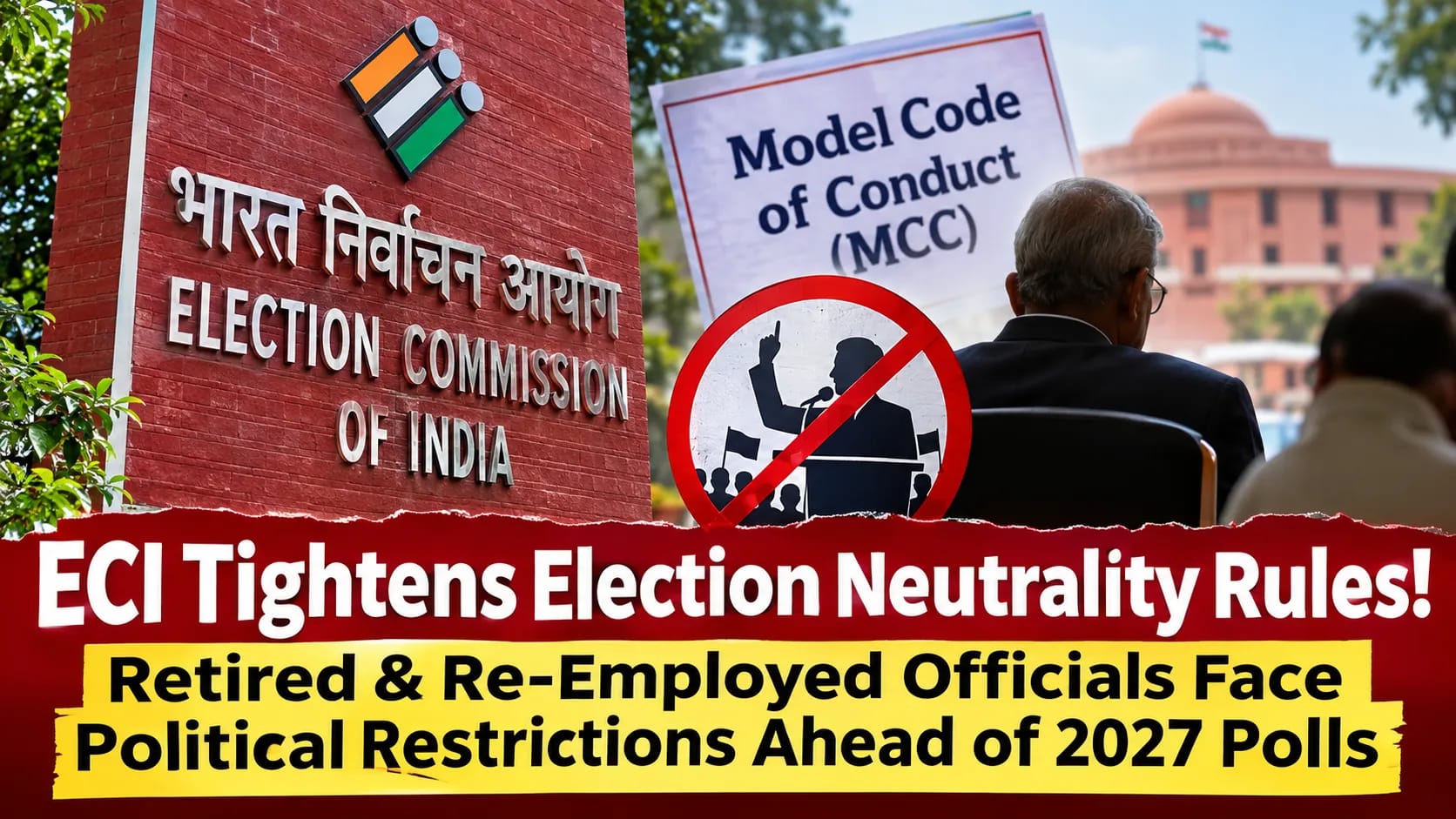
ECI Tightens Election Neutrality Rules! Retired Government Officials Face Fresh Political Restrictions Ahead of 2027 Assembly Polls
The Election Commission of India has drawn a fresh line on political neutrality ahead of the 2027 Assembly elections. Retired government officials re-employed by state governments will now face restrictions similar to serving government employees during the Model Code of Conduct period. With five states under the Commission's watch, the decision puts administrative neutrality and electoral fairness firmly in the political spotlight.
By Sucharita Mohanty • 16 views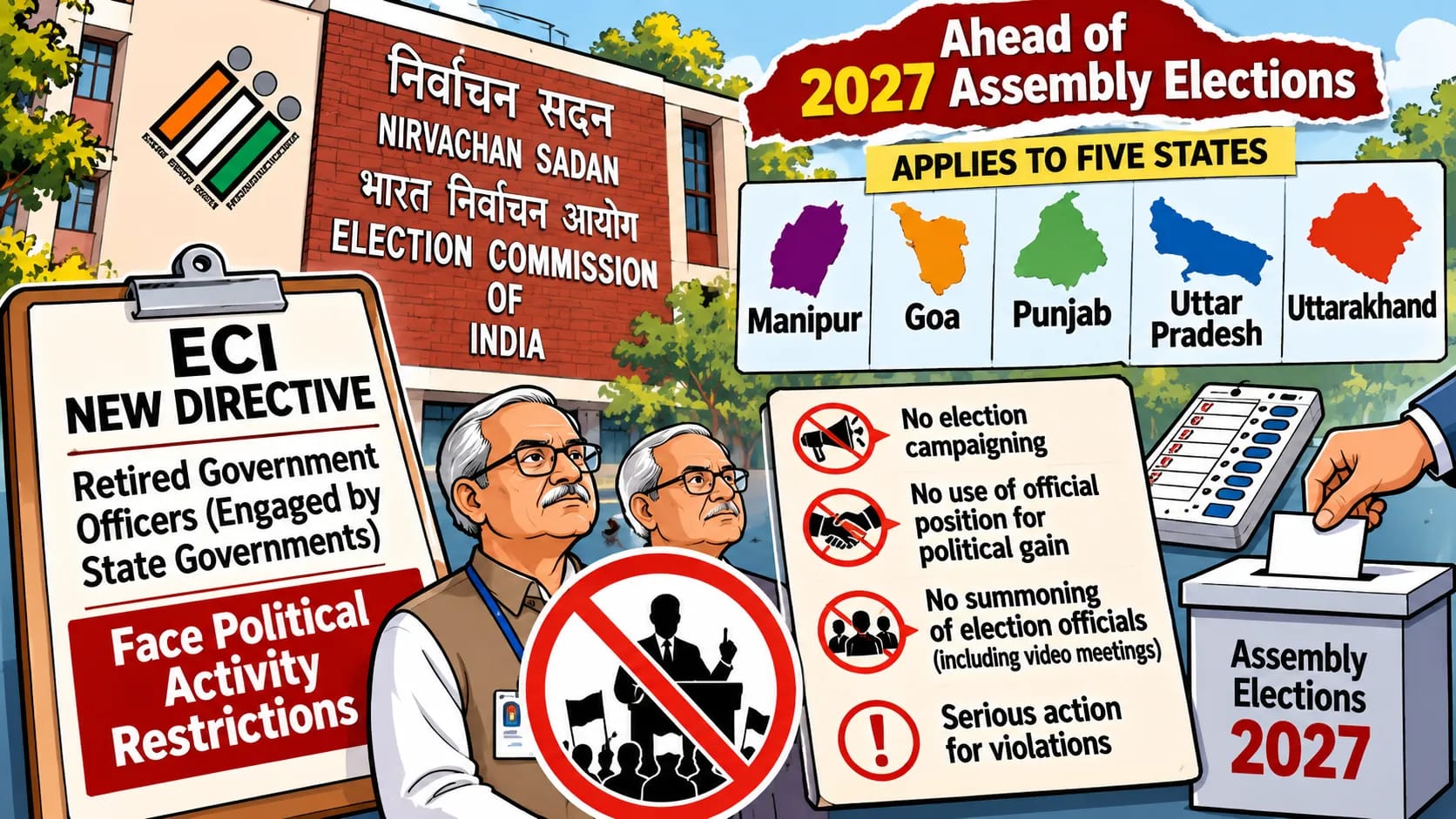
ECI Draws a Strict Red Line Ahead of 2027 Elections: Retired Government Officers Face Political Activity Restrictions – Manipur Among Five States Under New Directive
Ahead of the 2027 Assembly elections, the Election Commission of India has extended political neutrality restrictions to retired government officers engaged by state governments in five poll-bound states. Manipur is among the states covered by the directive, raising fresh questions about administrative accountability and election-time neutrality.
By Sucharita Mohanty • 89 views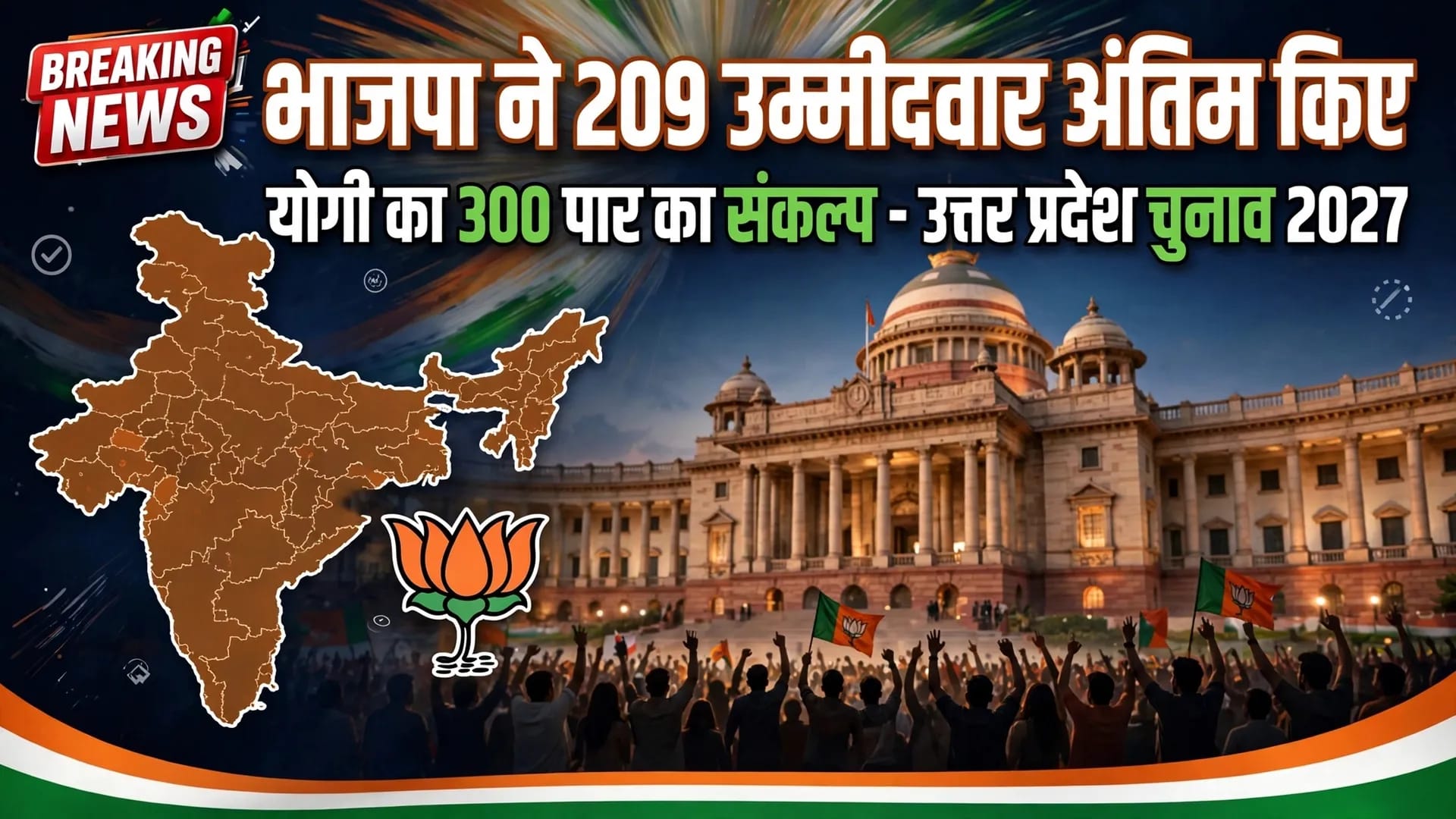
उत्तर प्रदेश चुनाव 2027 भाजपा ने 209 उम्मीदवार अंतिम किए, दिल्ली भेजी सूची योगी का 300 पार का संकल्प
किसका टिकट कटेगा, किसको मिलेगा अवसर? जानिए भाजपा की भीतरी पूरी कहानी
By Karishma • 19 views