Goa Politics: MGP Stakes Claim to Seven Constituencies as BJP Alliance Talks Loom
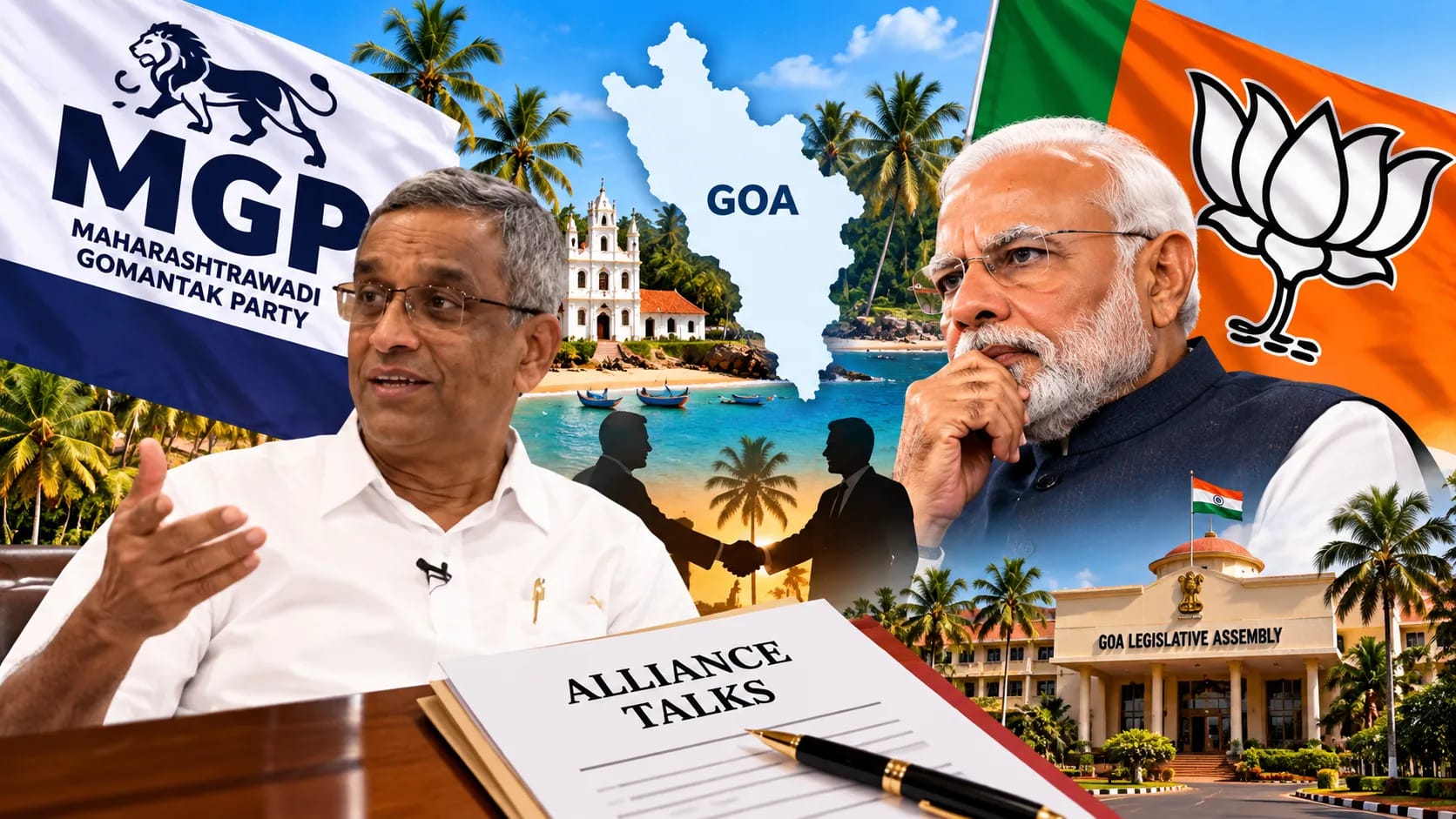
The Maharashtrawadi Gomantak Party (MGP) has staked a claim to seven constituencies ahead of the next Goa Assembly election, signalling that seat-sharing could become a major issue in discussions with the Bharatiya Janata Party.
The development comes as parties in Goa begin assessing their positions before the 2027 election. MGP leader and state minister Ramkrishna “Sudin” Dhavalikar has said the party will first discuss its alliance strategy and related questions through its internal organisational meetings before holding formal discussions with the BJP leadership.
The statement indicates that the MGP wants to establish its negotiating position, but it does not confirm a final seat-sharing agreement.
Why the seven-seat demand matters
Seat allocation can determine how much influence a smaller party retains within a coalition. For the MGP, identifying constituencies it considers important is a way to communicate its electoral priorities before formal negotiations begin.
Reports have identified Ponda, Priol and Shiroda among the constituencies in the party’s plans. Dhavalikar has also emphasised the MGP’s interest in the currently vacant Ponda seat, questioning why his party should surrender its claim to it.
Ponda carries a particular political significance for the MGP. In the 2022 Assembly election, MGP candidate Ketan Bhatikar finished runner-up to Ravi Naik, with the reported margin between them standing at 77 votes. That result provides context for the party’s interest, although past performance alone does not establish how voters will behave in 2027.
The BJP’s calculation
The BJP must weigh the benefits of cooperation against its own ambitions to contest constituencies and expand its organisation. A coalition can help partners coordinate their campaigns and reduce competition between allied candidates, but it also requires each party to give up opportunities to contest some seats.
If both parties seek the same constituencies, negotiations could become difficult. The parties would need to consider their organisational strength, local candidates, previous results and the potential impact of competing separately.
No final outcome can be inferred from the MGP’s demand alone. The BJP’s response and any subsequent negotiations will be important in determining whether the two parties can reach an understanding.
The wider Goa political picture
Alliance decisions can influence the strategies of other parties, including Congress and the Aam Aadmi Party, as they prepare for the next election. The balance of power in Goa is shaped by constituency-level competition, candidate credibility and the ability of parties to build support across different areas.
Smaller parties can hold negotiating leverage when their local presence matters to a coalition’s electoral prospects. However, that leverage depends on actual support and the willingness of larger partners to accommodate their demands.
Goa’s political landscape also means that a state-level alliance decision cannot be assessed solely through national party calculations. Local issues, candidate relationships and the performance of the incumbent government will remain relevant.
What to watch next
The next milestones are the MGP’s internal meetings and any formal discussions with the BJP. An agreed seat-sharing arrangement, if reached, should be distinguished from preliminary claims or speculation. The final candidate list and campaign agreements will provide clearer evidence of the parties’ strategy.
Conclusion
The MGP’s demand for seven constituencies signals an early effort to define its position before Goa’s 2027 Assembly election. Ponda and other key seats could become important points in negotiations, but the eventual outcome will depend on the parties’ discussions and electoral calculations. Until a formal announcement is made, the alliance arrangement remains unresolved.

Join the discussion
Comments (0)