Mann Ki Baat October 2026: Modi's 139th Address and Political Significance
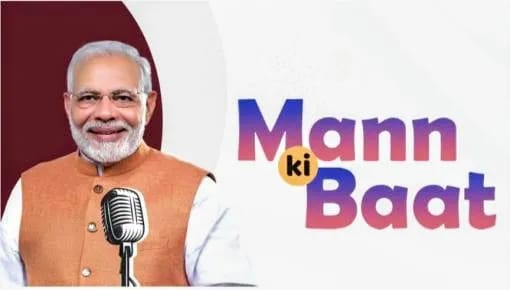
Political communication has changed considerably as leaders increasingly use radio, television, digital platforms and social media to reach citizens.
In India, Mann Ki Baat has become one of the most recognisable examples of a Prime Minister communicating directly with the public through a recurring programme.
Narendra Modi delivered the 139th episode on October 25, 2026, according to the Prime Minister's Office and the official transcript published through the Press Information Bureau.
The address is relevant to political reporting because it provides a record of the themes the Prime Minister chose to discuss with the public. It also raises broader questions about how governments communicate their priorities and how citizens assess official messaging.
What happened on October 25?
The Prime Minister's Office published the English rendering of Modi's 139th Mann Ki Baat address on October 25, 2026.
The transcript is the primary reference for the programme's content. It allows readers to examine the subjects discussed, the examples mentioned and the messages the Prime Minister sought to communicate.
For publication, the transcript should be read in full before selecting the main headline. A story should not claim that a particular issue dominated the address unless the content supports that description.
The same principle applies to political reactions. If a party or leader has responded publicly, the response should be linked to an attributable statement. Otherwise, it is more accurate to analyse the programme's political significance without inventing a reaction.
Why does a monthly address matter in politics?
Regular communication allows a political leader to present priorities outside the immediate setting of Parliament, a press conference or an election campaign.
A recurring programme can help the government discuss public initiatives, community activities and issues that it wants citizens to consider.
It can also provide a consistent communication channel between the Prime Minister and listeners across the country.
The programme should therefore be viewed as one part of the wider political communication system rather than as a substitute for parliamentary scrutiny or detailed policy reporting.
The BJP's communication strategy
For the BJP, the Prime Minister's public profile is an important part of its national political identity.
A regular address gives the Prime Minister an opportunity to communicate themes in a format that is not restricted to the daily news cycle. The programme can also highlight individual stories and community initiatives that may not receive sustained attention elsewhere.
From an editorial perspective, the significance of this communication lies in the content and its relationship to the government's broader policy agenda.
Journalists should distinguish between what the Prime Minister said, what the government has formally implemented and what remains an aspiration or proposal.
For example, a speech describing a public initiative does not automatically establish that the initiative has achieved all its intended outcomes.
Where does the opposition fit into the discussion?
In a parliamentary democracy, opposition parties have a responsibility to scrutinise government priorities and assess the results of public programmes.
That scrutiny may involve examining budgets, implementation reports, official statistics and the experience of citizens affected by a policy.
An opposition response to Mann Ki Baat should be reported when it is available and relevant. It should not be manufactured simply to create the appearance of political conflict.
Are the policy claims supported by published data? Are the relevant schemes accessible to intended beneficiaries? Is there independent information about implementation? Can citizens compare stated objectives with results?
These questions strengthen political reporting without requiring unsupported allegations.
What happens next?
The next step for readers is to follow any official announcements, policy documents or implementation updates connected to issues raised during the address.
If the Prime Minister discussed a public programme, reporters should seek the relevant ministry's information to establish its current status. If a new policy was proposed, the article should distinguish the proposal from a formal government decision.
Conclusion: Communication is important, but evidence remains essential
The 139th episode of Mann Ki Baat provides another opportunity to examine how India's Prime Minister communicates with the public.
For the BJP, such communication is part of its wider political outreach. For the opposition, it can provide subjects for scrutiny and questions about implementation. For citizens, the most useful approach is to compare official messages with accessible information about policy outcomes.
Join the discussion
Comments (0)