
'VOTE CHORI’ ROW ERUPTS! Rahul Gandhi-Led INDIA Bloc Takes on CEC Gyanesh Kumar in Massive Delhi Protest
Introduction: Ramlila Maidan Becomes the Centre of a Major Political Showdown
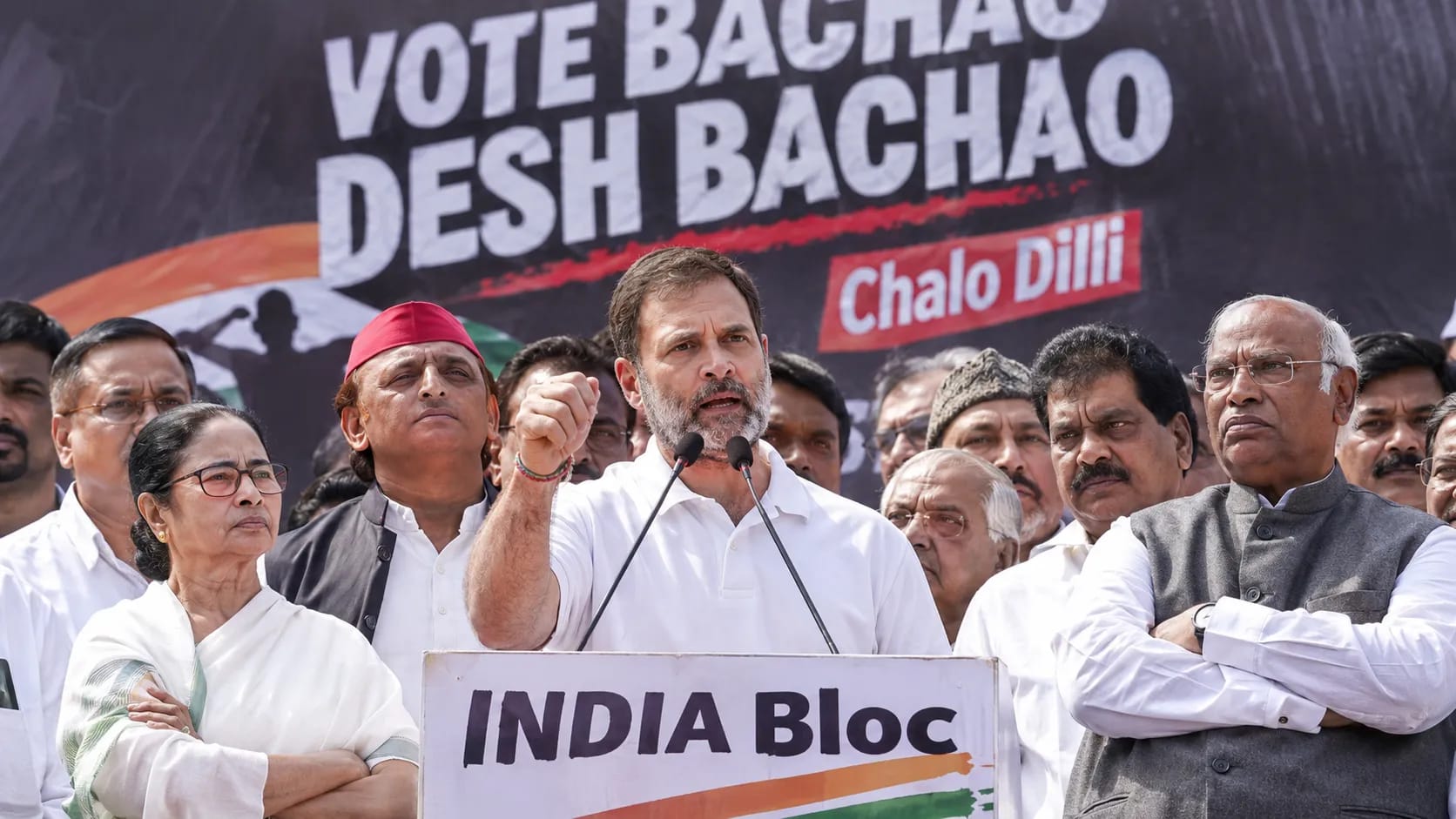
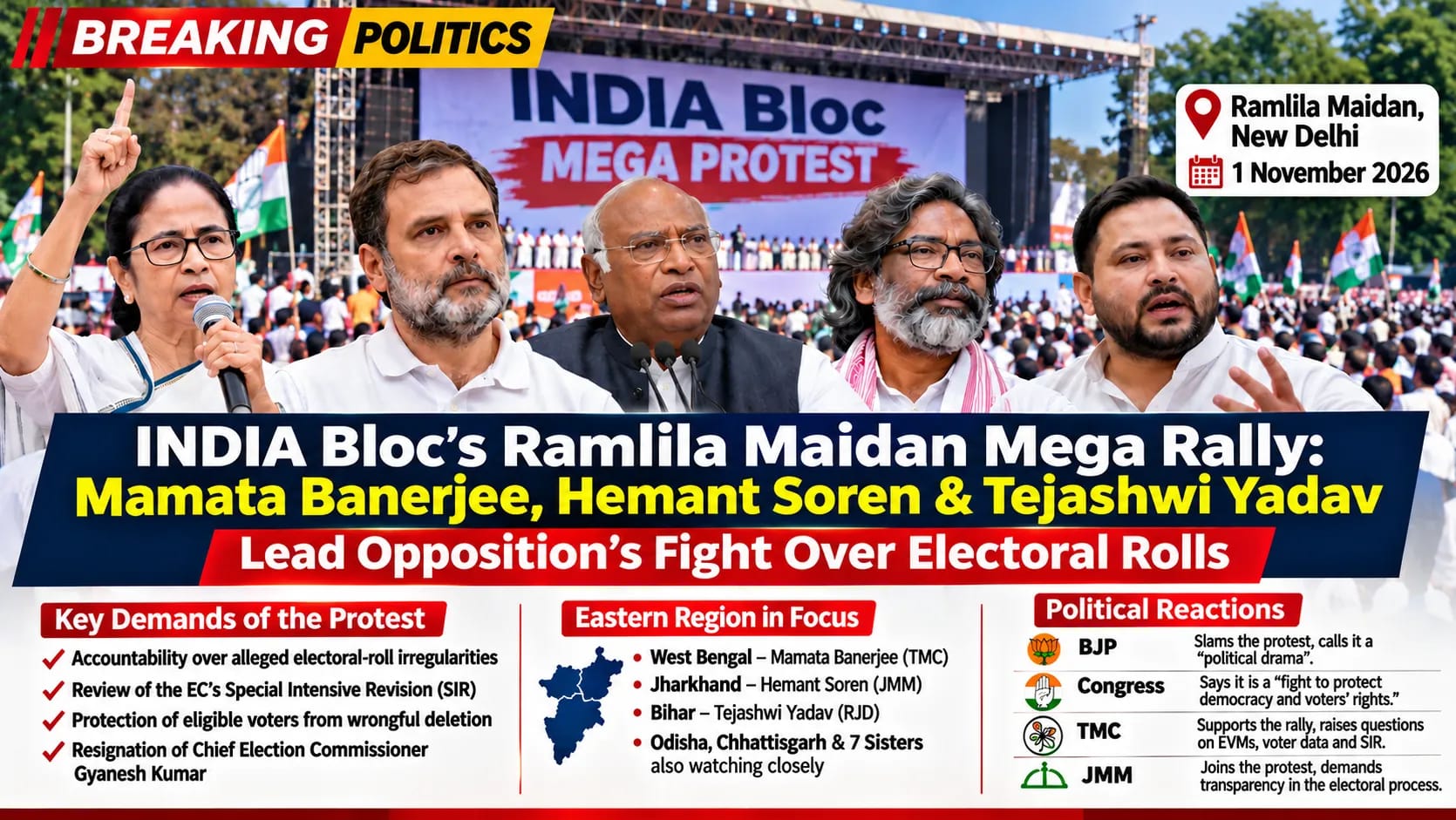
New Delhi witnessed a major political demonstration on Sunday, November 1, 2026, as opposition leaders belonging to the INDIA bloc gathered at the historic Ramlila Maidan to intensify their campaign against alleged electoral irregularities.
Under the banner of 'Vote Bachao, Desh Bachao', opposition leaders, party workers, student organisations and supporters marched through the national capital, demanding the resignation of Chief Election Commissioner (CEC) Gyanesh Kumar.
Congress leader and Leader of Opposition in the Lok Sabha Rahul Gandhi led the political mobilisation alongside Congress president Mallikarjun Kharge, Priyanka Gandhi Vadra, Samajwadi Party chief Akhilesh Yadav, Trinamool Congress leader Mamata Banerjee, RJD leader Tejashwi Yadav and several other opposition figures.
From Minto Road to Ramlila Maidan: How the Protest Unfolded
The INDIA bloc's demonstration began with a march from the Minto Road–Connaught Place junction towards Ramlila Maidan.
Several prominent opposition leaders travelled together in an open vehicle, while party workers and supporters walked alongside the procession.
The march attracted thousands of participants, with flags, banners and placards displaying messages opposing the SIR exercise and demanding action against the Chief Election Commissioner.
The slogan 'Vote Bachao, Desh Bachao' became the central message of the gathering.
Rahul Gandhi's Strong Attack on CEC Gyanesh Kumar
Rahul Gandhi emerged as one of the central speakers at the demonstration.
Addressing supporters at Ramlila Maidan, he accused the Election Commission of compromising citizens' democratic rights through the alleged wrongful removal of names from electoral rolls.
He demanded that Gyanesh Kumar leave his position, arguing that accountability within constitutional institutions was essential for restoring public confidence.
BJP's Response: Ruling Party Rejects Opposition's Allegations
The BJP strongly criticised the opposition's campaign and rejected allegations that the Election Commission was manipulating electoral rolls to benefit the ruling party.
The ruling party's position is that the revision process is a legitimate administrative responsibility of the Election Commission.
Union Health Minister and senior BJP leader Jagat Prakash Nadda criticised the Ramlila Maidan gathering, describing it as a carefully orchestrated political drama.
The October 31 Public Impeachment: What Happened Before the Delhi Rally?
The November 1 protest was preceded by another major political development.
On October 31, INDIA bloc leaders organised a symbolic public impeachment programme against CEC Gyanesh Kumar at the residence of Congress president Mallikarjun Kharge in New Delhi.
Former Lok Sabha Speaker Meira Kumar presided over the symbolic proceedings.
Participating opposition leaders adopted a resolution containing six major allegations concerning the functioning of the Election Commission and electoral-roll management.
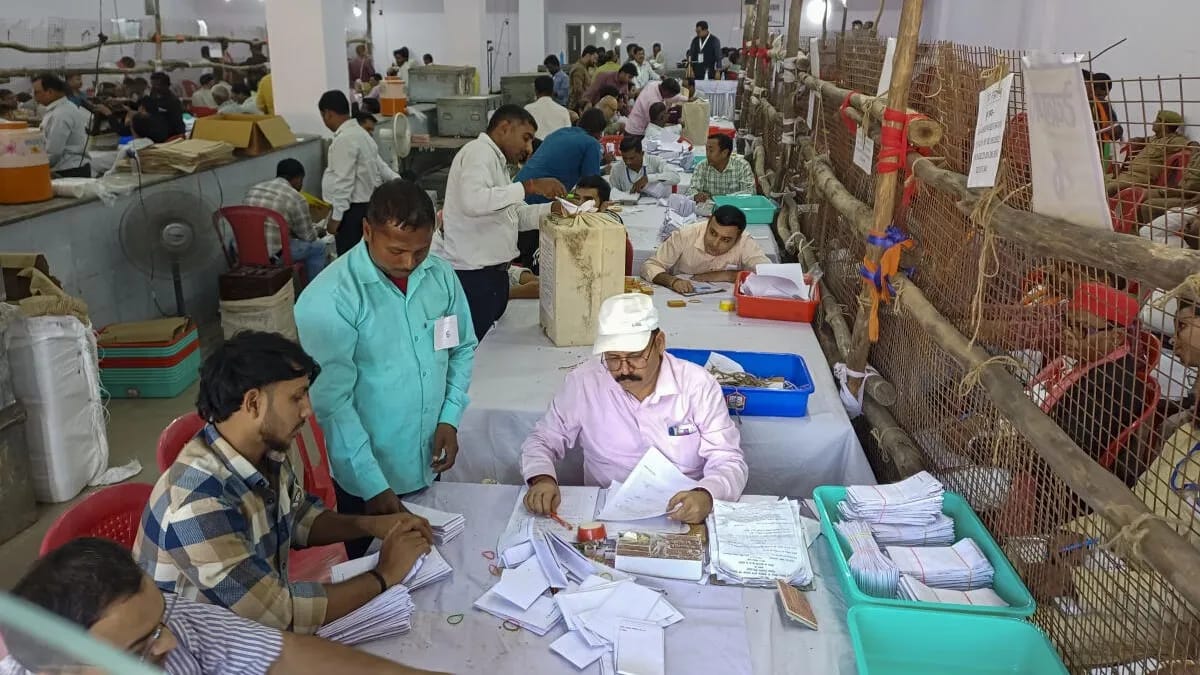
The opposition raised concerns about alleged voter deletions, the SIR process, registration procedures, digital systems and the independence of the poll body.
The formal removal notices submitted by opposition MPs in March 2026 had already been rejected by the Lok Sabha Speaker and Rajya Sabha Chairman in April.
Under Article 324(5) of the Constitution, the Chief Election Commissioner enjoys protection comparable to that of a Supreme Court judge in matters of removal.
Political Reactions: A Wider Confrontation Between the Opposition and BJP
The Ramlila Maidan gathering highlighted the differences between the INDIA bloc and the BJP over the functioning of the Election Commission.
Congress: Rahul Gandhi and Mallikarjun Kharge demanded accountability from the CEC and questioned the electoral-roll revision process.
Trinamool Congress: Mamata Banerjee criticised SIR and alleged that the exercise threatened democratic rights, particularly in West Bengal.
Samajwadi Party: Akhilesh Yadav questioned voter deletions and raised concerns about their possible impact on citizens in Uttar Pradesh.
Rashtriya Janata Dal: Tejashwi Yadav criticised the ruling establishment and used the Mahabharata reference to underline the political confrontation.
BJP: The ruling party rejected the opposition's allegations and defended the Election Commission's responsibility to maintain accurate electoral rolls.
Election Commission: The poll body maintains that the revision is intended to remove duplicate and ineligible entries and has denied acting in favour of any political party.
Conclusion
Ultimately, the most important issue is not which political party gains an advantage from the controversy. It is whether every eligible Indian citizen can exercise the right to vote without unnecessary barriers and whether electoral institutions can maintain public confidence through transparent and accountable procedures.
Join the discussion
Comments (0)