Andhra Pradesh Municipal Elections 2026: What Was the Polling Percentage? How Does It Compare With the 2021 Elections?
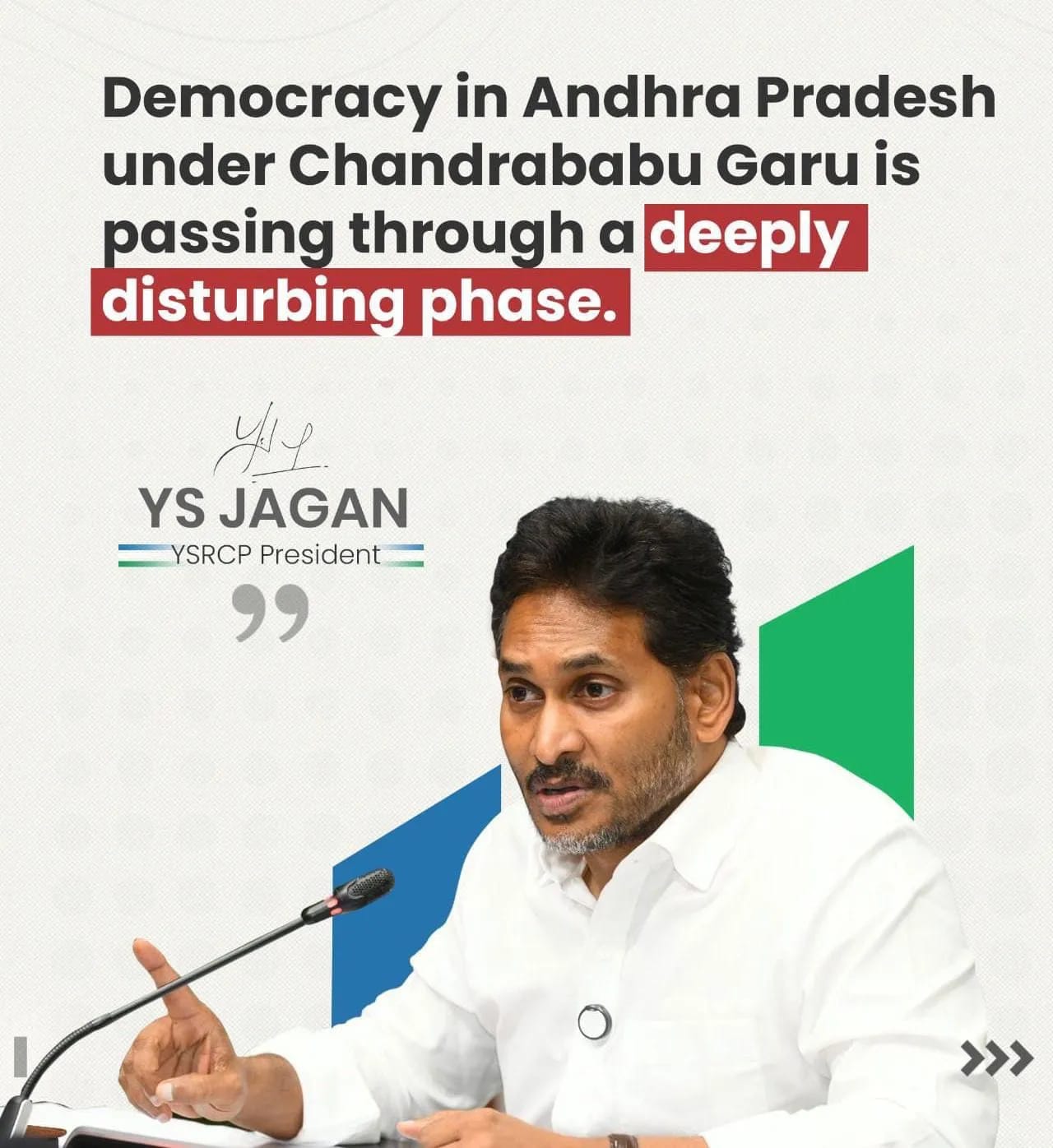
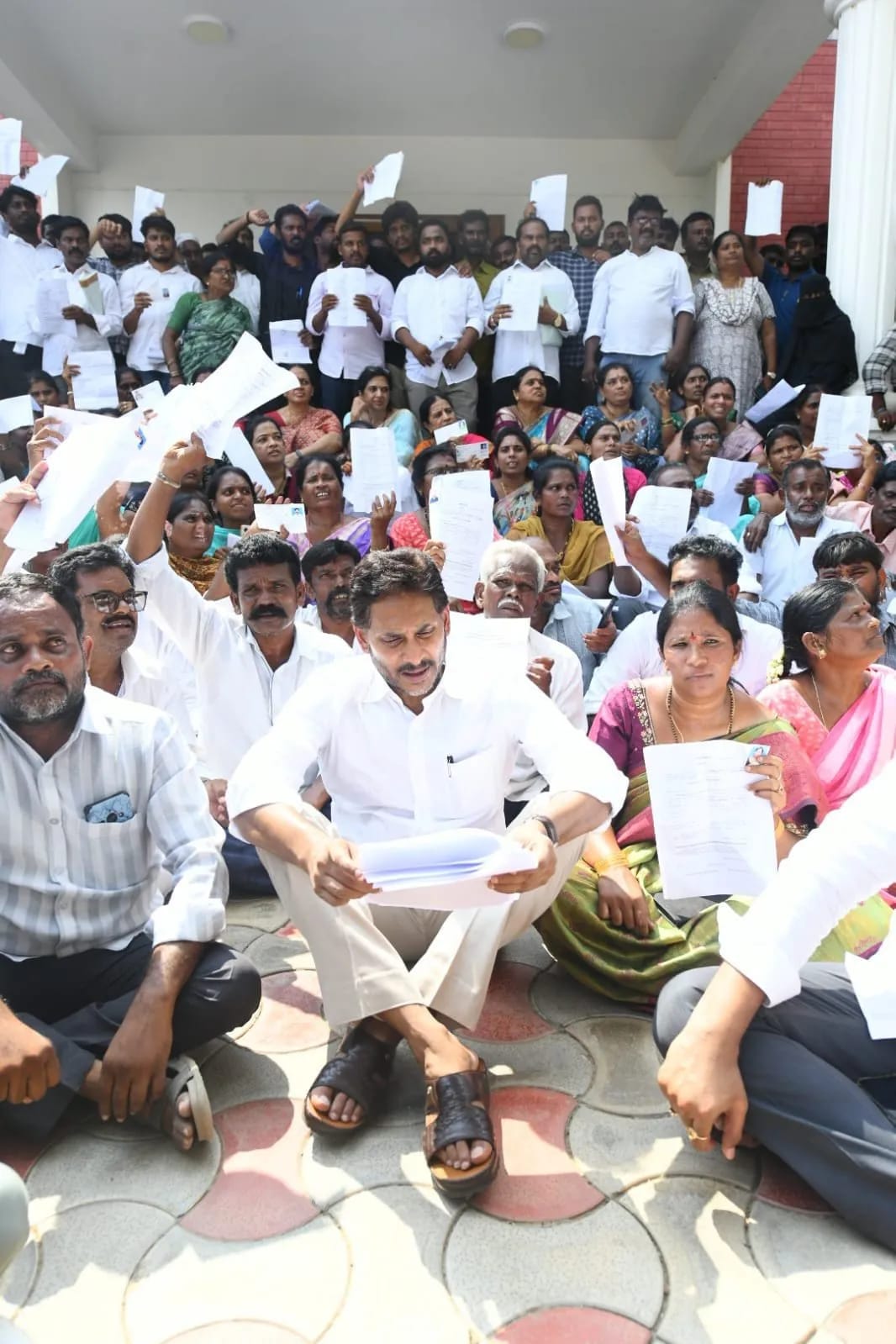
Despite intense campaigning by the ruling TDP-led NDA alliance and opposition YSRCP, voter turnout in several major cities remained below expectations. The latest polling figures have once again raised questions about urban voter participation and the changing political mood in Andhra Pradesh.
Andhra Pradesh Municipal Elections 2026: Latest Polling Percentage
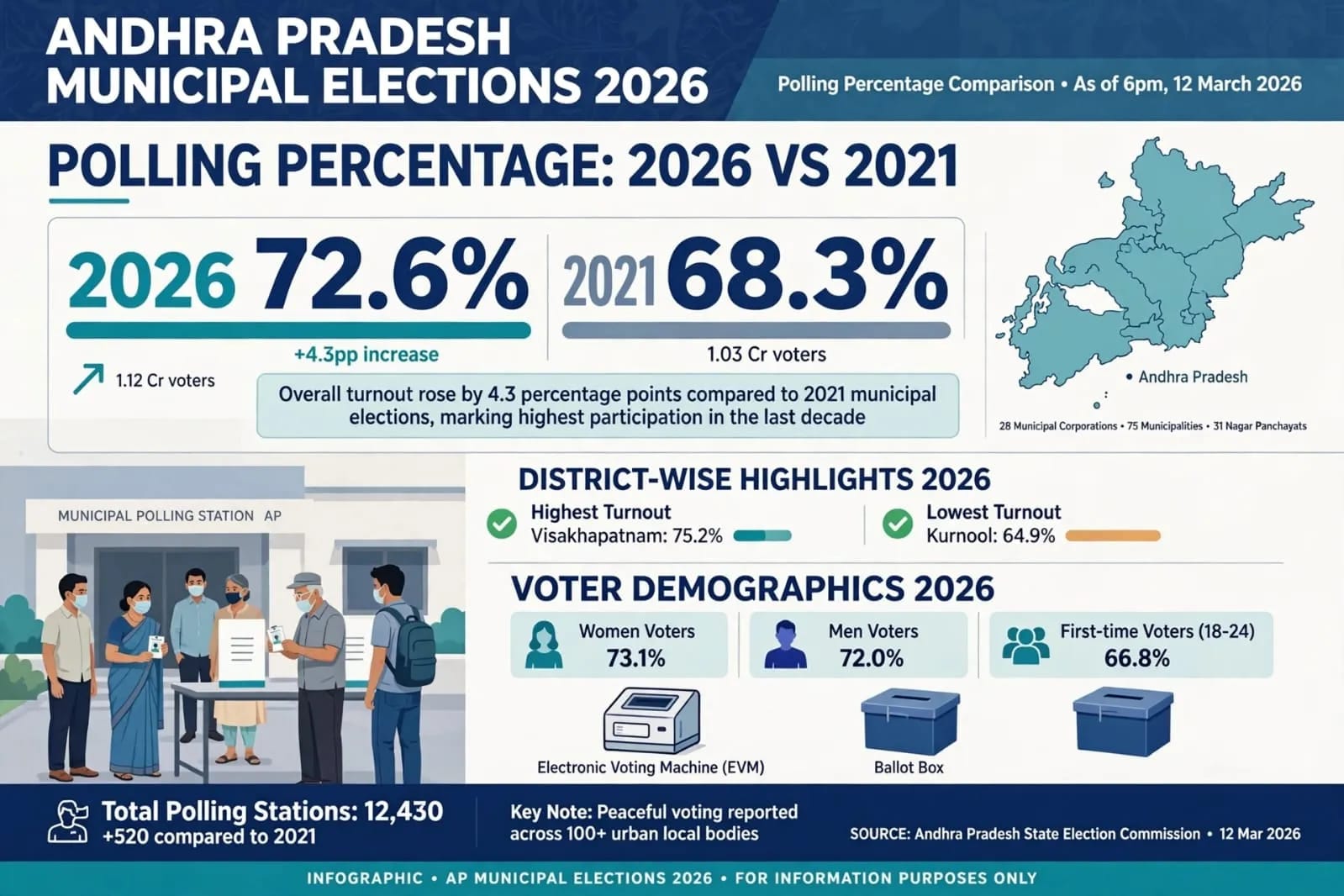
According to polling updates, Andhra Pradesh recorded an average voter turnout of 48.03% by 3 PM on November 1.
Out of approximately 96.89 lakh eligible voters, more than 46.54 lakh had exercised their voting rights by that time.
Some of the major municipal corporation figures reported by 3 PM were:
- Greater Visakhapatnam Municipal Corporation: 39.74%
- Vijayawada Municipal Corporation: 41.80%
- Guntur Municipal Corporation: 40.99%
- Nellore Municipal Corporation: 40.91%
- Tirupati Municipal Corporation: 42.12%
- Kadapa Municipal Corporation: 41.21%
- Eluru Municipal Corporation: 43.84%
These figures are interim polling percentages, not the final turnout.
According to later reports, Visakhapatnam recorded 51.47% turnout by 10 PM, while Vijayawada recorded a little over 55% and Guntur approximately 57%.
Tirupati recorded 45.26% by 5 PM, according to preliminary district figures.
Which Municipalities Recorded Higher Polling?
Smaller municipalities showed stronger voter participation compared with several major cities.
Some notable figures reported by 3 PM included:
- Gudur (Kurnool district): 73.96%
- Chimakurthy: 73.64%
- Kanigiri: 73.20%
- Nagari: 71.78%
- Badvel: 71.52%
The difference between metropolitan corporations and smaller municipalities was one of the most noticeable features of this election.
What Was the Polling Percentage in the 2021 Municipal Elections?
The previous Andhra Pradesh urban local body elections were held in March 2021.
According to the final figures reported by the State Election Commission and contemporary news reports, the statewide turnout was approximately 63.89%.
The 2021 elections covered 12 municipal corporations and 71 municipalities and Nagar Panchayats.
The municipal corporations recorded approximately 57.14% polling, while municipalities and Nagar Panchayats witnessed considerably higher participation, at around 70.65%.
Ongole recorded the highest turnout among municipal corporations at 75.52%, while Kurnool recorded the lowest at 49.26%.
2021 vs 2026: What Has Changed?
The comparison between the two elections highlights an important trend.
In 2021, smaller municipalities recorded significantly higher participation than major municipal corporations.
A similar pattern was visible in the 2026 elections, with several smaller towns reporting turnout above 70%, while major cities struggled to achieve comparable participation.
However, the final statewide 2026 turnout is still needed for an accurate numerical comparison with 2021.
Why Did Major Cities Witness Lower Voter Participation?
Several factors may have contributed to the relatively low turnout in major urban areas.
1. Urban voter apathy
A section of urban voters appeared less interested in participating in municipal elections despite the political importance attached to the contest.
2. Polling station difficulties
Reports from Tirupati indicated that some voters faced difficulties locating polling stations because of unfamiliar booth locations and problems with voter slips.
3. Local civic issues
Municipal elections directly influence everyday issues such as roads, drainage, drinking water, garbage collection and street lighting. However, voter participation in major cities remained below expectations.
4. Political competition
Although TDP, Jana Sena, BJP and YSRCP conducted extensive campaigns, the political excitement did not translate into equally high voter participation in several major cities.
What Does Low Polling Mean for TDP Alliance and YSRCP?
The municipal election results are expected to provide an important indication of the political strength of the ruling alliance and the opposition in urban areas.
However, low voter turnout does not automatically favour any particular political party.
The final results will depend on the support received by individual candidates, local political factors and voting patterns across different wards.
Both the NDA alliance and YSRCP will closely examine the turnout figures while assessing their performance in the municipal elections.
Conclusion
The Andhra Pradesh municipal elections of November 2026 have highlighted a continuing difference between voter participation in smaller towns and major cities.
While several smaller municipalities recorded impressive polling percentages, major urban centres witnessed comparatively weaker participation.
The 2021 elections recorded approximately 63.89% turnout, making the final 2026 statewide percentage particularly important.
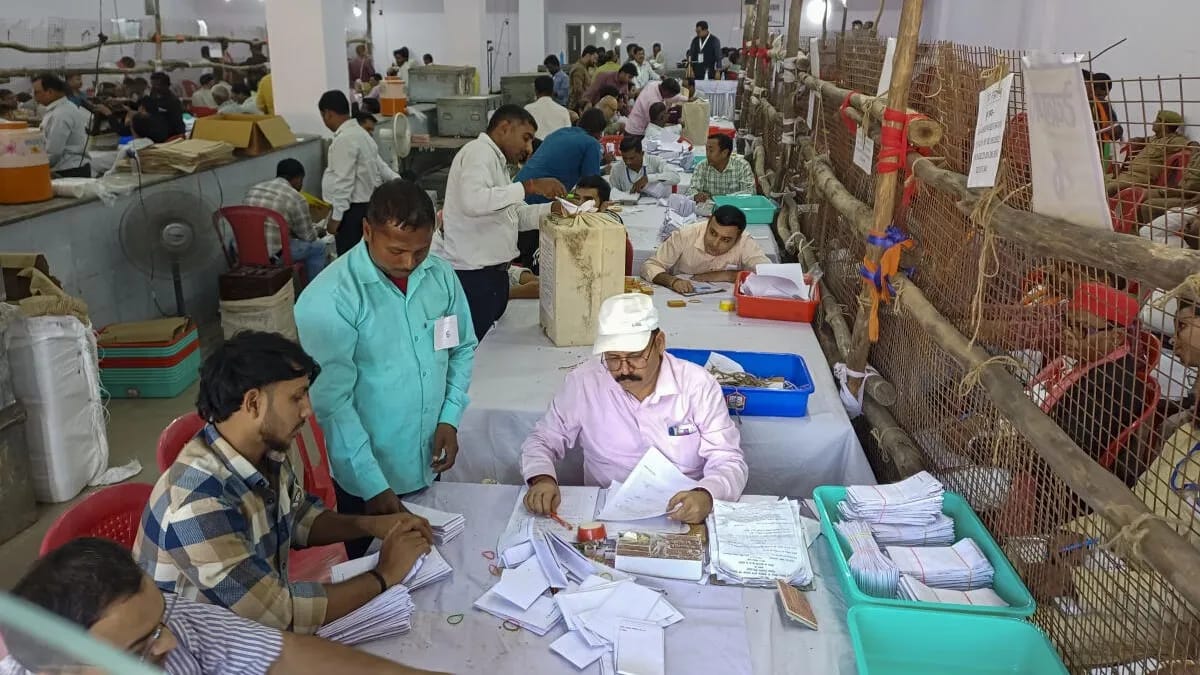
The November 3 counting results will reveal whether the lower participation in major cities has any impact on the political fortunes of the ruling NDA alliance and YSRCP.

Join the discussion
Comments (0)