
Deleted Voters Testify Before Former Judges’ Panel, Raise Concerns Over SIR Process
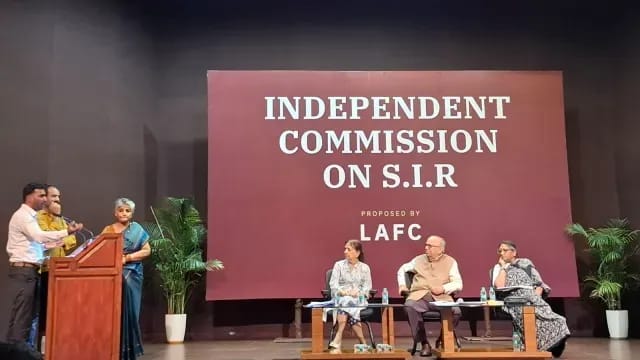
Voters whose names were reportedly deleted from electoral rolls during the Special Intensive Revision (SIR) have presented their experiences before an independent inquiry commission organised by the Lawyers Association for Constitution (LAFC) in New Delhi. The public hearing, held on Thursday, October 15, 2026, heard testimonies from voters and civil society representatives from Karnataka, Delhi, Rajasthan, West Bengal, Odisha and Telangana.
The testimonies raised questions about the effects of electoral roll revisions on long-term residents, economically vulnerable communities and people seeking restoration of their voting rights.
Bela Estate Residents Report Large-Scale Deletions
Kamal Lal, a resident of Bela Estate in Delhi, told the commission that the names of 728 out of 729 residents had been deleted from the electoral roll during the SIR exercise.
According to Lal, residents have lived in the settlement since 1913. He said they were subsequently informed that they could no longer retain voter identification because the settlement occupies land belonging to the Delhi Development Authority (DDA) and faces the possibility of demolition.
Following media attention to the issue, residents reportedly submitted 496 applications seeking inclusion in the electoral roll. Lal told the hearing that the applications had not yet been processed.
The case has raised concerns about whether residents facing uncertainty over their housing and land tenure can effectively maintain their electoral registration.
Civil Society Groups Question Verification Requirements
Civil society organisations appearing before the commission raised concerns about the documentation and verification requirements associated with the current SIR exercise.
According to the concerns presented at the hearing, the 2002 guidelines limited verification to questions relating to age and place of residence, while the current exercise was said to require voters to establish citizenship.
These claims raise questions about the nature of the documents requested, the procedures followed by election officials and the safeguards available to voters whose names are removed.
The applicable rules, official instructions and individual circumstances need to be examined to determine whether verification requirements were correctly applied in each case.
Testimonies From Six States
The public hearing included accounts from people and organisations representing Karnataka, Delhi, Rajasthan, West Bengal, Odisha and Telangana.
The participation of representatives from multiple states allowed the commission to hear different experiences involving electoral registration and voter inclusion. The testimonies also highlighted the importance of accessible procedures for people who may struggle to obtain documents or navigate administrative processes.
However, individual testimonies and allegations do not by themselves establish the scale of irregularities across the entire SIR exercise. Further examination of official records and responses from the relevant election authorities would be necessary.
Electoral Roll Revision and the Right to Vote
The Special Intensive Revision of electoral rolls has become a significant subject of political and civil society debate. Accurate electoral rolls are essential to the conduct of elections, while transparent verification procedures and accessible correction mechanisms are important for protecting eligible voters from wrongful exclusion.
The cases presented at the LAFC hearing underscore the need for clear communication when names are deleted, timely decisions on applications for inclusion and effective avenues for challenging disputed deletions.
For affected residents, the immediate concern is whether their applications will be processed and whether eligible voters will be able to restore their names before the relevant electoral deadlines.
The testimonies before the independent inquiry commission have added to the discussion about how electoral roll revisions are implemented and how authorities can balance verification requirements with the protection of eligible citizens’ voting rights.
Editorial note: This article is based on the supplied report. The figures and allegations are attributed to the testimony described in that report and should be independently verified before publication.

Join the discussion
Comments (0)