Voter Roll Revision: No Prosecutions Over Draft Deletions, Says Supreme Court in Landmark Delhi Case
The Core Development
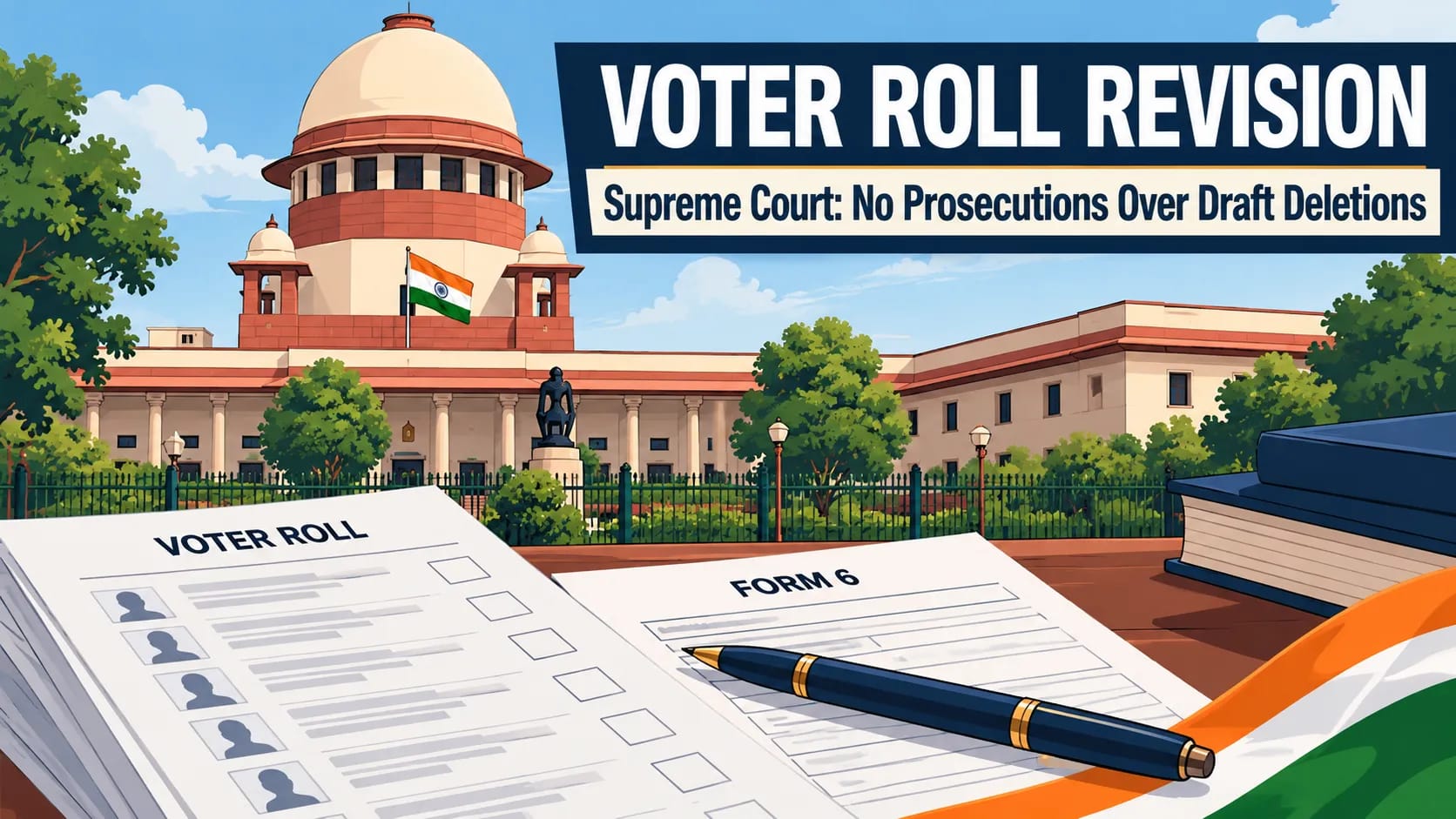
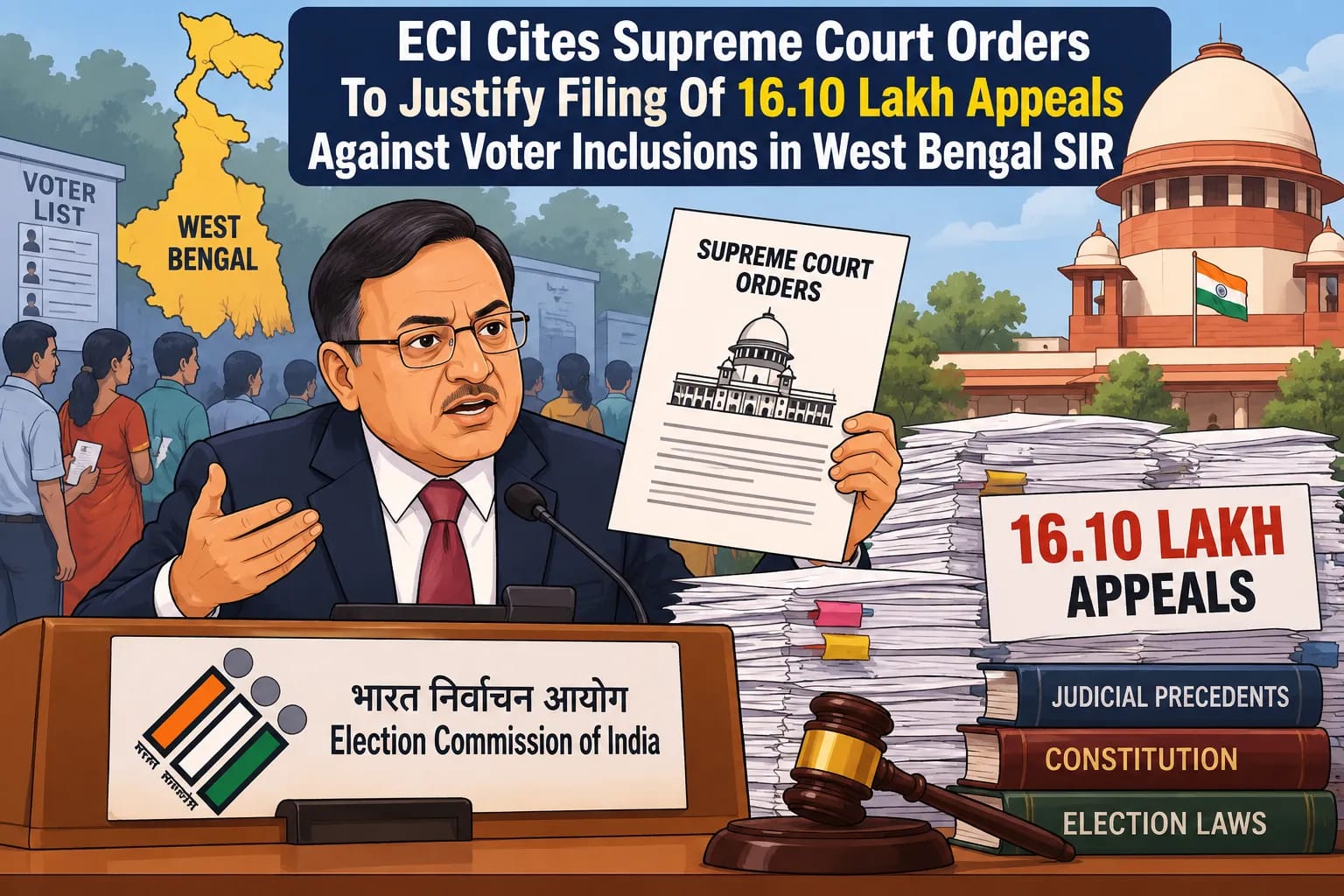
The ongoing Special Intensive Revision (SIR) in the National Capital Territory of Delhi has shifted from a localized bureaucratic mapping exercise into a high-stakes constitutional discussion inside the Supreme Court of India. During extensive judicial deliberations, a multi-judge bench analyzed the strict criteria used to evaluate voter continuity when individuals relocate or travel for seasonal work.
To reduce growing public concern regarding clerical errors during list cleanups, the bench explicitly confirmed that no good-faith citizens will face prosecution or legal liabilities if their names are flagged for mismatch or removed during ongoing draft revision cycles. The judicial comments bring vital reassurance to millions of working-class migratory laborers and rental populations across the National Capital Region (NCR).
Ground Realities of Booth Level Hearings
A central point of discussion during the hearings was the logistical burden placed on common citizens to verify their voter status. The ECI clarified its revised operational procedures to the apex court:
1. Field Collection Focus: The SIR strategy does not mandate mass physical hearings at centralized district offices for citizens whose names are under review.
2. BLO Door-to-Door Mandate: Booth Level Officers (BLOs) are officially instructed to visit localities directly to collect physical verification papers.
3.Exceptional Cases Only: Formal, centralized summons and in-person magisterial hearings will be strictly reserved for complex, disputed cases showing significant discrepancies.
The Ruling vs. Opposition Standpoint
The local ruling administration in Delhi welcomed the judicial protections against citizen prosecution, maintaining that lower-level state machinery often acts with undue haste when deleting names to meet administrative timelines.
Meanwhile, opposition lawmakers in the Delhi Assembly noted that thorough cleaning of the rolls is needed to prevent multi-city registrations, pointing out that many individuals keep duplicate active IDs in both the capital and neighboring satellite towns.
What Happens Next?
The office of the Chief Electoral Officer in Delhi is preparing revised instructions for field staff. Over the coming weeks, tracking operations will shift to focus heavily on door-to-door verification rather than relying on online system flags. This change aims to ensure that genuine residents are not left off the final rolls before the next election cycle.

Join the discussion
Comments (0)