Punjab Election 2027: Why a Possible BJP–Akali Dal Alliance Faces Difficult Questions
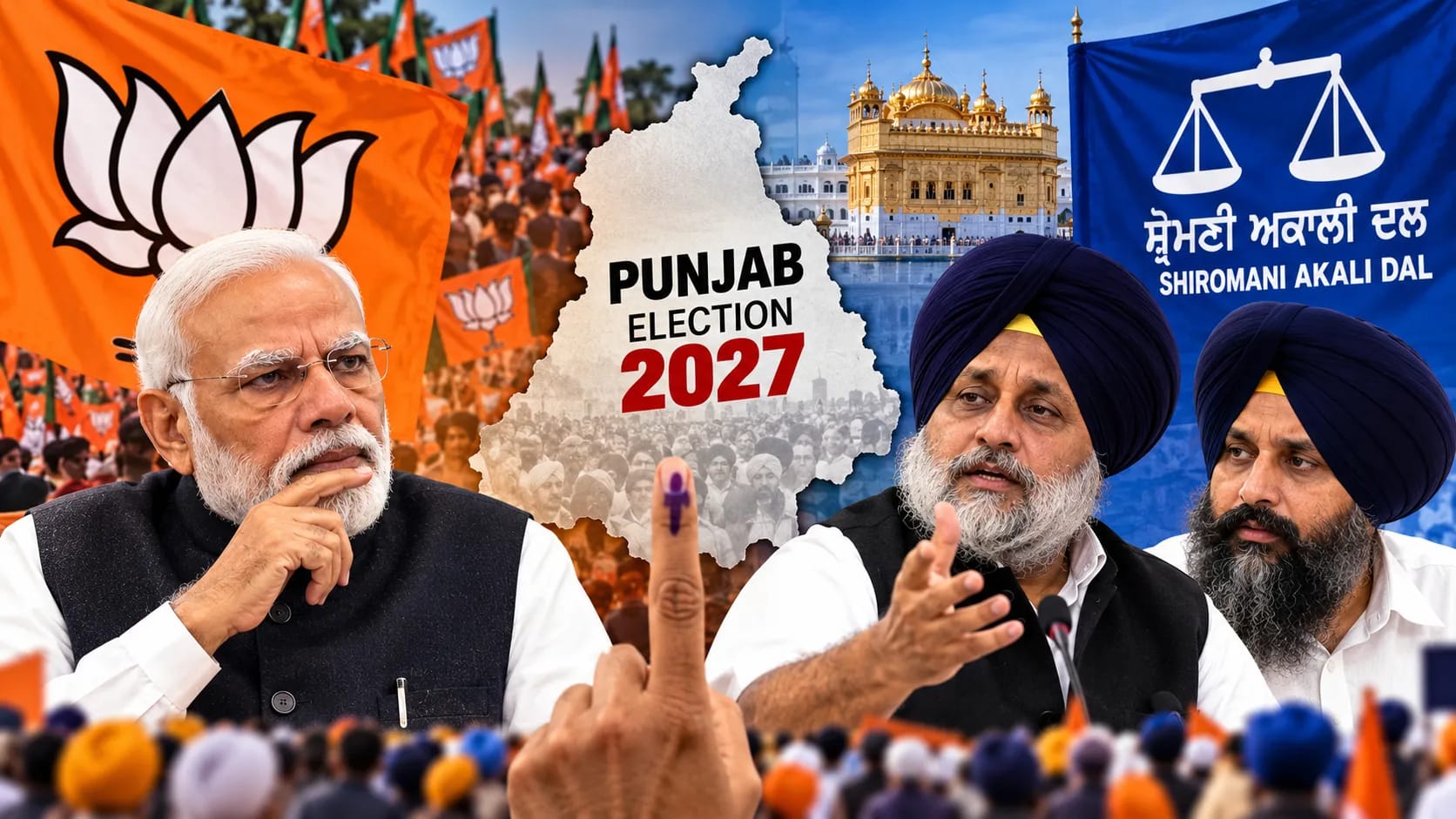
The possibility of renewed cooperation between the Bharatiya Janata Party and the Shiromani Akali Dal has returned to Punjab’s political debate ahead of the 2027 Assembly election. SAD president Sukhbir Singh Badal has indicated that his party is open to working with ideologically compatible parties. Recent political statements and reports of discussions have fuelled speculation about a possible understanding with the BJP.
However, openness to an alliance is not the same as a final agreement. The parties have not established a confirmed seat-sharing arrangement through the statements cited here, and any potential understanding should be treated as a developing political question.
Why the alliance question matters
The BJP and SAD have a history of electoral cooperation, but their political circumstances have changed since their previous partnership ended. A renewed alliance would require both organisations to assess their current support, organisational reach and priorities for the next election.
For the SAD, cooperation could offer a way to coordinate with a national party while seeking to strengthen its position in Punjab. For the BJP, an alliance could provide access to a regional partner with an established political identity and organisational network.
These potential advantages do not guarantee electoral gains. Voters may respond differently to a renewed partnership, and local political conditions can vary substantially between constituencies.
Seat-sharing could be a major hurdle
One of the central questions is how many constituencies each party would contest. In previous alliances, seat distribution reflected the relative positions of the partners at the time. A future arrangement would have to account for changed political ambitions and each party’s desire to maintain its independent identity.
The BJP has also indicated that it is preparing organisationally for the election, including the possibility of contesting constituencies independently. Such statements matter because they show that an alliance is not the only scenario under consideration.
Punjab’s wider political competition
Any BJP–SAD understanding would take place within a competitive political environment that also includes the Aam Aadmi Party and Congress. Each party will assess the others’ strengths, public concerns and organisational readiness as the election approaches.
Issues such as employment, agriculture, public finances, law and order, drug-related concerns and state–centre relations can shape political debate. Parties will need to explain their proposals on these matters rather than rely only on alliance arithmetic.
Conclusion
The BJP–SAD alliance discussion highlights the calculations that shape state-level electoral politics. A renewed partnership could alter campaign strategies, but its significance would depend on the terms of the agreement, candidate choices and voters’ responses.

Join the discussion
Comments (0)