Meghalaya Political Shake-Up: Two-Thirds of UDP Legislators Merge with BJP, Changing the State’s Political Equation
A Major Development in Meghalaya’s Political Landscape
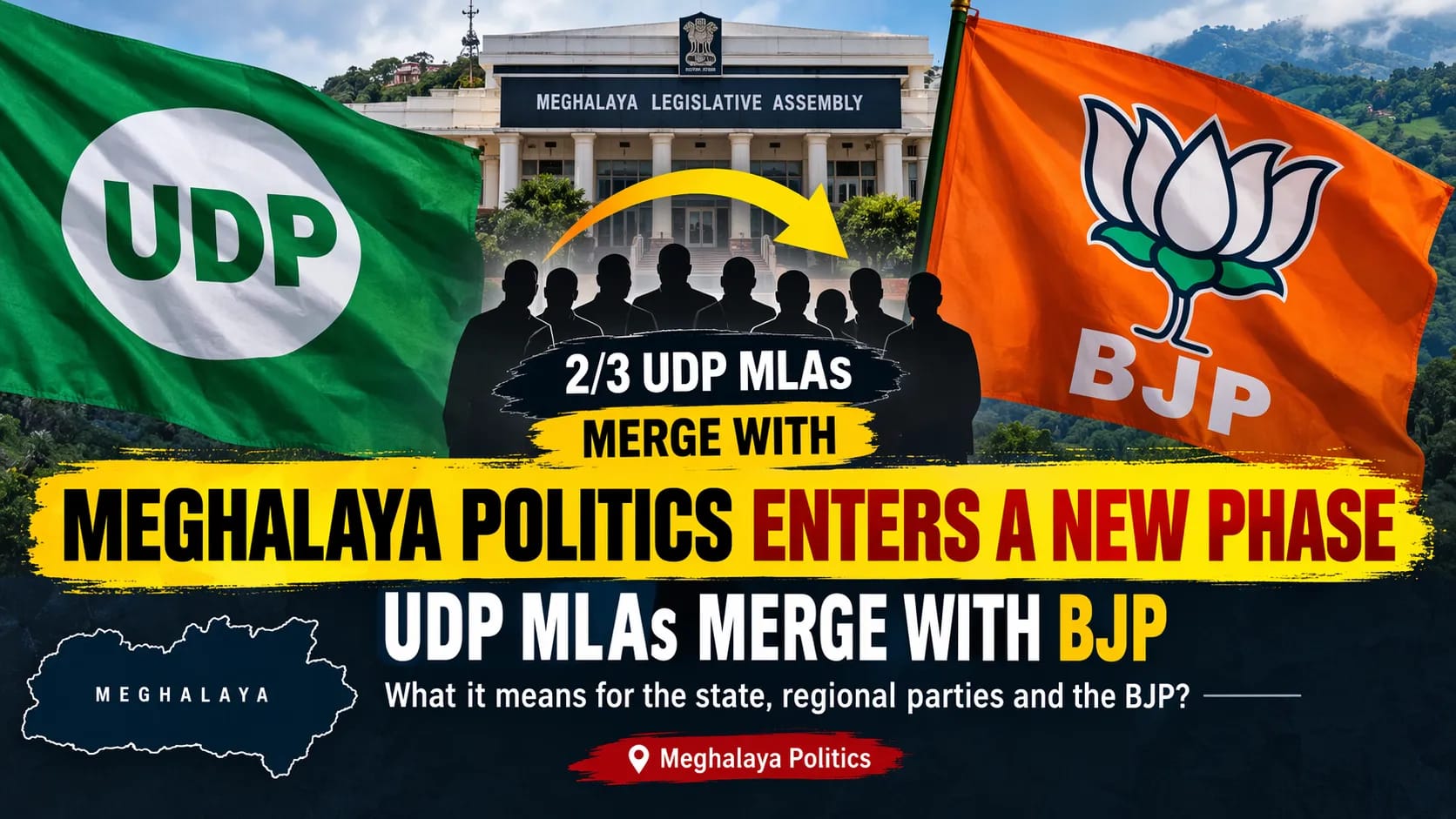
Meghalaya politics has entered a new phase following an important development inside the state Legislative Assembly. The merger of two-thirds of the members of the United Democratic Party (UDP) legislature party with the Bharatiya Janata Party (BJP) has raised questions about the future of regional political representation and the balance of power in the state.
The development was formally recorded through an order issued by the Meghalaya Legislative Assembly Secretariat on October 16, 2026. The order specifically concerns the merger of two-thirds of the UDP legislature party members with the BJP.
What Does the Merger Mean?
A merger involving two-thirds of the members of a legislature party is particularly important under the anti-defection framework of the Tenth Schedule of the Constitution.
The constitutional framework provides an exception to disqualification on grounds of defection when a merger meets the prescribed two-thirds requirement. However, the legal position depends on the relevant constitutional provisions and the formal proceedings of the competent legislative authority.
In this case, the Assembly Secretariat’s October 16 order provides the official documentary basis for reporting the merger.
The BJP’s position within the state legislature could consequently change, depending on the strength of the legislators covered by the merger.
Why Is This Important for the BJP?
The BJP has been working to strengthen its political presence in northeastern India. Regional political relationships remain important to its wider political strategy.
The merger could provide the BJP with an opportunity to strengthen its legislative position in Meghalaya and increase its influence in state-level political discussions.
However, the development should not automatically be described as a change of government. A legislative merger and a change in government are two different political developments.
The actual consequences will depend on the existing coalition arrangement, the number of legislators involved and the decisions taken by the political leadership.
What Does It Mean for Regional Politics?
Regional parties have traditionally played a major role in Meghalaya. Parties such as the UDP have built their political identity around state-specific concerns, local leadership and regional representation.
When legislators from a regional party move together into a national party through a recognized merger, it can create questions about the future direction of regional political organizations.
For voters, the important question is whether their representatives will continue to prioritize the political issues on which they received public support.
Regional identity, employment, infrastructure, education, tribal interests and state development remain important subjects in Meghalaya’s political debate.



Join the discussion
Comments (0)