SIR Voter List Row: Why Did the Election Commission Reject an RTI Request About Its Software?
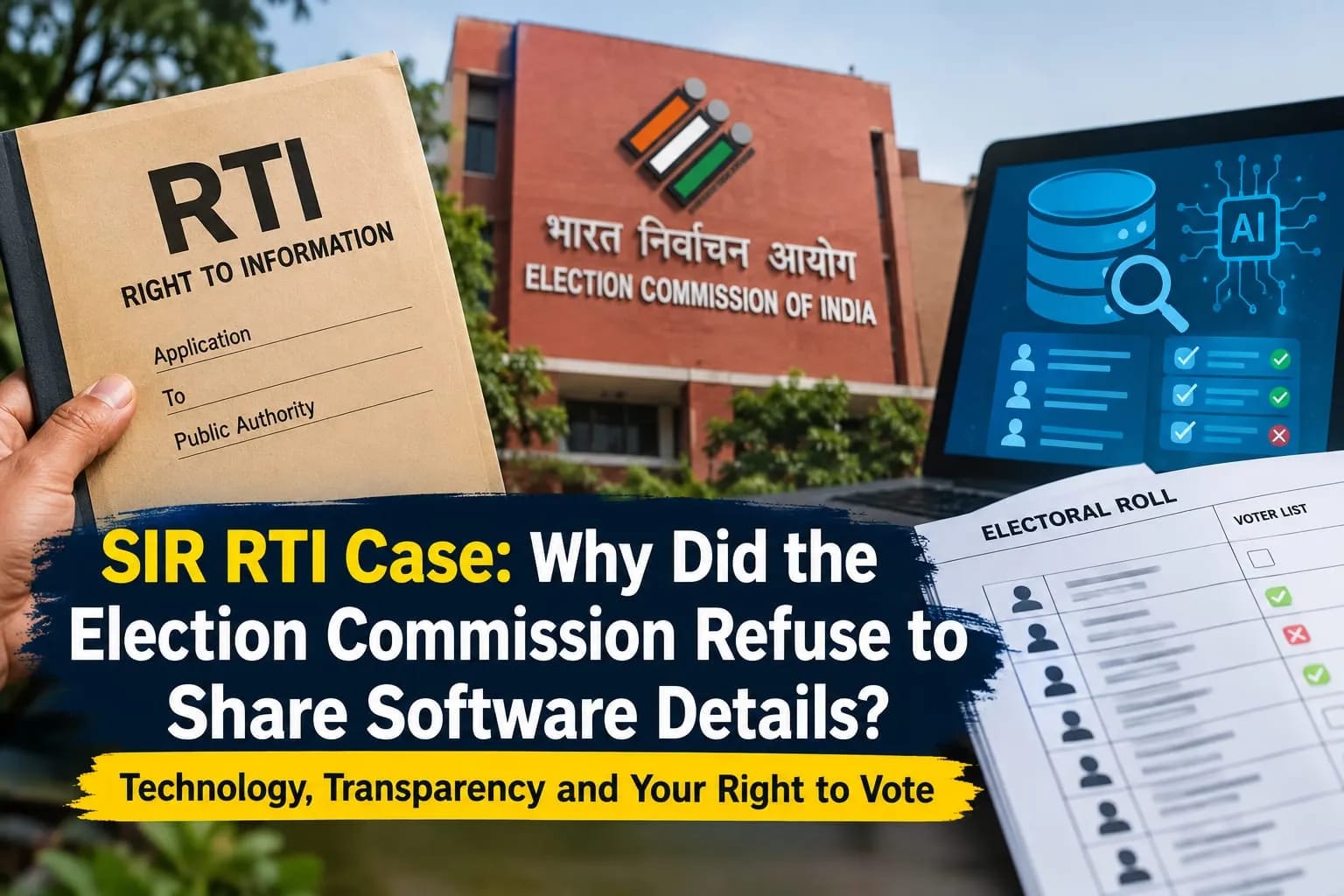
NEW DELHI: How does the Election Commission identify errors in voter lists? Is software used to flag suspicious entries, and how are genuine voters protected from being wrongly removed? These are some of the questions raised by a recent Right to Information (RTI) application filed by Telangana-based activist M.A. Mujeeb Ayyub.
What Is SIR, and Why Does It Matter?
The Special Intensive Revision is an exercise conducted to review and update electoral rolls. Its purpose is to improve the accuracy of voter lists by identifying errors, duplicate entries and other discrepancies.
For ordinary citizens, the issue is straightforward: their names must appear correctly on the electoral roll if they are to exercise their voting rights.
Why Did the Election Commission Refuse?
In its response, the ECI cited Section 8(1)(d) of the RTI Act, 2005, which exempts certain information involving commercial confidence, trade secrets and intellectual property.
The Commission also stated that no new software had been developed or procured specifically for the SIR exercise.
For some other questions, the ECI said that requests seeking explanations or clarifications did not qualify as information under Section 2(f) of the RTI Act. It also referred to an exemption under Section 8(1)(g) in response to a question about the review of flagged anomalies.
The Commission maintained that Electoral Registration Officers are responsible for decisions on the inclusion or exclusion of names, based on the relevant facts and records.
The refusal to disclose software details does not, by itself, establish that the SIR process is flawed. The question is whether the exemptions have been applied appropriately and whether other information about the process can be made available.
What Happens Next?
Media reports state that Ayyub criticised the response and indicated that he would appeal to the First Appellate Authority. The appeal could provide an opportunity to review whether the requested information falls within the exemptions cited by the Commission.
The outcome will be worth watching because the issue extends beyond one RTI application. It concerns how government institutions explain the use of technology in decisions that affect citizens.
The Bigger Question: Can Technology and Transparency Coexist?
Technology can help election officials manage large amounts of data, but accuracy and accountability remain essential. Voters need confidence that their details are handled properly and that any errors can be corrected through accessible procedures.
At the same time, certain technical information may legitimately require protection under the law. The challenge is to distinguish genuinely confidential material from information that can be disclosed without compromising legitimate interests.
For citizens, the most important questions remain simple: Are voter records accurate? Can people challenge errors? Are decisions made by authorised officials? And is enough information available to understand the process?



Join the discussion
Comments (0)