How Social Media Is Changing Indian Elections.
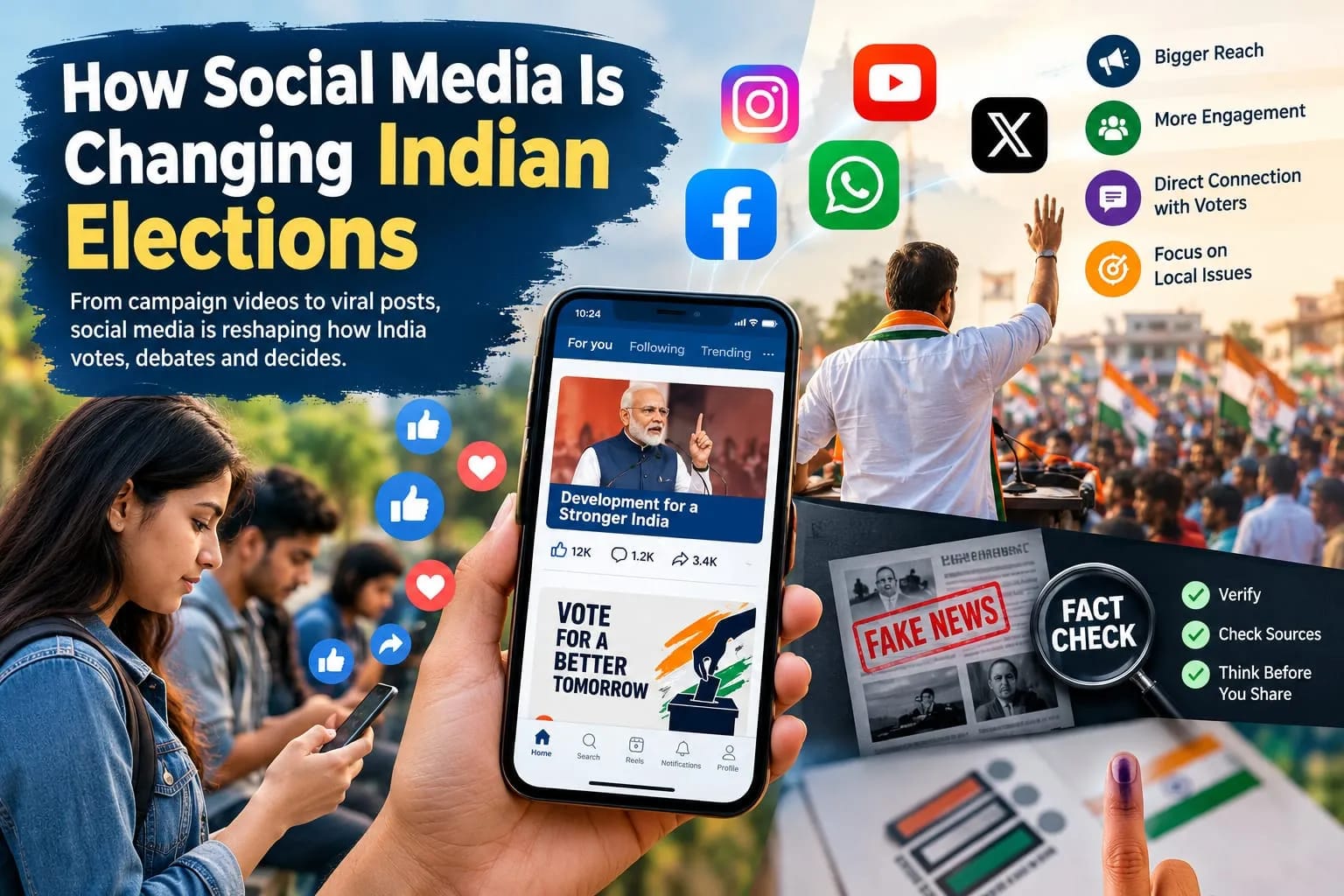
From Traditional Campaigns to Digital Politics
Earlier, political parties mainly depended on public meetings, newspaper advertisements, television debates, posters and door-to-door campaigns to reach voters. These methods remain important, but social media has added a new dimension to election campaigning.
Political leaders now use short videos, live broadcasts, interviews, digital posters and online discussions to connect directly with the public. A single speech or campaign video can quickly reach a nationwide audience without relying entirely on traditional media.
For regional parties and local candidates, digital platforms also offer an opportunity to communicate with voters in their own languages and highlight issues affecting their constituencies.
Why Young Voters Matter
Young Indians are among the active users of digital platforms, making social media an important channel for political communication. First-time voters can learn about candidates, compare party promises, watch parliamentary debates and participate in discussions about unemployment, education, inflation and public services.
Social media can encourage political participation by making information easier to access. It also gives citizens a platform to question elected representatives and draw attention to problems that might otherwise receive limited coverage.
The Growing Problem of Fake News
Alongside its benefits, social media creates serious challenges for elections. Misleading claims, edited videos, old photographs presented as new, and unverified messages can spread rapidly.
Artificial intelligence has added another concern. Deepfake videos and cloned voices can make it appear that a political leader said something they never actually said. Such content may confuse voters, damage reputations and increase tensions if people share it without checking the facts.
Can Social Media Influence Voting Decisions?
Digital campaigns can shape public conversations by repeatedly highlighting certain issues, presenting a candidate's achievements or criticising opponents. Online discussions may influence what voters consider important, but the extent of that influence varies. Family views, local concerns, candidate credibility, party loyalty and personal experiences also play significant roles in voting decisions.
Political advertisements and campaign messages should be evaluated critically. Voters should distinguish between verified facts, opinions, campaign promises and allegations that have not been independently established.
Conclusion
Social media has transformed Indian election campaigning by making political communication faster, more direct and more accessible. It can strengthen democracy when it encourages informed debate and public participation. But when misinformation and manipulation dominate online discussions, it can weaken trust and mislead voters.
Join the discussion
Comments (0)