Election Commission Independence Debate: Cabinet Secretariat File Notings Put Institutional Relations Under Scrutiny
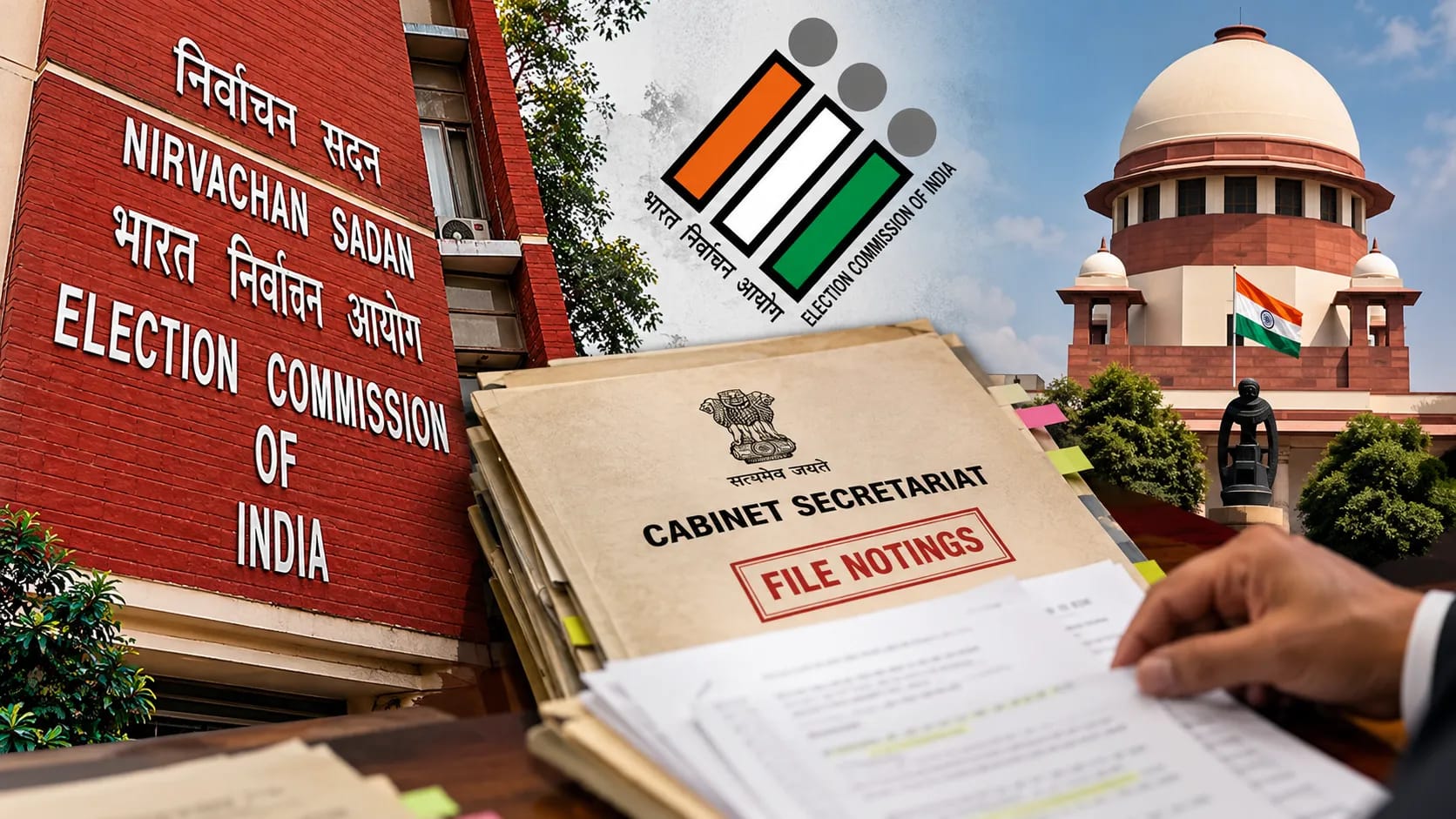
Freshly reported details from Cabinet Secretariat file notings have brought relations between the Union government administration and the Election Commission of India into focus. The documents concern requests by two Election Commissioners for disciplinary action against a senior election official and the subsequent assessment that taking action could be inappropriate.
The development raises important questions about how institutional independence is protected, how internal disagreements are handled and where administrative authority ends when a constitutional body is involved.
What Do the Reported File Notings Say?
According to reporting published on October 23, Election Commissioners Sukhbir Singh Sandhu and Vivek Joshi wrote separately to Cabinet Secretary T. V. Somanathan on July 29, seeking disciplinary action against Senior Deputy Election Commissioner Maneesh Garg.
The Cabinet Secretariat acknowledged the communications but considered action inappropriate because it could be interpreted as interference in the functioning of the Election Commission, a constitutional body.
The disclosure came through a response to a Right to Information application filed by retired Commodore Lokesh K. Batra.
The reported file notings provide a record of how the issue was assessed administratively. They do not, by themselves, establish that wrongdoing occurred or settle every question about the underlying disagreement.
Why Institutional Independence Matters
The Election Commission is responsible for administering elections within the constitutional and legal framework. Public confidence in the electoral process depends partly on whether the institution can perform its functions without improper interference.
Institutional independence does not mean that every official or internal decision is beyond scrutiny. Constitutional bodies must also operate through appropriate procedures and maintain accountability.
The difficult question is how concerns about an official's conduct should be addressed without compromising the autonomy of the institution itself.
The Cabinet Secretariat's reported assessment reflects that tension: administrative action involving a constitutional body can raise questions about the boundary between oversight and interference.
Internal Disagreements and Accountability
Large institutions can experience disagreements over administration, personnel and the interpretation of rules. The existence of a disagreement does not automatically prove misconduct by the official concerned.
A fair assessment requires examining the specific complaint, the applicable service rules, the evidence available and the procedures followed by the relevant authorities.
In this case, the reported correspondence shows that two Election Commissioners sought disciplinary action. The available report does not provide enough information to independently establish the full basis of their request or determine whether the underlying allegations were substantiated.
It would therefore be inaccurate to describe the episode as proof that the official committed misconduct or that the Election Commission's independence was necessarily compromised.
Political Implications of the Disclosure
The timing of the disclosure is significant because the Election Commission is already facing political scrutiny over electoral roll revision and related questions about transparency.
Opposition parties have raised concerns about the administration of voter lists, while the BJP has rejected allegations of politically motivated electoral irregularities.
The file notings may intensify public discussion about institutional accountability. However, the personnel-related issue described in the documents should not automatically be treated as proof of any separate allegation concerning electoral rolls.
Each question requires its own evidence and context.
What Needs Clarification?
Several details matter for a complete understanding of the episode: the precise reasons given by the two Election Commissioners, the relevant rules governing the official's position, whether any further inquiry was conducted and whether subsequent administrative decisions were made.
The original documents and any official response would help establish the sequence of events more fully.
The disclosure also illustrates the value of transparency mechanisms. Access to official records can help citizens and journalists understand how decisions are considered, even when the documents do not resolve every underlying question.
The Broader Issue
The central issue is the balance between institutional autonomy and administrative accountability. Constitutional bodies need protection from improper interference, but their internal processes must also be capable of addressing legitimate concerns.
The reported file notings offer a glimpse into how that balance was considered in this case. The wider implications will depend on additional documentary evidence and any subsequent official clarification.


Join the discussion
Comments (0)