BJP vs INDIA Bloc: Why the Electoral Roll Debate Is Becoming a Larger Political Test
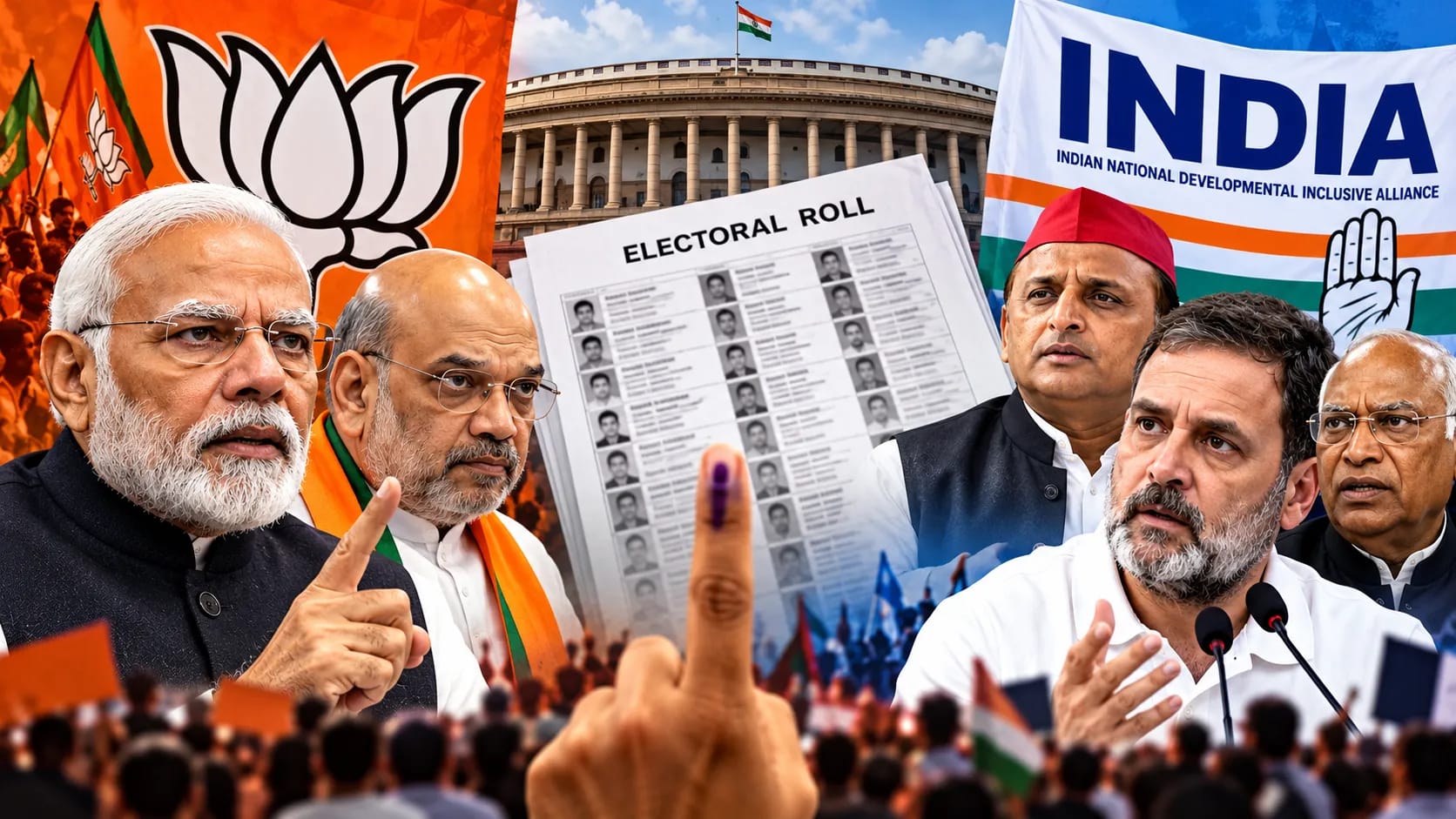
India’s electoral-roll debate is moving beyond a technical discussion about voter registration and has become a wider political contest between the ruling BJP and opposition parties. With the INDIA bloc planning further mobilisation and the BJP preparing a campaign to counter its criticism, the coming weeks could test how effectively both sides explain their positions to voters.
The central issue is the Special Intensive Revision (SIR) of electoral rolls. The Election Commission’s stated responsibility is to maintain accurate voter lists, while opposition parties have raised concerns about possible exclusions and the transparency of the revision process. These are distinct positions, and assessing them requires examining official procedures, individual complaints and the available evidence rather than treating political claims as established conclusions.
Why the issue matters to political parties
For opposition parties, voter-list transparency offers a common issue around which parties with different regional interests can coordinate. Congress and its INDIA bloc partners have argued that electoral procedures require stronger scrutiny and accountability. The issue also gives the opposition an opportunity to connect national-level concerns with voter experiences in individual constituencies.
For the BJP, the challenge is to explain why the revision is necessary, defend the stated objectives of electoral-roll correction and respond to concerns about eligible voters being left out. Its reported nationwide campaign to counter opposition criticism indicates that the party sees public communication as an important part of the contest.
Neither campaign, by itself, establishes whether a particular voter was wrongly removed or whether a wider allegation is justified. Those questions require verifiable records and a fair process for resolving complaints.
The unity challenge for the opposition
A shared protest issue can bring parties together, but coordination on the street does not automatically guarantee agreement on electoral strategy. Regional parties have different political priorities, voter bases and relationships with Congress. Sustaining a common campaign will require agreement on demands, messaging and the next steps beyond public demonstrations.
The November 1 rally planned at Delhi’s Ramlila Maidan is one important test of this coordination. Its political impact will depend not simply on crowd size, but on whether participating parties communicate a clear, evidence-based set of demands and follow it with practical action.
Conclusion
The BJP–INDIA bloc contest over electoral rolls is now also a test of political credibility. The opposition must demonstrate that its campaign leads to clear answers and remedies, while the BJP must address concerns rather than relying solely on counter-messaging. Ultimately, confidence in elections depends on transparent procedures, accountable institutions and voters being able to verify their own registration status.
Join the discussion
Comments (0)