Tripura Civic Polls 2026: Congress–Left Alliance Challenges BJP as Opposition Unity Takes Shape
Introduction: A New Political Equation in Tripura
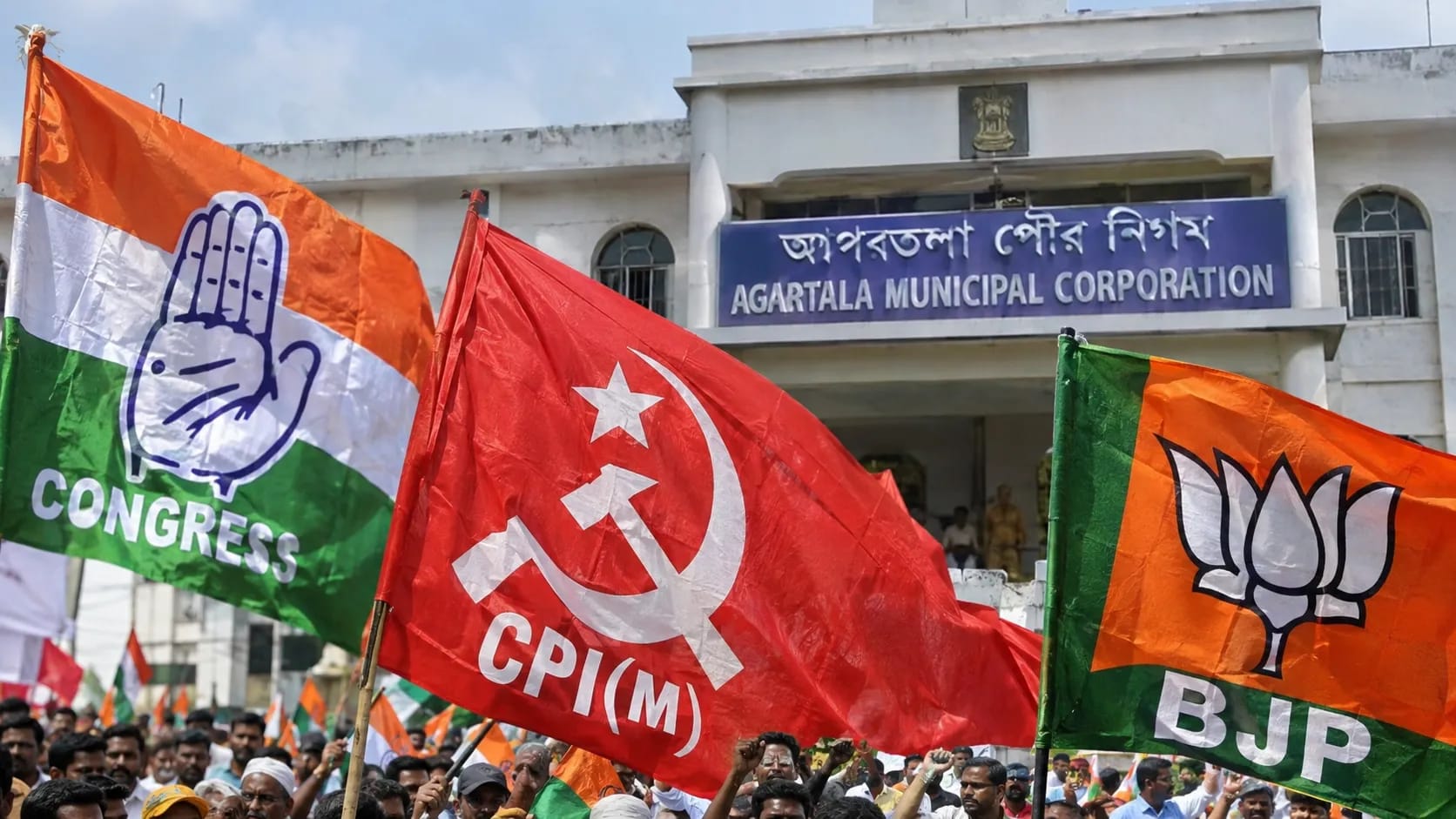
Tripura's political atmosphere is heating up ahead of the November 27, 2026, civic elections. A possible electoral understanding between the Congress and the CPI(M)-led Left Front has introduced a new dimension to the state's political battle.
The proposed cooperation is aimed at preventing the division of anti-BJP votes. For the opposition, this election is an opportunity to demonstrate that political differences can be put aside when electoral interests and democratic competition are at stake.
The BJP, which has governed Tripura since 2018, faces an opposition that is attempting to coordinate its political strength at the local level.
Congress and Left Front Move Towards Cooperation
The Congress and CPI(M) have been discussing a joint electoral strategy for the upcoming civic elections.
Left Front leader Jitendra Chaudhury has indicated that the two parties intend to contest together to prevent opposition votes from being divided.
The proposed arrangement involves the Agartala Municipal Corporation, which has 51 wards. The CPI(M) has already submitted nominations for 26 wards, while the remaining 25 have been left for Congress under the proposed understanding.
This arrangement could become an important political experiment in Tripura.
BJP and Tipra Motha Prepare Their Counterstrategy
The BJP and its ally, the Tipra Motha Party, are also preparing to contest the civic elections together.
The BJP will attempt to highlight its governance record, infrastructure development and administrative performance.
Tipra Motha's participation adds another political dimension, particularly because regional identity, tribal interests and local development remain important issues in Tripura.
21 Civic Bodies Become the Centre of the Battle
The November 27 elections will cover 21 urban local bodies, including the Agartala Municipal Corporation.
The contest involves 345 seats across these bodies.
The electoral schedule includes:
November 6: Last date for nominations.
November 7: Scrutiny of nomination papers.
November 10: Last date for withdrawal.
November 27: Polling.
December 2: Counting of votes.
The election involves 6,29,903 eligible voters, including 3,21,743 women, 3,08,115 men and 45 third-gender voters.
What Is at Stake for the Major Parties?
For the BJP, the election is an opportunity to demonstrate that its political influence remains strong at the municipal level.
For Congress and the Left, the contest offers a chance to rebuild their organisational presence through cooperation.
For Tipra Motha, the election provides another opportunity to strengthen its regional political position.
Conclusion
The Congress–Left understanding has created a new challenge for the BJP, but electoral cooperation alone cannot determine the outcome.
Ultimately, voters will decide which political formation can best address urban development, public services and local governance.

Join the discussion
Comments (0)