TMC SYMBOL WAR ERUPTS! Election Commission Freezes Party Name as Rival Factions Face a New Political Battle
Introduction
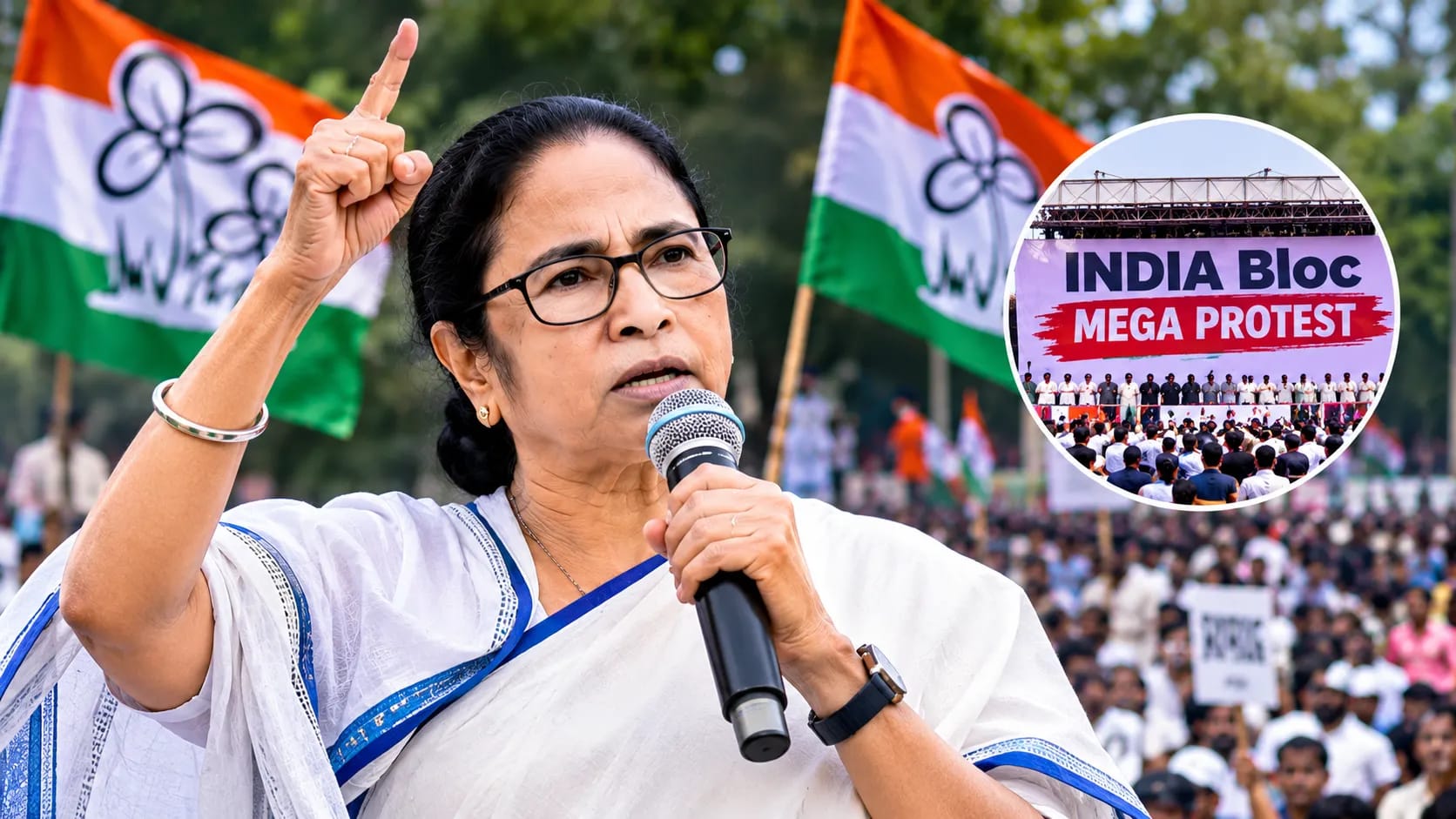
A major political dispute involving rival factions of the Trinamool Congress reached the Election Commission of India in September 2026. The Commission issued an interim order preventing both groups from using the party’s existing name and reserved election symbol for the upcoming Assembly by-elections.
The development followed competing claims by two groups, each seeking recognition as the legitimate Trinamool Congress.
The decision placed the party’s organizational identity, leadership and election symbol at the center of a significant political controversy in West Bengal.
What did the Election Commission decide?
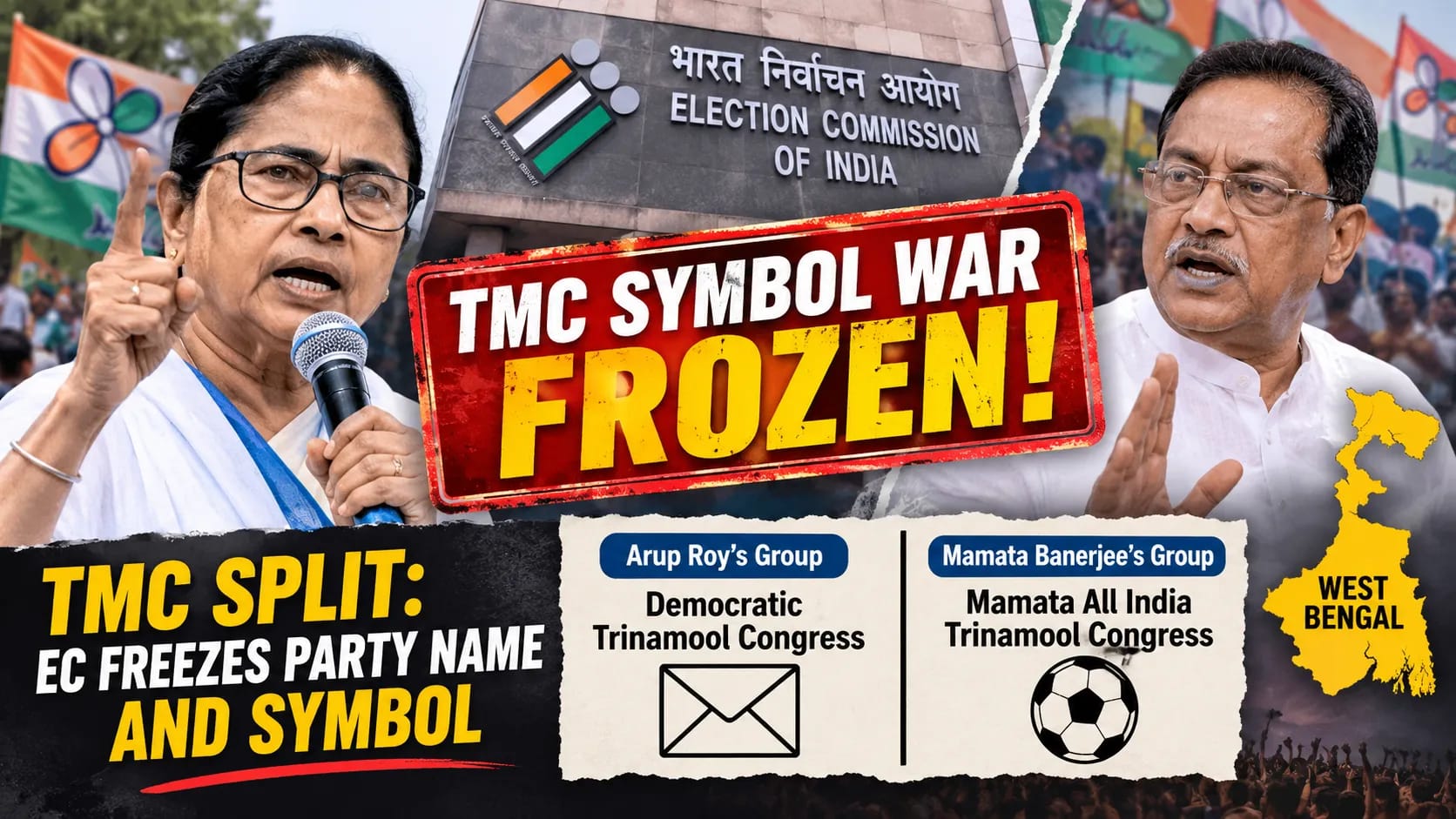
According to the Election Commission’s interim order, reported by public broadcaster Akashvani on September 18, neither the Mamata Banerjee-led group nor the Arup Roy-led group could use the name All India Trinamool Congress or its reserved Flowers and Grass symbol for the specified by-elections.
The Commission said that two rival groups were claiming to represent the party and that a substantive determination under Paragraph 15 of the Election Symbols (Reservation and Allotment) Order, 1968, would be required.
Separate names and symbols
In a subsequent development, Akashvani reported that the Commission allotted separate names and symbols to the rival groups.
The group led by Arup Roy was allotted the name Democratic Trinamool Congress and the Envelope symbol.
The group led by Mamata Banerjee was allotted the name Mamata All India Trinamool Congress and the Football Player symbol.
The report stated that both groups would be treated as recognized political parties in West Bengal, Meghalaya and Tripura for the relevant electoral purposes.
Political implications
The Commission’s interim arrangement created a new electoral situation for both groups. Each faction would have to use its allotted identity and symbol in the specified by-elections.
The development also highlights the importance of party constitutions, organizational records and authorized leadership in disputes involving recognized political parties.
The rival groups’ claims should be reported as competing claims, not as proof that either side has established exclusive ownership of the party.
What happens next?
The substantive question of which group is entitled to the original party identity and reserved symbol remains distinct from the temporary electoral arrangement.
Further official decisions by the Election Commission will determine the longer-term position.
Conclusion
The Election Commission’s intervention transformed the TMC organizational dispute into a major electoral controversy. The interim freezing of the party’s name and symbol, followed by the allotment of separate identities, created a significant political development in West Bengal.
The final outcome will depend on the Commission’s formal determination of the competing claims.
Join the discussion
Comments (0)