
PM Narendra Modi Pays Tribute to Loknayak Jayaprakash Narayan on His Birth Anniversary
PM Narendra Modi Pays Tribute to Loknayak Jayaprakash Narayan on His Birth Anniversary
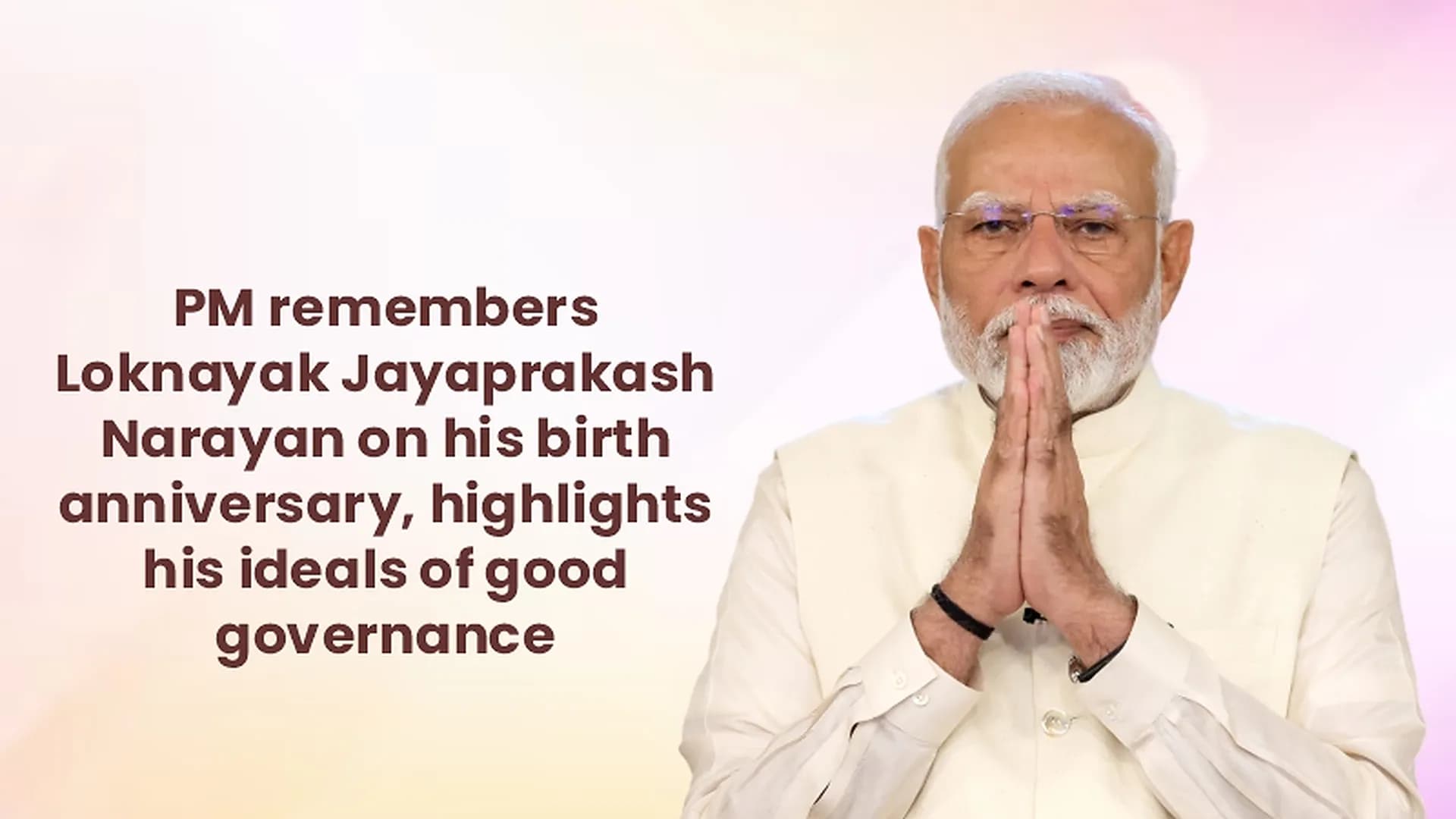
Prime Minister Narendra Modi remembered Loknayak Jayaprakash Narayan on his birth anniversary on October 11, 2026, highlighting the enduring relevance of Narayan’s ideals of good governance and public service. The tribute was published through the Prime Minister’s official communication platform, PM India.
Jayaprakash Narayan, widely known as Loknayak, occupies a significant place in India’s modern political history. He is remembered for his participation in the freedom movement and his later role in political mobilisation around questions of governance, accountability and democratic values.
The Prime Minister’s message described Narayan as a leader whose appeal extended across generations. It also recalled his belief that public life could serve as an instrument of national renewal.
PM Modi Highlights Narayan’s Ideals of Public Service
The official tribute focused on the continuing significance of Narayan’s ideas. By remembering the veteran political leader on his birth anniversary, the Prime Minister drew attention to a legacy associated with public participation, political responsibility and the relationship between citizens and institutions.
Narayan’s political journey is often discussed in connection with the broader development of democratic movements in India. His contribution went beyond electoral politics and included efforts to mobilise citizens around issues that he considered important for the country’s political and social direction.
The official message did not announce a new government policy or programme. Instead, it was a commemorative statement recognising Narayan’s place in India’s public life and the continuing relevance of his ideals.
Who Was Loknayak Jayaprakash Narayan?
Jayaprakash Narayan was an Indian freedom fighter and political leader whose public career spanned major changes in the country’s political landscape. His life is associated with the independence movement, political activism and efforts to encourage changes in governance.
Narayan was born on October 11, 1902. He later became widely known by the title Loknayak, meaning a people’s leader. His political thinking evolved over time, and he became an influential voice in discussions about political power, public accountability and the role of ordinary citizens in a democracy.
He is particularly remembered for his role in the movement that challenged the government of Prime Minister Indira Gandhi during the 1970s. That period became a major chapter in India’s post-independence political history, especially in debates about civil liberties, the limits of executive authority and democratic institutions.
His legacy continues to be discussed by political parties and commentators with different perspectives. For some, Narayan represents resistance to concentrated political power; for others, his life offers a broader example of political engagement beyond formal positions in government.
Jayaprakash Narayan and India’s Democratic History
Narayan’s importance in Indian politics is closely connected with the question of how citizens can participate in public life. Political movements, public demonstrations and debates over government accountability have all played a role in the country’s democratic development.
His political activities during the 1970s attracted support from different groups, including students and opposition leaders. The movement associated with him became an important point of reference in later discussions about the relationship between governments, political opposition and citizens.
The period also remains a subject of historical analysis because it involved competing interpretations of political authority and democratic rights. Understanding Narayan’s role requires attention to the wider circumstances of the time, including the positions taken by the government, opposition parties and participants in public movements.
For a political news website, his legacy is relevant not only as a historical subject but also as an opportunity to explain how earlier political movements continue to shape public discussion.
Why His Legacy Continues to Matter
Commemorations of historical political figures can provide an opportunity to revisit their ideas and assess their relevance to contemporary public life. In Narayan’s case, themes such as good governance, political accountability and citizen participation remain important subjects in democratic debate.
These themes are not limited to one political party. They concern how public institutions operate, how leaders respond to citizens and how democratic processes allow different viewpoints to be represented.
Narayan’s life also illustrates that political influence does not depend exclusively on holding a formal government position. Public movements, political ideas and citizen mobilisation can shape national debate and influence the direction of political developments.
Join the discussion
Comments (0)