West Bengal Bypolls 2026: Why Nandigram and Rejinagar Are an Early Test for BJP’s New Government
Nandigram and Rejinagar Become First Test of Bengal’s New Political Order
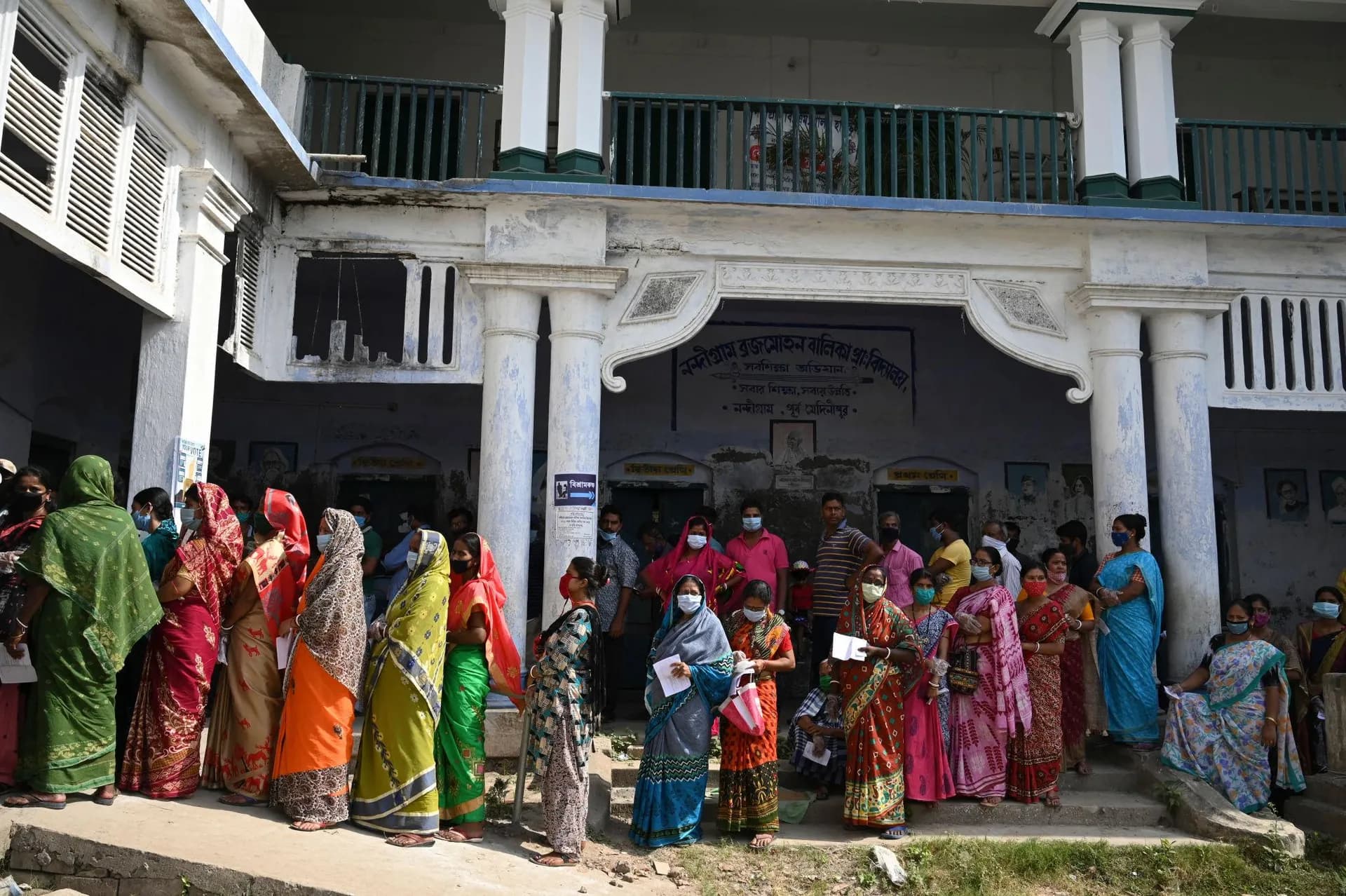
West Bengal is heading towards an important electoral moment as voters in Nandigram and Rejinagar prepare to cast their ballots in bypolls on October 6, 2026. The results will be declared on October 9.
The two constituencies are being closely watched because they represent the first electoral test for the BJP after the party ended the Trinamool Congress’ 15-year rule and formed the government in West Bengal. The bypolls are unlikely to be treated as a direct verdict on a government that is only around four months old, but the results could provide an early indication of the BJP’s electoral position after moving from Opposition to power.
The contests are also taking place at a time when Bengal’s opposition space is undergoing major changes. The Trinamool Congress has split into rival factions, while the Congress and Left parties are attempting to recover political ground lost during the TMC’s long period of dominance.
For the BJP, therefore, the bypolls are about more than retaining or winning two Assembly seats. They could indicate whether the political momentum that brought the party to government can continue after the change in regime.
Why These Bypolls Matter
Bypoll results often have a more limited political meaning than a full Assembly election. However, these two contests carry unusual importance because of the political transition that has taken place in Bengal.
Political analyst Biswanath Chakraborty said the significance of the bypolls lies in the new political vacuum created by the BJP’s rise.
One of the central questions is which party will emerge as the principal challenger to the BJP.
The results could therefore provide an early indication of how the opposition space is being reorganised and whether the Congress, Left or one of the rival TMC factions can establish itself as the main force challenging the ruling party.
The outcome will also offer clues about whether the BJP has been able to convert its Assembly-election victory into sustained support at the constituency level.
Nandigram: A Seat Loaded With Political History
Among the two constituencies, Nandigram carries far greater political symbolism.
The constituency became central to the anti-land acquisition movement that helped the TMC rise to power in 2011. Nandigram later became the setting for one of the most closely followed contests of the 2021 Assembly election, when Chief Minister Suvendu Adhikari defeated Mamata Banerjee.
Adhikari went on to win Nandigram again in the 2026 Assembly election, but he retained Bhabanipur, leaving Nandigram vacant and resulting in the current bypoll.
That history makes the constituency especially important for the BJP.
A victory would allow the party to demonstrate that its political hold over a constituency that once played a defining role in the TMC’s rise remains intact even after the change in government.
For the opposition, meanwhile, Nandigram represents an opportunity to challenge the BJP in one of Bengal’s most politically symbolic constituencies.
BJP Fields Hasirani Rath
The BJP has nominated Hasirani Rath, the mother of Chandranath Rath, a former aide of Suvendu Adhikari who was shot dead on May 6, two days after the Assembly election results were announced.
Her candidature has introduced an emotional dimension to the Nandigram contest.
Senior BJP leaders, including Adhikari, have campaigned for her during the final stages of the election campaign.
The BJP is therefore seeking to combine the constituency’s political symbolism with its existing organisational and electoral advantage.
Mamata Banerjee’s Faction Changes Its Nandigram Strategy
The Nandigram contest has also witnessed an unusual opposition arrangement.
The Mamata Banerjee-led TMC faction withdrew its candidate, Sanchita Pradhan Dey, after she met with Suvendu Adhikari.
Banerjee subsequently extended support to Congress candidate Milan Pradhan, presenting the move as an attempt to strengthen the INDIA bloc.
The decision has added another layer to the contest because it raises the question of whether tactical cooperation between the Mamata-led faction and Congress can translate into actual votes on the ground.
The Congress candidate also carries his own political history.
Milan Pradhan, who had been arrested in connection with cases dating back to the 2007 Nandigram land agitation, secured interim bail from the Calcutta High Court and returned to campaign before the election.
The BJP, Congress, Left, Indian Secular Front and the rival TMC faction led by Ritabrata Banerjee are all contesting the seat.
This makes Nandigram a contest not simply between two major parties but among multiple political forces trying to shape the post-TMC political landscape.
Rejinagar Presents a Completely Different Challenge
While Nandigram is dominated by political symbolism and the legacy of the land movement, Rejinagar presents a very different electoral equation.
The constituency has a fragmented multi-cornered contest, with several political parties and candidates competing for the seat.
Rejinagar became vacant after Aam Janata Unnayan Party (AJUP) chief Humayun Kabir, who had won both Rejinagar and Nowda in the Assembly election, retained Nowda.
His party has now fielded his son Golam Nabi Azad.
The BJP has nominated former Murshidabad district president Sakharav Sarkar, while the Mamata-led TMC faction has fielded Rabiul Alam Chowdhury.
The rival TMC faction has nominated Safiuzzaman Sheikh.
The Congress candidate is Mohammad Abdullahil Kafi, while the CPI(M) has fielded Syed Asad Ali.
The wide field makes the result harder to predict and increases the possibility of votes being divided among several parties.
Election Symbols Add Another Twist
The Rejinagar contest has also seen last-minute complications involving election symbols.
The RSP withdrew its candidate after objecting to the allocation of the bucket symbol instead of its traditional spade-and-shovel symbol.
The AJUP also raised an objection after its whistle symbol was replaced with the table.
Such developments may appear administrative, but election symbols can have practical importance, particularly in contests where voters are familiar with party identities and symbols.
The changes have added another unusual element to an already fragmented electoral contest.
Why Rejinagar Is Important for the BJP
Rejinagar represents a different test for the BJP from Nandigram.
The constituency has a substantial minority electorate, making it an important indicator of whether the BJP can extend its appeal beyond its traditional support base.
Suvendu Adhikari has framed the election as a test of whether minority voters will support the government's development agenda.
The BJP, however, has maintained that it does not view the election through a religious lens.
For the ruling party, a strong performance in Rejinagar would therefore carry significance beyond the individual constituency.
It could strengthen the argument that the BJP's political appeal has expanded following its rise to government.
Not a Referendum on the BJP Government
Political analysts have cautioned against interpreting the bypolls as a direct referendum on the new government.
Analyst Subhomoy Moitra told PTI that it would be too early to describe the elections as a referendum on the BJP administration.
At the same time, he noted that these are the first elections after the change of regime, meaning they can provide an early electoral reading of the government's political appeal and performance.
That distinction is important.
The BJP government is still relatively new, and the two constituencies have their own local political dynamics. Candidate selection, local alliances, factional competition and constituency-specific issues can all influence the result.
However, the results can still provide valuable clues about the direction in which Bengal politics is moving.
Congress Faces Two Different Electoral Tests
The bypolls also present contrasting challenges for the Congress.
In Nandigram, the party is contesting with the backing of the Mamata Banerjee-led TMC faction.
In Rejinagar, however, the Congress is contesting independently.
The contrasting strategies could influence the debate within the Congress over its future political approach in Bengal.
One question is whether the party should attempt to rebuild its organisation independently or continue pursuing tactical understandings with other parties opposed to the BJP.
The results from the two constituencies could provide ammunition to both sides of that debate.
Left Parties Attempt to Reclaim Political Space
The Left faces a similar challenge.
Once a dominant political force in West Bengal, the Left has seen its electoral influence decline significantly over the years.
The current bypolls offer another opportunity for the Left to attempt to regain some political space.
However, the multi-cornered contests mean that the party must compete not only against the BJP but also against the Congress, TMC factions and other regional political forces.
A stronger-than-expected performance could provide the Left with renewed organisational momentum, while a weak result could reinforce questions about its long-term electoral relevance in the state.
TMC Factions Fight Over the Party’s Political Legacy
Perhaps one of the most unusual aspects of the current Bengal political landscape is the division within the Trinamool Congress.
The rival factions are effectively competing for the political inheritance of a party that once dominated the state.
Nandigram demonstrates how this fragmentation can affect electoral strategy, with the Mamata-led faction choosing to support a Congress candidate rather than contesting the seat directly.
Rejinagar presents another test because the rival factions are competing separately.
The results could therefore indicate which faction has greater organisational strength and voter recognition following the split.
The BJP’s Bigger Question: Can It Sustain Its Momentum?
For the BJP, the central issue is whether its electoral success has translated into sustained support after entering government.
Winning an Assembly election and governing the state are two different political challenges.
The party now has to maintain its support base while also expanding its reach into constituencies where its traditional support may be weaker.
Nandigram provides a test of its ability to retain a politically symbolic seat.
Rejinagar offers a different test — whether the party can make inroads into a constituency with a substantial minority electorate and a fragmented opposition.
The combined results will therefore provide a more useful picture than either seat considered individually.
October 9 Results Could Offer an Early Snapshot
The results will be announced on October 9, three days after polling.
The outcome is unlikely to determine the future of the West Bengal government on its own.
However, it could offer an early snapshot of the state's new political landscape.
A BJP victory in both seats would strengthen the perception that the party has successfully carried its Assembly-election momentum into the post-election period.
A strong opposition performance, meanwhile, could indicate that the BJP's transition from Opposition to government has not completely consolidated its electoral dominance.
The performance of Congress, the Left and the rival TMC factions will also matter because the central question in Bengal is increasingly about who can occupy the opposition space against the BJP.
What the Nandigram and Rejinagar Results Could Tell Bengal
The two bypolls are therefore testing different aspects of West Bengal politics.
Nandigram is primarily a test of political symbolism, BJP consolidation and opposition coordination.
Rejinagar, by contrast, is a test of the BJP's reach into a different electorate, the strength of local political networks and the impact of a fragmented opposition.
Together, the seats provide a useful early indicator of how Bengal's political competition may develop after the change of government.
The results could also influence future alliance calculations among the Congress, Left and different TMC factions.
For the BJP, the immediate question is whether its move into government has strengthened its electoral position or whether opposition forces can quickly begin rebuilding.
For the opposition, the challenge is even more fundamental: who will emerge as the principal challenger to the BJP in Bengal?
The answer may not come from a single bypoll, but the results from Nandigram and Rejinagar on October 9 could provide the first meaningful clues.
Join the discussion
Comments (0)