Omar Abdullah Government: Statehood, Manifesto Promises and the Jammu and Kashmir Governance Debate
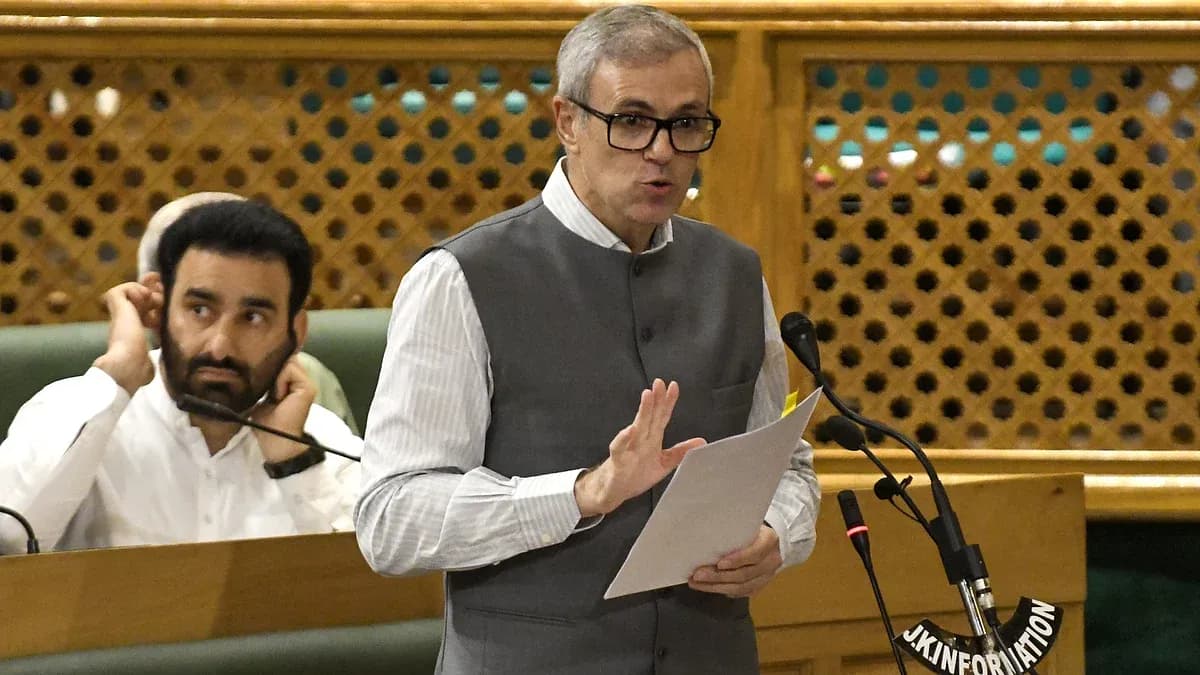
The government led by Jammu and Kashmir Chief Minister Omar Abdullah is facing renewed political scrutiny over its performance, manifesto commitments and continuing limitations under the Union Territory's existing constitutional and administrative framework.
Omar Abdullah took office in October 2024 after the Jammu and Kashmir Assembly election. Nearly two years into the government's tenure, questions over the restoration of statehood and the implementation of the National Conference's electoral promises have become central to the political debate.
The issue has gained additional attention following disagreements surrounding the Assembly's resolution seeking restoration of Jammu and Kashmir's statehood.
Statehood Remains Central to Omar Abdullah’s Politics
Restoration of statehood has been one of the most important political issues for the Omar Abdullah government.
The National Conference entered government after campaigning on a range of political, economic and social commitments, including efforts towards restoring the political status that existed before the reorganisation of Jammu and Kashmir in 2019.
Omar Abdullah has repeatedly argued that the Lieutenant Governor's office retains significant powers under the current Union Territory structure.
This has produced tension between the elected government and the administration headed by the Lieutenant Governor.
Dispute Over the Assembly’s Statehood Resolution
The latest controversy involves the Jammu and Kashmir Assembly's statehood resolution.
The Assembly adopted a resolution seeking restoration of statehood, but the process surrounding the resolution later generated disagreement involving senior government officials.
Political parties in Jammu and Kashmir, excluding the BJP, have sought action against the Chief Secretary and Law Secretary after the officials questioned aspects of the resolution.
The controversy centres on whether the officials' intervention amounted to inappropriate interference in legislative proceedings. That is a political and constitutional dispute, and the competing positions should be distinguished from established legal findings.
Omar Abdullah’s Argument About Dual Governance
Omar Abdullah has described the current arrangement as one involving a form of dual governance, in which the elected government operates alongside an administration with substantial powers through the Lieutenant Governor.
The Chief Minister has argued that this arrangement can restrict the ability of the elected government to implement its political programme.
This issue is especially important because Jammu and Kashmir remains a Union Territory with a legislature, rather than a full-fledged State.
The division of administrative powers between the elected government and the Lieutenant Governor therefore remains a recurring issue in political debate.
Manifesto Promises Under Scrutiny
The National Conference's election manifesto included a broad range of commitments.
These included promises concerning:
Restoration of political and legal status
Statehood
Employment
Electricity and water relief
Social welfare
Healthcare
Protection of land and employment rights
Release of political prisoners and youth
Reduction of convoy-related inconvenience
Engagement on political issues
Repeal of the Public Safety Act
Employee job security
The breadth of these promises created high expectations among voters.
Opposition leaders have argued that several commitments remain unfulfilled, particularly those involving employment, political rights and economic relief.
Opposition Questions Government Performance
Opposition voices within Jammu and Kashmir have criticised the Omar Abdullah government for what they describe as limited progress on its major promises.
The criticism has focused particularly on unemployment, inflation and the political status of the Union Territory.
Some opposition leaders have argued that voters expected more visible changes after the National Conference returned to power.
At the same time, the government's supporters point to the constitutional limitations under which the administration is operating.
This creates an important distinction between political promises made by the elected government and powers actually available to it under the Union Territory framework.
National Conference Defends Its Record
The Jammu and Kashmir National Conference (JKNC) has defended the government's performance and argued that it still has time remaining in its five-year term.
The party has also pointed to welfare measures introduced since taking office.
Among the initiatives highlighted are support for economically vulnerable families, pension measures and free public transport for women.
The party has also pointed to Assembly resolutions dealing with important political questions.
However, even within the wider political discussion, there remains a gap between what voters expected from the manifesto and what the administration has been able to deliver.
Jobs Remain a Major Political Issue
Employment is one of the most important areas in the government's manifesto.
The National Conference had promised the creation of one lakh jobs for youth.
The employment issue remains politically significant because government jobs and economic opportunities have traditionally played an important role in Jammu and Kashmir's political discourse.
Opposition leaders have argued that unemployment remains a major concern.
For the government, the challenge is complicated by the broader economic and administrative structure of the Union Territory.
Welfare Promises and Delivery
The government has also focused on welfare-related commitments.
The National Conference has pointed to measures involving subsidised or free services for sections of the population.
The source notes the government's initiatives involving LPG support for Antyodaya Anna Yojana families, pension increases and free public transportation for women.
These measures form part of the government's effort to demonstrate progress on its social welfare agenda.
However, manifesto evaluation involves comparing both promises and actual implementation, including whether benefits reach the intended population and whether the scale of delivery matches the original commitment.
Political Rights Remain a Sensitive Issue
Political rights and Jammu and Kashmir's constitutional status remain more difficult areas for the elected government.
The National Conference's manifesto included commitments related to the restoration of the political and legal position that existed before the changes introduced in 2019.
These matters involve decisions beyond the sole authority of the Union Territory government.
This has created a recurring tension: the party campaigned on political promises that require action at the Union level, while its government operates within a constitutional framework in which several important powers remain outside its direct control.
Internal Debate Within the National Conference
The political debate has also involved criticism from within the broader National Conference camp.
Some party leaders and MPs have expressed frustration over the gap between expectations and the pace of political change.
This demonstrates that the issue is not simply a government-versus-opposition dispute.
There is also an internal discussion about how aggressively the elected government should pursue questions such as statehood and political autonomy while managing day-to-day governance.
The Lieutenant Governor Question
The role of the Lieutenant Governor remains central to the debate.
The Union Territory structure gives the LG's office an important administrative role, particularly in areas where the elected government's authority is limited.
Omar Abdullah has repeatedly raised concerns about this arrangement.
Supporters of the elected government argue that democratic accountability requires elected representatives to have sufficient authority to implement the programme on which they were elected.
The Union government and its supporters have a different constitutional interpretation of the administrative arrangement.
The disagreement is therefore both political and institutional.
A Government Caught Between Expectations and Constraints
The central challenge facing the Omar Abdullah government is the gap between electoral expectations and institutional limitations.
The National Conference won the Assembly election on promises involving political rights, development, employment and welfare.
However, the government does not operate with the full range of powers available to a conventional State government.
This has made performance assessment more complicated.
For supporters of the government, some delays can be attributed to the Union Territory structure.
For critics, voters elected a government to deliver results and should therefore be entitled to judge its performance.
Both arguments form part of the current political debate.
What Lies Ahead
The coming period will be important for the Omar Abdullah government.
Statehood will remain one of the central political demands of the National Conference and other regional parties.
At the same time, the government will face pressure to demonstrate progress on employment, welfare and development.
The relationship between the elected administration and the Lieutenant Governor's office will also remain an important factor in governance.
The recent controversy surrounding the Assembly's statehood resolution has once again highlighted the institutional tensions underlying Jammu and Kashmir's current political structure.
Omar Abdullah’s Political Challenge
Nearly two years after taking office, Omar Abdullah's government is being judged against both its electoral promises and the limitations of the Union Territory system.
The government can point to welfare measures and legislative initiatives, while critics continue to question progress on jobs, political rights and other major manifesto commitments.
The statehood question adds another layer to the debate because it involves a political demand that extends beyond the authority of the elected government alone.
The coming years will therefore be important in determining how the National Conference government balances governance, political expectations and its demand for greater constitutional and administrative authority.
For now, the debate over Omar Abdullah's record remains closely linked to one larger question: how much can an elected Jammu and Kashmir government deliver within the present Union Territory framework?
Join the discussion
Comments (0)