Maharashtra Moves to Revive Student Elections After 33 Years as Fadnavis Government Forms Expert Panel.
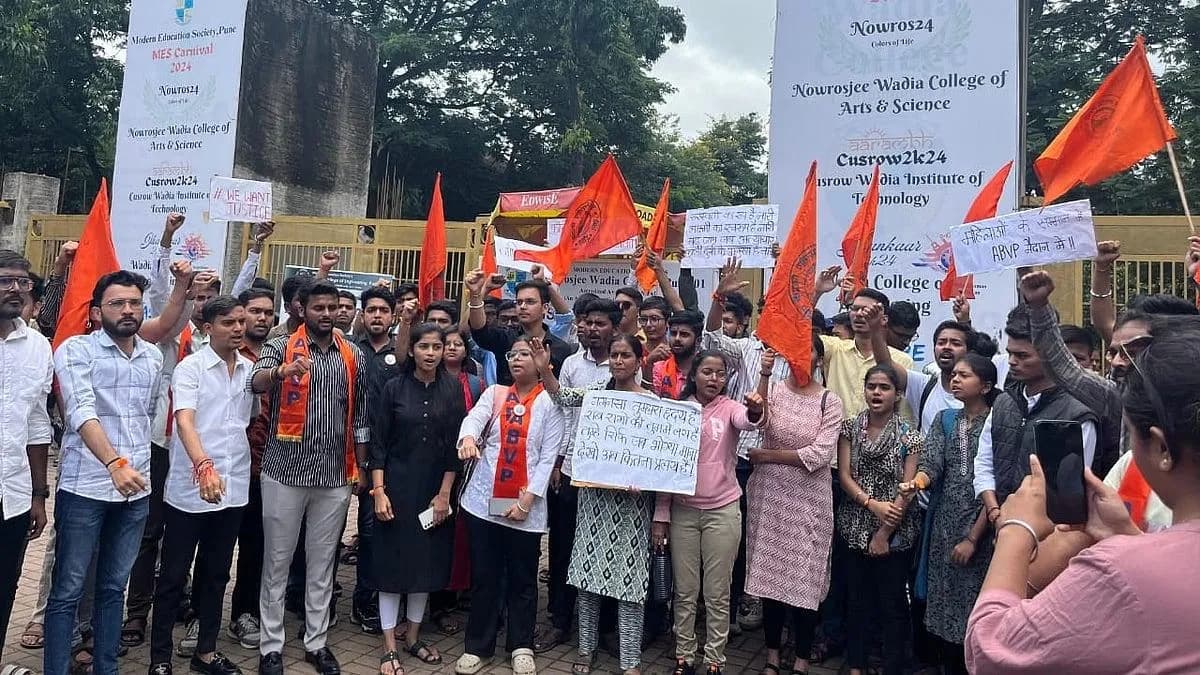
Maharashtra is taking a fresh step towards bringing back student union elections on college and university campuses after more than three decades. The Devendra Fadnavis-led Mahayuti government has constituted a 12-member committee headed by former Mumbai University Vice-Chancellor Professor Suhas Pednekar to work out a framework for conducting student elections.
The move comes at a time when student activism has once again become visible across the state, with young people taking part in protests over education and examination-related issues. The government is now examining whether student elections can be restored while addressing the concerns over political interference, money power, violence and law-and-order issues that led to their suspension in the first place.
The committee has been given one month to submit its report, making its recommendations an important next step in determining whether Maharashtra's campuses will once again see students voting for their representatives.
Maharashtra Has Gone More Than Three Decades Without Student Elections
The last time college and university students in Maharashtra voted for their representatives was in 1993.
A year later, the state moved to stop direct and competitive student elections following growing concerns over violence on campuses and the influence of money and political organisations.
The decision effectively meant that an entire generation of students grew up without experiencing the traditional campus election process.
Student Councils continued to exist in different forms, but students no longer had the opportunity to directly choose their representatives through competitive elections.
The absence of elections, however, did not mean that student politics disappeared.
Student organisations continued to function, raise educational issues and organise protests. Political parties also continued to maintain student and youth wings.
What disappeared was the formal electoral mechanism through which students could directly choose campus representatives.
That distinction has become important again as Maharashtra debates whether student representation should return through elections.
Why Student Elections Were Banned
The decision to stop student elections was closely linked to concerns over campus violence.
In October 1989, NSUI student leader Owen D’Souza was killed outside a Mumbai college during campaigning. The incident became part of a wider debate about violence and political activity on campuses.
The state subsequently passed the Maharashtra Universities Act, 1994, which banned direct and competitive student elections.
The government's reasoning was largely connected to law and order. There were concerns about money power, muscle power and the entry of external political organisations into educational institutions.
The ban was therefore introduced with the intention of preventing campus politics from becoming violent or excessively influenced by outside political forces.
But the decision also had a long-term consequence: students lost a direct democratic mechanism for selecting their representatives.
The 2016 Attempt to Bring Campus Elections Back
The first serious attempt to reverse the ban came decades later.
Discussions on reviving student elections were held during 2013-14, with the idea of introducing a system based on the recommendations of the Lyngdoh Committee.
The Lyngdoh framework was designed to make student elections more disciplined and reduce the influence of money and muscle power.
It included safeguards relating to candidate eligibility, attendance requirements, campaign expenditure, campaign rules and grievance redressal.
In 2016, the then BJP-Shiv Sena government led by Devendra Fadnavis passed the Maharashtra Public Universities Act to revoke the ban and provide for elected Student Councils in universities, colleges and departments.
The development created expectations that Maharashtra's campuses could once again return to competitive student elections.
The government framed detailed rules in 2018, after which universities began preparing election schedules for 2019.
For the first time in more than two decades, the state appeared ready to conduct student elections again.
But the revival did not last.
Why the 2019 Student Elections Were Put on Hold
Just weeks before the scheduled elections, the Fadnavis Cabinet decided in August 2019 to put the student union polls on hold.
The government cited law-and-order concerns and the proximity of the student elections to the October Assembly elections.
The state approved provisions that gave the government the power to defer the campus polls.
The elections were therefore stopped just as Maharashtra appeared ready to restore a system that had been absent for more than 20 years.
The COVID-19 pandemic followed soon afterwards, while political instability and changing government priorities pushed the issue further down the agenda.
The student elections were never rescheduled.
Universities continued with nominated Student Councils, leaving students without a regular electoral process for choosing their campus representatives.
Why Is Maharashtra Revisiting the Issue Now?
The latest move comes at a time when student and youth activism has again become visible in Maharashtra.
Over the past few months, students have taken part in protests over education and examination-related issues. The protests have demonstrated that young people remain willing to organise and demand accountability even without formal campus elections.
In July, thousands of students and young people participated in protests across Maharashtra over the NEET paper leak issue.
In September, the death by suicide of 20-year-old IIT Bombay student Sahil Wakode led to days of protests on the campus. Students demanded action and changes to the institute's grievance and disciplinary mechanisms.
The allegations raised by Wakode's family against faculty members have been under investigation.
Neither of these protests was directly about student elections.
However, they demonstrated something important: the absence of formal student elections has not eliminated student politics.
Students continue to organise when they believe their concerns are not being addressed.
That has added fresh relevance to the question of whether colleges and universities should have elected student representatives.
What the New 12-Member Committee Will Do
The Maharashtra government has now constituted a 12-member committee headed by former Mumbai University Vice-Chancellor Professor Suhas Pednekar.
The committee has been tasked with working out a framework for student union elections and examining the safeguards that would be necessary before the polls can return.
Its responsibilities include examining ways to prevent external political interference and commercialisation of student elections.
It will also look at the management and auditing of Student Council funds, the orientation and training of elected representatives, and the use of digital systems for nominations, scrutiny and grievance redressal.
The committee will also consider representation for women, students from reserved categories and students involved in NSS, NCC, sports and cultural activities.
This indicates that the government is not simply considering whether elections should return. It is also examining what the election system should look like if it is restored.
Political Interference Remains a Major Concern
One of the biggest challenges will be keeping campus elections independent from outside political influence.
Maharashtra has a long history of student organisations being connected with political parties.
Political participation can provide students with an opportunity to develop leadership skills and understand democratic processes. But critics have long argued that excessive involvement by political organisations can bring money, confrontation and party rivalry into educational institutions.
The new committee has therefore been asked to consider safeguards against external political interference.
The challenge will be finding a balance.
The government cannot realistically separate young people completely from politics, but it can create rules designed to prevent outside political organisations from controlling campus elections.
The Debate Over Digital Voting
Another issue before the committee is the possible use of digital systems during the election process.
Technology could potentially be used for nominations, scrutiny and grievance redressal, making the administrative process easier to manage.
However, student organisations have also raised concerns about transparency.
Some groups have argued that traditional ballot-based voting would provide greater confidence in the process.
This debate reflects a larger question about how Maharashtra wants to conduct student elections in the modern era.
The state is trying to revive a system that was stopped in the 1990s, but it now has access to technologies and administrative tools that were not available when student elections were last held regularly.
Money, Campaigning and Student Council Funds
Money power is another issue that the new framework will have to address.
Student elections can involve campaigning, posters, meetings and other activities that require resources.
Without spending limits and transparent accounting, candidates with access to greater financial resources could gain an unfair advantage.
The committee is therefore expected to examine Student Council funds, their management and auditing.
Campaign expenditure limits and financial transparency could become important safeguards if elections are eventually held.
The objective would be to ensure that campus elections remain focused on student issues rather than becoming contests driven by money.
Representation of Women and Reserved Categories
The committee is also expected to examine representation for different sections of the student community.
This includes women and students from reserved categories, along with students involved in NSS, NCC, sports and cultural activities.
The issue is significant because student councils are expected to represent the wider campus community.
A system in which only a small group of politically active students participates could fail to capture the concerns of the larger student population.
The eventual rules will therefore need to balance competitive elections with inclusive representation.
Supporters See Student Elections as a Training Ground
Supporters of student elections argue that campuses can serve as an important training ground for democracy.
Student elections give young people practical experience in campaigning, public speaking, leadership, organisation and electoral competition.
An elected student representative also has to communicate with college authorities and raise issues affecting students.
For many young people, campus politics can therefore become an early experience of democratic participation.
Maharashtra's political history also includes several senior politicians who were active in student politics before entering mainstream public life.
The return of student elections could consequently create a new generation of student leaders.
Critics Fear a Return of Campus Conflict
The opposing argument is based on the problems that led to the original ban.
Critics fear that competitive elections could bring political rivalry, money power, outside influence and confrontation back into campuses.
There is also concern that state-level political conflicts could be reproduced inside colleges and universities.
These concerns cannot simply be ignored.
The history of Maharashtra's student politics shows why the state originally decided to restrict direct elections.
That is why the safeguards proposed by the government will be just as important as the decision to hold elections itself.
A Political Question as Well as an Educational One
The revival of student elections is not merely an education policy issue.
It also has a wider political dimension.
Student organisations have historically played an important role in political mobilisation. Young leaders often begin their political careers through campus organisations before moving into mainstream politics.
The government therefore has to manage a difficult balance.
Students should have the freedom to participate in democratic activities and raise issues affecting them. At the same time, educational institutions need to remain safe environments where academic activities are not disrupted by political confrontation.
The success of the proposed system will depend largely on how that balance is achieved.
Could Elections Return in 2027?
The immediate next step is the report of the Suhas Pednekar-led committee.
The committee has been given one month to submit its recommendations.
Only after those recommendations are considered by the government will the exact implementation process become clearer.
Some student representatives have suggested that the system could be prepared before the next academic year, potentially allowing elections to be held in July 2027.
However, the final timeline will depend on the committee's recommendations, the government's decisions and the implementation of the necessary rules across universities and colleges.
Therefore, the current development should be seen as a formal step towards revival, rather than confirmation that polling dates have already been announced.
What Happens Next?
The coming weeks will be important for Maharashtra's student politics.
The Suhas Pednekar committee will examine the existing framework and the safeguards needed to conduct student elections.
The government will then have to decide whether and how to implement the recommendations.
Several practical questions will need answers before elections can actually take place.
Who will be eligible to contest?
How much can candidates spend?
How will political interference be restricted?
How will Student Council funds be audited?
How will women and reserved-category students receive representation?
Will voting be conducted through traditional ballots or digital systems?
How will complaints and election disputes be handled?
Most importantly, students will want to know when they will actually get the opportunity to vote.
Conclusion
Maharashtra's latest move to examine the revival of student elections marks a significant development after more than three decades without regular campus polls.
The last elections were held in 1993, after which the state introduced restrictions because of concerns over violence, money power, muscle power and external political influence.
A major attempt to reverse the ban came in 2016, when the Maharashtra Public Universities Act provided for elected Student Councils. Rules were subsequently framed, and universities prepared for elections in 2019. But the process was eventually put on hold.
Now, the Devendra Fadnavis-led government has once again opened the door to a possible revival by creating a 12-member committee headed by Professor Suhas Pednekar.
The committee's recommendations will determine how the government moves forward.
The timing is significant because student protests over education and campus issues have once again demonstrated that young people remain willing to organise and demand accountability.
The challenge for Maharashtra will be to create a system that gives students a genuine democratic voice without allowing violence, money power or excessive political interference to take over campuses.
For now, the state has taken the first formal step towards reopening a chapter of student politics that has remained largely closed since 1993.
The question that remains is simple: will Maharashtra's students finally get to vote again?
Join the discussion
Comments (0)