AAP vs Centre Row Escalates After ED’s 50-Hour GMADA Raid in Mohali Over Alleged ₹10,000 Crore Land Scam
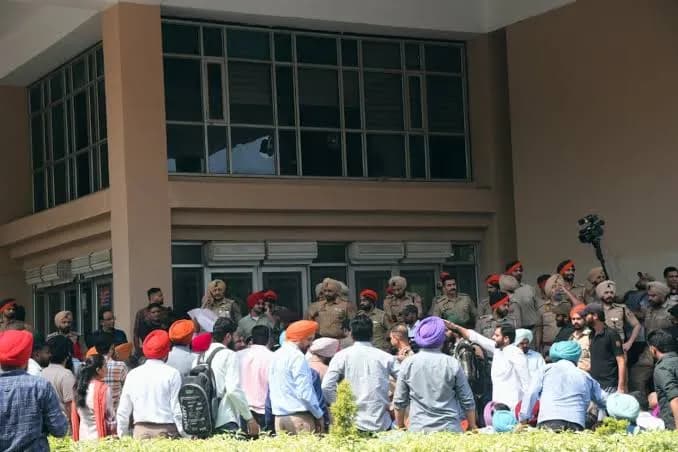
ED’s Long Raid at GMADA Triggers Political Storm in Punjab
The political confrontation between the Aam Aadmi Party (AAP)-led Punjab government and the BJP-led Centre has intensified following the Enforcement Directorate’s prolonged search operation at the offices of the Greater Mohali Area Development Authority (GMADA).
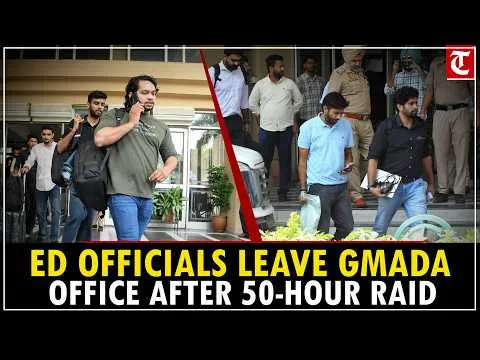
The ED conducted searches and surveys at GMADA’s headquarters in Mohali that continued for more than 50 hours, questioning senior officials and examining government records, electronic devices, computers and official files.
What initially began as part of a money-laundering investigation linked to a private infrastructure company has now expanded into a much larger political controversy involving GMADA’s land transactions, alleged irregularities and a potential loss of nearly ₹10,000 crore claimed by the ED.
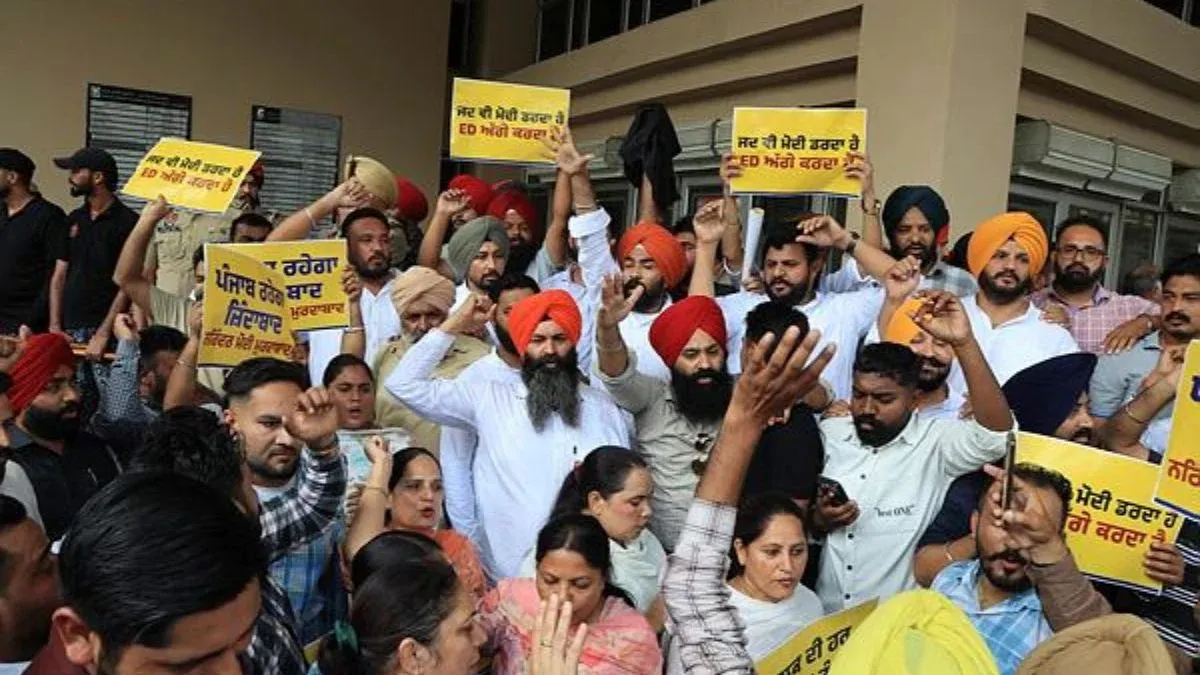
The AAP government has rejected the allegations, describing them as baseless and politically motivated, while accusing the BJP-led Centre of using central investigative agencies against political opponents ahead of the Punjab Assembly elections scheduled for February 2027.
What Happened During the ED Raid at GMADA?
The ED began its search and survey operation at the GMADA headquarters in Mohali on Tuesday, with the operation continuing through Wednesday night before concluding on Thursday.
During the searches, the agency questioned eight senior GMADA officials. Their mobile phones were cloned, while computers, servers and official records were examined.
The agency also seized electronic devices and documents as part of its investigation.
The searches were not limited to Mohali. The ED carried out related operations at multiple locations in Delhi, Mohali, Chandigarh, Panchkula and Ludhiana in connection with its money-laundering investigation linked to Tirupati Infra Projects.
The extended presence of the agency at the GMADA premises quickly turned the investigation into a political flashpoint between the Punjab government, AAP and the BJP.
Why Is GMADA Important?
The Greater Mohali Area Development Authority is one of Punjab’s important urban development bodies.
GMADA is responsible for several major aspects of urban development around Mohali and adjoining areas, including master planning, land acquisition, development, allotment and auction of residential and commercial properties.
The authority also controls a substantial land bank around Mohali. Decisions involving the acquisition, pricing and auction of this land can involve transactions worth hundreds of crores of rupees.
Because of the scale and value of the land under its control, allegations involving GMADA have significant financial and political implications.
The ED’s investigation, however, did not originally begin as a case against GMADA itself. According to the agency, the investigation emerged from a CBI case involving an alleged bank fraud connected to Tirupati Infra Projects.
During that investigation, the ED said it came across material relating to GMADA’s land transactions, leading the agency to examine the authority’s dealings.
What Is the Alleged ₹10,000 Crore Scam?
One of the most significant claims made by the ED relates to unsold GMADA land and the reserve prices fixed for auctions.
The agency has alleged that reserve prices for some unsold GMADA land were deliberately reduced before auctions.
According to the ED, such actions could potentially have caused a loss of nearly ₹10,000 crore to GMADA and the Punjab government.
Importantly, the ₹10,000 crore figure is an estimate of potential loss claimed by the ED, and does not mean that an actual loss of ₹10,000 crore has been established.
The investigation is examining whether decisions surrounding land pricing and auctions resulted in financial benefits to private parties or caused losses to the government.
The agency has also alleged irregularities involving land acquisition awards, compensation, reallotment of cancelled plots and concessions allegedly provided to private developers.
These allegations remain part of the investigation and have not been established as final findings by a court.
Remigate Infra Developers Transaction Under Scanner
One of the transactions being examined by the ED involves Remigate Infra Developers.
The agency has alleged that statutory dues and penal interest involving the company were waived, allegedly providing the company with a benefit estimated between ₹40 crore and ₹57 crore.
The transaction is among several matters that the agency is examining as it investigates GMADA’s land-related decisions.
During the searches, ED officials examined government files as well as electronic devices and computer systems.
The agency has also claimed that material recovered from seized mobile phones contained conversations relating to alleged hawala transactions involving relatives of some Punjab politicians.
These claims are part of the agency’s investigation and would need to be established through further investigation and legal proceedings.
Why Have Manish Sisodia and Satyendar Jain Been Dragged Into the Row?
The controversy has also expanded beyond Punjab government officials to involve senior AAP leaders associated with Delhi.
The ED has alleged that former Delhi ministers Manish Sisodia and Satyendar Jain held regular unofficial meetings with GMADA officials.
According to the agency, discussions during these alleged meetings involved issues such as GMADA master plans, land auctions, land acquisition and compensation.
The ED has further alleged that GMADA officials carried files from the authority’s office at PUDA Bhawan in Mohali to meetings involving Jain and his officer on special duty, Amarender Jha.
The agency said one such location was a government bungalow in Sector 39, Chandigarh, officially allotted to AAP leader Sunny Singh Ahluwalia, who was chairman of the Punjab Water Supply and Sewerage Board.
The ED has alleged that the premises were used for meetings involving Jain and GMADA officials.
The agency has further claimed that important decisions relating to fresh auctions, acquisitions and compensation were informally influenced through these meetings.
AAP Rejects ED’s Allegations
The AAP has strongly rejected the allegations against Satyendar Jain and Manish Sisodia.
The party described reports of meetings between the leaders and GMADA officials as “completely false, baseless and politically motivated.”
AAP has maintained that neither Jain nor Sisodia had any role in GMADA’s official functioning, projects or administrative decisions.
The party has also questioned the wider basis of the ED action, arguing that there was no FIR or predicate offence against GMADA itself.
The contrasting positions have turned the investigation into a wider political battle over the use of central investigative agencies.
Punjab Government Approaches High Court
The prolonged ED operation also triggered concerns within the Punjab government regarding the treatment of GMADA officials.
The AAP government approached the Punjab and Haryana High Court, alleging that officials were being detained during the ED operation.
The court subsequently appointed a warrant officer to examine the situation at the GMADA premises.
However, when the warrant officer checked the situation, the officials reportedly stated that they had not been illegally detained or pressured.
The episode added another layer to the political dispute, with the Punjab government questioning the manner in which the ED operation was being conducted while the agency continued its investigation.
AAP and BJP Escalate Political Attack
The ED action has provided fresh ammunition to the Opposition ahead of the 2027 Punjab Assembly elections.
BJP leader and former Union minister Ravneet Singh Bittu attacked the Bhagwant Mann government following the raids.
Bittu argued that the ED action demonstrated what he described as a gap between the Punjab government's claims and its actual record of governance. He also said those responsible for alleged wrongdoing involving Punjab's treasury and public interests should face legal action.
The BJP has used the ED investigation to intensify its criticism of the AAP government and its handling of Punjab's administration.
For AAP, however, the raids have become another example of what the party describes as the political use of central agencies against opposition governments.
Congress and SAD Demand Answers
The controversy has also given Punjab’s other Opposition parties an opportunity to target the Mann government.
Congress Leader of Opposition Partap Singh Bajwa demanded answers from Chief Minister Bhagwant Mann over the ED’s claim of a potential ₹10,000 crore loss.
Bajwa questioned who fixed the reserve prices, who made the decisions and who ultimately benefited from the alleged irregularities.
The Shiromani Akali Dal (SAD) also demanded a detailed investigation into the matter.
SAD chief Sukhbir Singh Badal called for every relevant file and link connected to the allegations to be examined.
The Opposition parties are likely to continue using the investigation as a political issue as Punjab moves closer to the 2027 Assembly election.
Malvinder Singh Kang Had Earlier Raised Questions Over GMADA
Interestingly, criticism of GMADA has not come only from the Opposition.
AAP’s Anandpur Sahib MP Malvinder Singh Kang had earlier described GMADA as a “den of corruption” and a “centre of loot.”
Kang had raised allegations regarding the authority’s functioning, including claims of selective demolition of illegal structures.
He also demanded action against officials who had remained posted within the authority for long periods.
His earlier criticism adds another dimension to the controversy because concerns about GMADA’s functioning have been raised even from within the broader AAP political ecosystem.
Political Battle Ahead of Punjab’s 2027 Elections
The timing of the ED investigation has made the controversy particularly significant.
Punjab is scheduled to hold its next Assembly elections in February 2027, giving both the ruling AAP and Opposition parties a strong political incentive to use major controversies during the campaign period.
For the BJP, allegations surrounding land deals and potential financial losses provide an opportunity to question the Mann government's record on corruption and governance.
For AAP, the investigation reinforces its long-standing allegation that central agencies are being used to target Opposition-ruled states and political rivals.
The issue could therefore develop beyond the immediate ED investigation and become part of the wider political narrative surrounding the next Punjab election.
What Happens Next in the GMADA Case?
The immediate focus will remain on the evidence collected during the ED searches, including government files, electronic devices, mobile-phone data and other records examined by the agency.
The agency will also have to establish whether the alleged irregularities resulted in actual financial loss, whether specific officials or private entities benefited and whether the alleged transactions meet the legal requirements for further action under money-laundering laws.
The ₹10,000 crore figure will remain particularly important politically, but it should not be treated as an established loss unless supported by the findings of the investigation and subsequent legal proceedings.
Similarly, allegations concerning Delhi AAP leaders will require further investigation and evidence before any responsibility can be legally established.
A Major Political and Administrative Test for Punjab
The GMADA controversy has brought together several politically sensitive issues: land management, government auctions, alleged financial irregularities, the role of investigative agencies and the Centre-state political confrontation.
The ED's extended search operation has placed GMADA under intense scrutiny while forcing the Bhagwant Mann government to respond to allegations concerning the functioning of one of Punjab's major urban development authorities.
At the same time, AAP's rejection of the allegations and its accusation of political motivation means the controversy is likely to remain a major point of confrontation between the ruling party and the BJP-led Centre.
With the 2027 Punjab Assembly elections approaching, the GMADA investigation could become more than an administrative or financial case. It has already emerged as a significant political issue, with the ED, AAP government and Opposition parties offering sharply different interpretations of what the investigation represents.
For now, the central questions remain how GMADA’s land decisions were taken, whether government revenue was actually compromised, who benefited from the alleged irregularities and whether the claims made during the investigation can ultimately be established through evidence and legal proceedings.

Join the discussion
Comments (0)