Why Samajwadi Party and Congress Are Playing Hardball Before UP Seat-Sharing Talks
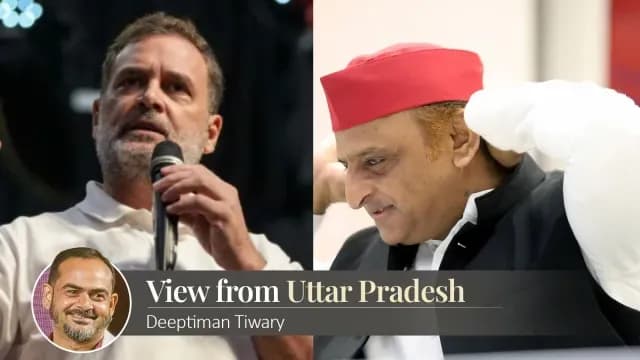
Why Samajwadi Party and Congress Are Playing Hardball Before UP Seat-Sharing Talks
As Uttar Pradesh prepares for its next Assembly election, the Samajwadi Party (SP) and Congress are facing an important test of their alliance ahead of seat-sharing negotiations. Both parties have indicated that they have options beyond the existing arrangement, even as their leaders maintain that the alliance remains firm.
The negotiations involve more than deciding how many constituencies each party will contest. They also concern political influence, organisational revival and the distribution of responsibilities within the Opposition alliance.
According to a report by The Indian Express published on October 9, 2026, both parties are using public statements and political signals to strengthen their positions before formal discussions conclude.
Why Seat Sharing Matters
Seat-sharing negotiations are a significant part of pre-election alliance building. Parties must balance their electoral ambitions with the need to coordinate candidates, campaign resources and local political networks.
For Congress, the discussions are an opportunity to secure a meaningful role in Uttar Pradesh politics and expand its organisational presence. For the Samajwadi Party, the central question is how much space to offer its alliance partner while maintaining its position as the larger Opposition party in the state.
Congress Seeks Space to Rebuild in Uttar Pradesh
Congress faces a long-term organisational challenge in Uttar Pradesh, a state where it once held a dominant position in national and state politics.
The party currently has only two MLAs in the state Assembly, according to the figures cited in the report. However, it won six Lok Sabha seats in Uttar Pradesh in the 2024 general election.
These contrasting results illustrate the difference between the party's parliamentary performance and its current representation in the state legislature.
Samajwadi Party's Position as the Larger Opposition Force
The Samajwadi Party emerged as the largest Opposition party in Uttar Pradesh in the 2024 Lok Sabha election, winning 37 seats in the state.
Its parliamentary performance gives it a substantial role in discussions over the Opposition's electoral strategy. The party must nevertheless balance its own constituency-level ambitions with the benefits of maintaining cooperation with Congress.
Public Signals and Political Pressure
Ahead of formal negotiations, both parties have sent signals that they retain alternatives if an agreement proves difficult. Such statements can serve as a way of communicating bargaining positions to alliance partners, party workers and supporters.
At the same time, public disagreements do not necessarily mean that an alliance has broken down. Political negotiations frequently involve differences over seat allocation, campaign strategy and the distribution of influence.
The Importance of the 2024 Lok Sabha Results
The 2024 general election provides an important backdrop to the negotiations.
Congress won six Lok Sabha seats in Uttar Pradesh, while the Samajwadi Party won 37. These results provide the parties with a recent electoral reference point, although parliamentary elections and Assembly elections involve different constituencies, campaign issues and voter calculations.
For Congress, the results provide a basis for arguing that it can contribute to an alliance beyond its limited representation in the state Assembly. For the SP, its larger parliamentary presence is relevant to discussions about leadership and constituency allocation.
What Could Shape the Final Agreement?
Several considerations are likely to be relevant as the parties work towards a seat-sharing arrangement.
Constituency-level strength: Both parties will need to assess where they have established organisations, credible candidates and local support.
Organisational revival: Congress will have to weigh its immediate electoral role against its longer-term objective of rebuilding its presence across Uttar Pradesh.
Alliance coordination: The SP and Congress will need to establish a workable division of constituencies and coordinate campaign messaging while retaining their individual party identities.
What Happens Next?
The next significant development will be the progress of formal seat-sharing discussions and any announcement by the parties' senior leadership.
Until an agreement is officially announced, statements about the number of seats each party should contest or the possibility of alternative arrangements should be treated as part of the political negotiations.
Conclusion
The seat-sharing discussions between the Samajwadi Party and Congress reflect the competing priorities within their alliance. Congress is seeking room to rebuild its political presence, while the SP must balance cooperation with its position as the larger Opposition force in Uttar Pradesh.
Source: Deeptiman Tiwary, The Indian Express, October 9, 2026.
Join the discussion
Comments (0)