BJP Accuses Rahul Gandhi of Politically Motivated Account of INDIA Bloc Meeting with President Murmu
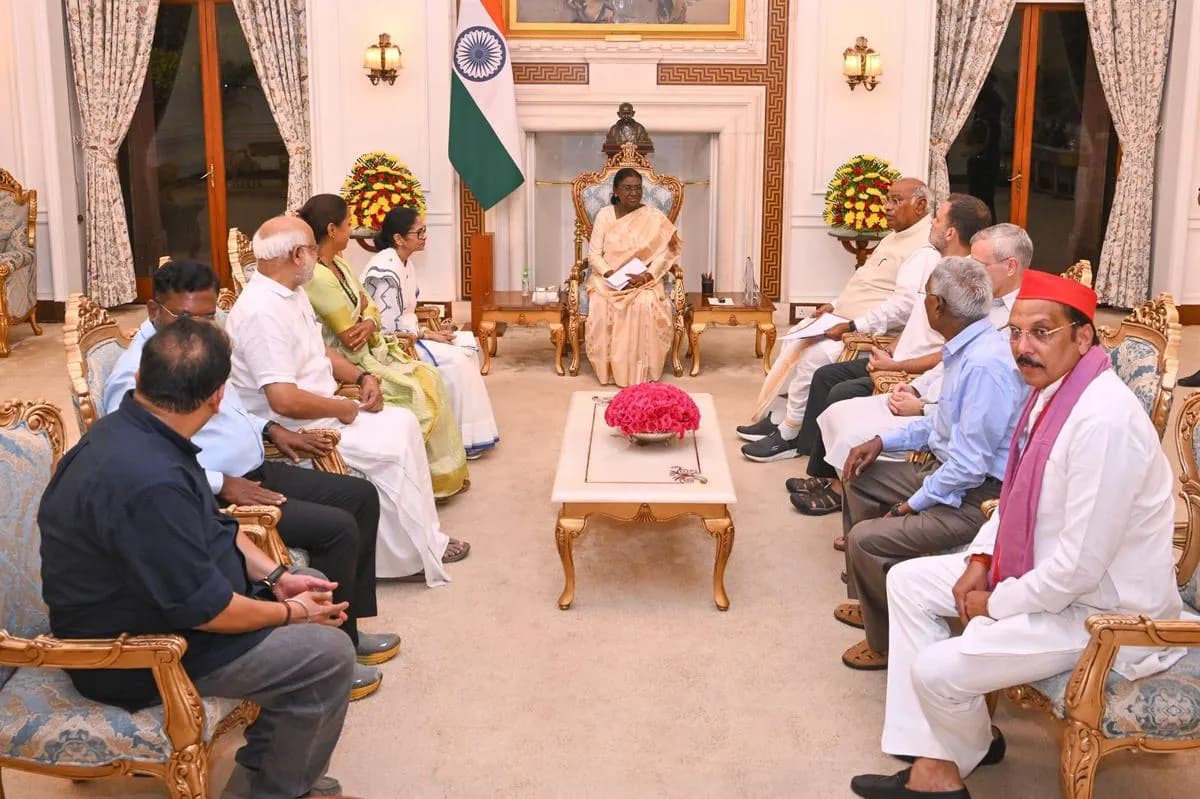
New Delhi, October 10, 2026: The Bharatiya Janata Party (BJP) has accused Congress leader Rahul Gandhi of misrepresenting the events of a meeting between INDIA bloc leaders and President Droupadi Murmu, adding another layer to the political confrontation over alleged irregularities in electoral rolls.
The controversy followed a meeting on Friday evening in which a delegation of Opposition leaders raised concerns about the Election Commission and allegations of “vote chori”, or electoral theft. The BJP rejected Gandhi’s account of the interaction, describing his remarks as politically motivated rather than factual.
BJP Questions Rahul Gandhi’s Account
BJP Rajya Sabha MP Sudhanshu Trivedi accused Rahul Gandhi of twisting what had transpired during the meeting with the President. Trivedi stressed that the President of India represents a constitutional institution and argued that statements about the meeting should reflect the facts.
The BJP’s response came after Gandhi expressed surprise that President Murmu had not, in his view, directly rejected the Opposition’s allegations concerning voter-list irregularities. The exchange has prompted competing political interpretations of the meeting and its significance.
The BJP’s criticism represents its position in the dispute. The competing accounts underline the need to distinguish statements made by political leaders from independently verified details of the meeting.
INDIA Bloc Raises Electoral Concerns
The INDIA bloc delegation met President Droupadi Murmu to bring the Opposition’s concerns about the electoral process to her attention. The delegation included Congress president Mallikarjun Kharge, Rahul Gandhi, Trinamool Congress chief Mamata Banerjee and Nationalist Congress Party (Sharadchandra Pawar) MP Supriya Sule, among other leaders.
The Opposition has raised questions about voter-list revisions and alleged irregularities, arguing that the process must be transparent and that eligible voters should not be wrongly excluded.
The controversy over electoral rolls has become a major point of political disagreement between the Opposition and the BJP. Opposition parties have called for accountability and safeguards, while the BJP has challenged their allegations.
President’s Role at the Centre of Political Debate
The meeting has also drawn attention to the constitutional role of the President. As head of state, the President occupies a position distinct from that of elected political parties and the government.
Trivedi’s remarks emphasised the importance of respecting the office and questioned the way Gandhi described the interaction. The Opposition, meanwhile, used the meeting to present its concerns about electoral integrity to the country’s highest constitutional office.
A meeting with the President does not, by itself, establish the truth or otherwise of the allegations raised by either side. The claims about voter-list irregularities require assessment through relevant records, official explanations and appropriate procedures.
Electoral Transparency Remains a Political Flashpoint
The latest exchange reflects the continuing political contest over the credibility of the electoral process. Voter-list revision, the responsibilities of the Election Commission and allegations of electoral manipulation have become recurring subjects in the debate between the ruling party and the Opposition.
For the INDIA bloc, raising the issue with the President provides another avenue to seek attention for its concerns. For the BJP, challenging Gandhi’s account is part of its broader rejection of the Opposition’s allegations.
The episode is likely to keep electoral transparency and institutional accountability in the political spotlight. The substance of the competing claims will ultimately depend on verifiable evidence rather than political statements alone.
Source note: This article is an original rewrite based on reporting published by The Hindu on October 10, 2026. Allegations and responses are attributed to the political leaders who made them and are not presented as established findings.
Join the discussion
Comments (0)