West Bengal Bypoll Results 2026: BJP Wins Nandigram and Rejinagar
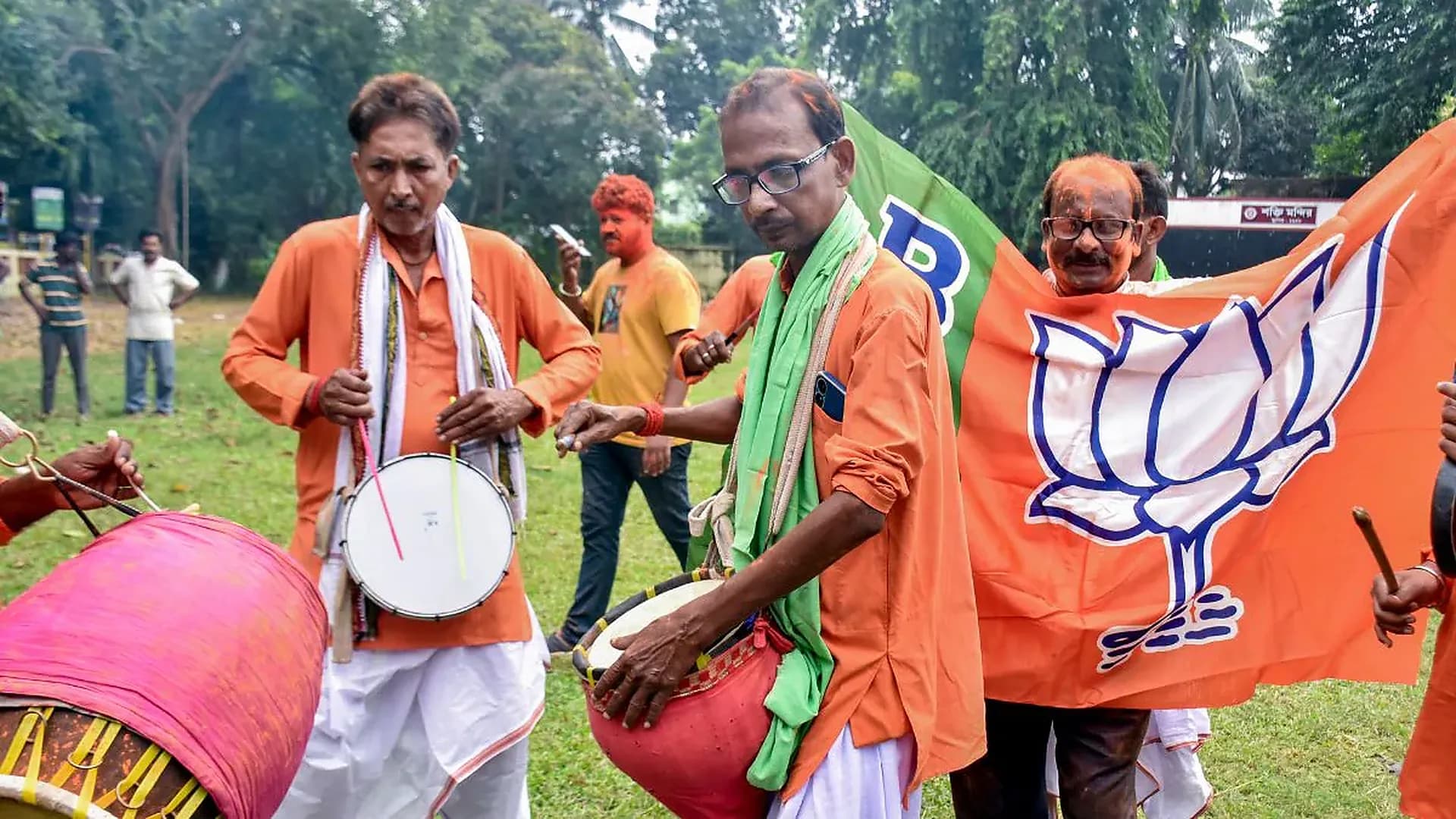
New Delhi, October 10, 2026: The Bharatiya Janata Party (BJP) won the Nandigram and Rejinagar Assembly by-elections in West Bengal, securing victories in two constituencies with distinct political backgrounds. The results, declared following vote counting on October 9, provide fresh evidence of the party's electoral performance at the constituency level.
Hansirani Rath won the Nandigram seat, while Shankharavh Sarkar emerged victorious in Rejinagar. The reported winning margins were approximately 1.22 lakh votes in Nandigram and 75,700 votes in Rejinagar, although the precise figures should be checked against the Election Commission of India's final constituency records.
The two outcomes have attracted attention because the constituencies have different political histories. Nandigram has long been associated with high-profile electoral contests, while Rejinagar's result is significant because of the competition among the BJP, the Aam Janata Unnayan Party (AJUP), Congress and other political groups.
The victories give the BJP an opportunity to consolidate its position in both constituencies. However, understanding their wider implications requires examining the candidates, the previous electoral context and the performance of rival parties rather than treating two by-election results as a complete measure of statewide political sentiment.
Nandigram By-Election Result: Hansirani Rath Wins for BJP
Hansirani Rath won the Nandigram Assembly by-election for the BJP. Congress candidate Milan Pradhan was among her principal electoral opponents.
The by-election followed the vacancy created after Suvendu Adhikari retained the Bhabanipur Assembly seat and gave up Nandigram. Adhikari's political association with Nandigram has made the constituency particularly prominent in West Bengal politics.
Rath's victory gives the BJP an opportunity to maintain its representation in the constituency following the vacancy. The scale of the reported margin also makes the result noteworthy in electoral terms.
Nevertheless, the result should be assessed in its immediate context. By-elections often differ from general elections because candidate selection, campaign organisation, turnout and local issues can have a considerable influence on voting behaviour.
A detailed comparison with the previous Assembly election would help establish how the distribution of votes changed between the two contests. Such a comparison should use official constituency-level figures and account for differences in candidates and party arrangements.
The result is therefore important for the BJP's local organisation, while its broader significance will depend on whether similar electoral patterns emerge in other constituencies.
Rejinagar By-Election Result: Shankharavh Sarkar Secures Victory
The BJP also won the Rejinagar Assembly by-election, where Shankharavh Sarkar defeated Aam Janata Unnayan Party candidate Golam Nabi Azad, also known as Robin.
The vacancy arose after AJUP leader Humayun Kabir retained another Assembly seat and gave up Rejinagar. The constituency subsequently became a contest involving several political organisations.
The BJP's victory is significant because Rejinagar has a different political and demographic context from Nandigram. The result has consequently attracted attention from observers assessing the BJP's performance beyond constituencies traditionally associated with its strongest electoral support.
However, the outcome alone does not establish how individual demographic groups voted. Claims about support from a particular community would require reliable evidence, such as appropriate constituency-level research or credible post-poll analysis.
The performance of the rival candidates is also relevant. A detailed assessment should examine the final vote totals for the BJP, AJUP, Congress, the Trinamool Congress and other contestants. It should also consider whether opposition parties were competing independently and how that may have affected the result.
The Rejinagar outcome gives the BJP a substantial electoral victory in the constituency. Determining the precise reasons for that victory requires evidence beyond the winning margin.
Why the Two Results Matter for West Bengal Politics
Nandigram's political significance is linked to its history of prominent electoral contests and its association with Suvendu Adhikari. Rejinagar, meanwhile, offers a different setting in which multiple parties competed for the Assembly seat.
Winning both constituencies strengthens the BJP's position in these local contests. The results also give competing parties a reason to review their campaign strategies, candidate selection and constituency-level organisation.
For the BJP, the immediate task will be to build on its electoral performance and maintain contact with voters between elections. For opposition parties, the results raise questions about how effectively they mobilised their support and competed against the BJP.

Join the discussion
Comments (0)