Uttar Pradesh Politics Heats Up as Yogi Adityanath Targets 115 Key Seats Ahead of 2027 Assembly Polls • Rajasthan Civic Polls 2026: Voting Begins as BJP Faces Rebel Challenge • Yogi Adityanath Targets 2027 UP Elections, Says BJP Will Return With a Grand Majority
Punjab Election 2027: Political Churn Intensifies as AAP, BJP, Congress and SAD Prepare for the Assembly Battle
Haripriya 26 Sept 2026 9 min read 161 views
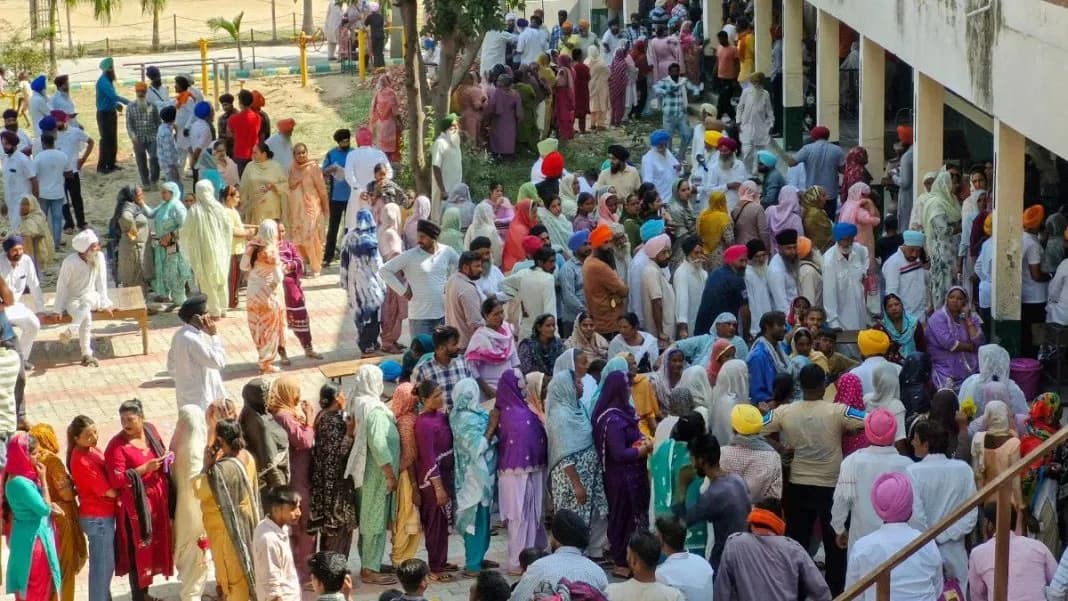
Punjab is gradually moving into election mode ahead of the 2027 Vidhan Sabha elections, with political parties intensifying their organisational work, public outreach and issue-based campaigns.
The Aam Aadmi Party (AAP), which came to power with a clear majority in the 2022 Assembly election, is preparing to defend its record in government. The Bharatiya Janata Party (BJP) is expanding its organisation and has publicly stated that it plans to contest all 117 Assembly seats. Congress is preparing to challenge the AAP government, while the Shiromani Akali Dal (SAD) is attempting to rebuild its political space.
At the same time, newer political formations, including Akali Dal (Waris Punjab De), are attempting to establish themselves in Punjab's political landscape. The combination of established parties, emerging groups, policy issues and possible alliance calculations is making the 2027 election a closely watched contest.
Maharashtra's decision to declare 265 talukas drought-affected has triggered questions from both ruling alliance leaders and the Opposition. While some areas represented by Mahayuti leaders have been excluded, the MVA has questioned the transparency of the assessment process.
Punjab's Assembly election is due in early 2027, with the current Assembly's term ending in March 2027. The Census 2027 schedule has reduced speculation about an early election, giving political parties (opens in a new tab) additional time to organise their campaigns and prepare candidates. **The enumeration phase in Punjab is scheduled from December 1, 2026, to January 4, 2027.
**
The additional preparation period matters for all the major parties.
AAP has more time to present its governance record. BJP can continue building an organisation beyond its earlier alliance-based structure. Congress can work on organisational coordination, while SAD has more time to decide its electoral strategy and relationship with other parties.
AAP Takes Its Governance Message to Voters
The ruling AAP has begun taking its government record directly to voters.
Chief Minister Bhagwant Mann recently launched the “Mann da Munafa” door-to-door campaign from his constituency of Dhuri. The campaign is designed to communicate the government's achievements and welfare measures directly to households across Punjab.
The campaign gives AAP an opportunity to highlight issues such as education, healthcare, electricity, irrigation and welfare programmes.
One of the government's major recent announcements has been the Mukh Mantri Mawan Dheeyan Satkar Yojana, under which eligible women from the general category receive ₹1,000 per month and eligible Scheduled Caste women receive ₹1,500 per month. The scheme was presented as the fulfilment of a major AAP election promise.
AAP is also highlighting its work relating to irrigation. At a recent Punjab Agricultural University event, Mann said canal-water use for irrigation had increased substantially and attributed the change to expanded pipeline infrastructure. These figures are government claims and form part of AAP's campaign narrative on agriculture and water management.
At the same time, opposition parties are expected to scrutinise the government's record on employment, law and order, finances, drugs and public administration.
Drug Crisis Becomes a Major Election Issue
The drug crisis has emerged as one of the most prominent issues in the early 2027 election campaign.
The BJP launched its Nasha Mukt Punjab Yatra on September 18. Four simultaneous yatras are covering nearly 4,000 kilometres and are scheduled to culminate in Jalandhar on September 30. The campaign is being used by the BJP to highlight drug addiction and trafficking while criticising the AAP government.
AAP has responded by pointing to the record of previous governments, including the period when BJP and SAD were alliance partners. Chief Minister Bhagwant Mann has also argued that drug trafficking needs to be addressed through the wider supply network rather than focusing only on Punjab.
The SAD has launched its own women-led anti-drug campaign, while Congress leaders have also raised concerns about trafficking and border-related supply routes.
As a result, the drug issue has developed into a multi-party political debate rather than remaining the campaign theme of a single party.
BJP Expands Its Independent Political Organisation
The BJP is entering the 2027 Punjab election with an organisational strategy different from the one it followed during its long alliance with the SAD.
BJP leaders have publicly said that the party plans to contest all 117 Assembly seats. BJP national general secretary (organisation) B L Santhosh stated in August that the party would contest independently, while Punjab BJP leaders have continued to emphasise statewide organisational expansion.
The BJP has also identified issues such as crime, corruption and drugs as important parts of its Punjab campaign. Its strategy includes efforts to reach young voters and expand its organisation among different social groups.
The party's statewide anti-drug yatra represents one part of this broader effort.
BJP-SAD Relationship Remains an Important Question
The future relationship between the BJP and SAD remains one of the unresolved questions in Punjab politics.
The two parties were long-standing allies before separating in 2020 following disagreements over the farm laws. In 2026, there has been political speculation about whether the relationship could change again.
However, the BJP has publicly stated that it intends to contest all 117 seats independently. Therefore, any future electoral arrangement should be distinguished from current public statements by the parties.
For SAD, the question is particularly significant because the party is simultaneously trying to rebuild its organisation and establish its own campaign narrative.
Congress Prepares for Another Punjab Contest
Congress remains one of the major parties preparing for the 2027 Assembly election.
The party is expected to focus its campaign on governance, drugs, employment, agriculture, law and order and the performance of the AAP government.
The additional preparation time following the Census schedule gives Congress more opportunity to organise its campaign and address internal organisational questions. Political reporting has also highlighted infighting within the state unit as an issue the party needs to manage before the election.
Congress's campaign will therefore involve both presenting an alternative programme to voters and building greater coordination among its state-level leaders and workers.
New Political Forces Add Another Dimension
The 2027 election is also witnessing the emergence of political formations outside the traditional AAP-Congress-BJP-SAD framework.
The Akali Dal (Waris Punjab De), associated with detained Khadoor Sahib MP Amritpal Singh, has been expanding its political activities.
Recent developments include the joining of former Enforcement Directorate deputy director Niranjan Singh and former SAD MLA Manpreet Singh Ayali. Their entry indicates an effort by the organisation to broaden its political appeal and bring in figures with different backgrounds.
The organisation's political messaging has included Sikh religious and community issues, while its expansion could introduce additional competition in selected constituencies.
Its eventual electoral reach, candidate network and organisational strength will become clearer as the election approaches.
Agriculture and Water Remain Important
Punjab's agricultural economy means that farming, irrigation and groundwater are likely to remain important election issues.
AAP has been highlighting increased canal-water use and irrigation infrastructure as part of its record. At the recent Punjab Agricultural University Kisan Mela, Mann discussed irrigation and groundwater while engaging directly with farmers.
Opposition parties are likely to scrutinise these claims and present their own positions on farm income, irrigation, water management, agricultural policy and rural employment.
Water is also connected to wider Centre-state relations and Punjab's political debate over its share of river waters.
Welfare and State Finances
Welfare schemes are another important component of the election debate.
The AAP government has expanded or introduced several welfare measures, including financial assistance for eligible women. The government has said that the Mawan-Dheeyan Satkar Yojana will provide ₹1,000 per month to eligible general-category women and ₹1,500 to eligible Scheduled Caste women.
At the same time, Punjab's finances are likely to remain an area of political scrutiny.
Opposition leaders have criticised the government's borrowing and expenditure policies. BJP leaders have made claims about the state's debt burden and financial management, while government supporters point to increased revenue collection and spending on welfare and public services. These competing claims need to be considered alongside official budget and finance data rather than treated as established political conclusions.
Governance Becomes Another Electoral Battleground
The AAP government's administrative record will be closely examined as the election approaches.
Apart from drugs and finances, issues involving recruitment, public services, law and order and relations with constitutional institutions have become part of political debate.
The Punjab government's disputes with the Punjab and Haryana High Court over several matters have also contributed to wider political discussion about governance and Centre-state relations.
AAP is expected to present its achievements and welfare measures, while opposition parties will continue to question the implementation and outcomes of government policies.
Social Media Becomes Part of the Campaign
The 2027 Punjab election is also developing in a highly digital political environment.
Political parties and leaders are increasingly using social media to communicate with voters, while disputes over AI-generated videos and digitally manipulated political content have already emerged.
Recent reporting has highlighted concerns over AI-generated material involving Punjab political figures and the difficulty of distinguishing political satire, manipulated content and genuine campaign material.
This means that campaign communication is likely to extend beyond rallies and traditional media into increasingly important digital platforms.
What Could Shape the Punjab Election Debate?
As political preparations continue, several issues are likely to remain important in the 2027 Punjab Assembly campaign:
Drug trafficking and addiction
Governance and public services
Employment and youth opportunities
Agriculture and farmers' concerns
Canal irrigation and groundwater
Welfare schemes
State finances and revenue
Law and order
Centre-state relations
Political alliances
Candidate selection
Rural and urban voter outreach
The emergence of new political organisations
The importance of these issues may vary across constituencies, and party strategies can change before the formal election schedule is announced.
Punjab's Political Landscape Moves Towards 2027
Punjab's 2027 Assembly election is taking shape against a backdrop of organisational restructuring, competing campaign narratives and the emergence of new political forces.
AAP is taking its governance record directly to households through the Mann da Munafa campaign. BJP is building an independent statewide organisation and using the drug issue as a major campaign theme. Congress is preparing to challenge the government, while SAD is working to rebuild its political base. Meanwhile, Waris Punjab De is attempting to broaden its political presence.
The coming months will provide more clarity on candidate selection, alliances, campaign priorities and constituency-level strategies.
For voters, the emerging campaign provides several areas for comparison: the record of the incumbent government, the policy proposals of opposition parties, approaches to the drug crisis, agricultural and economic policies, welfare commitments and each party's plans for Punjab's future.
With the Assembly election approaching, Punjab's political debate is moving from broad positioning towards more direct constituency-level campaigning. The final shape of the contest will become clearer as parties announce their candidates, programmes and electoral arrangements.
“Punjab’s 2027 Assembly contest is taking shape around competing campaigns on governance, welfare, drugs, agriculture and regional politics. AAP has begun a door-to-door campaign highlighting its government’s record, while BJP is conducting an anti-drug yatra across the state. At the same time, Congress, SAD and Akali Dal (Waris Punjab De) are working to expand their organisational and political space ahead of the election.”
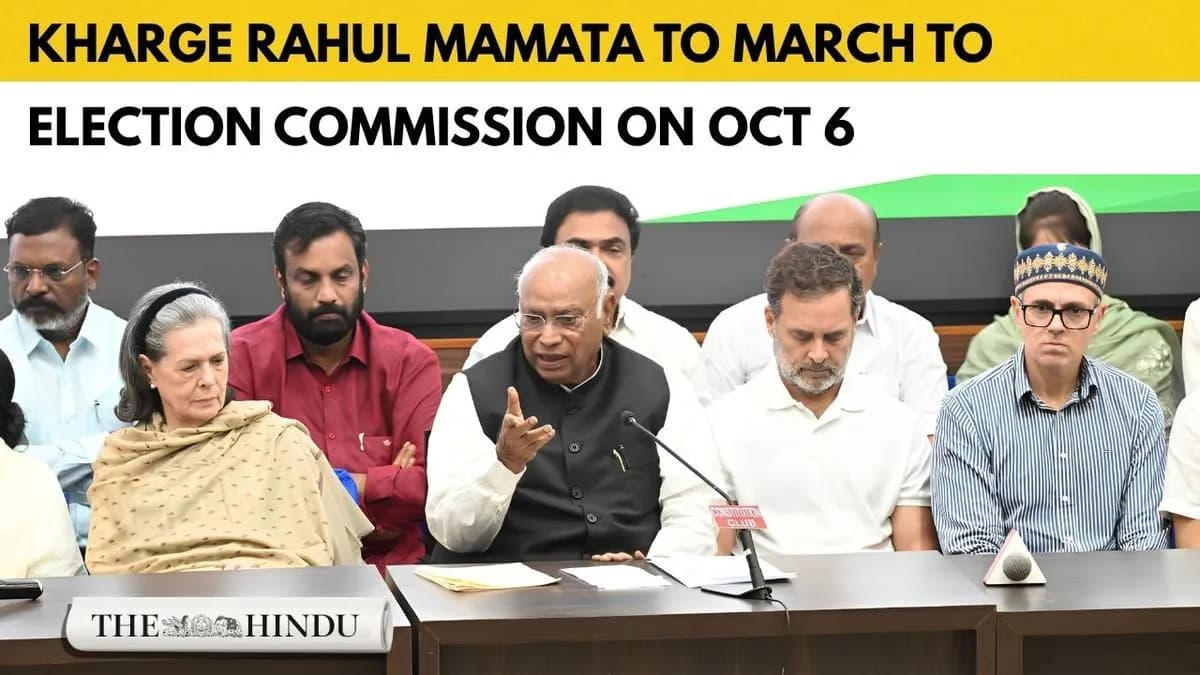
The INDIA bloc has announced a nationwide campaign over concerns related to the Election Commission and electoral processes. The Opposition plans protests, a march to the Election Commission headquarters, and a legal challenge to provisions of the Chief Election Commissioner Act, 2023.
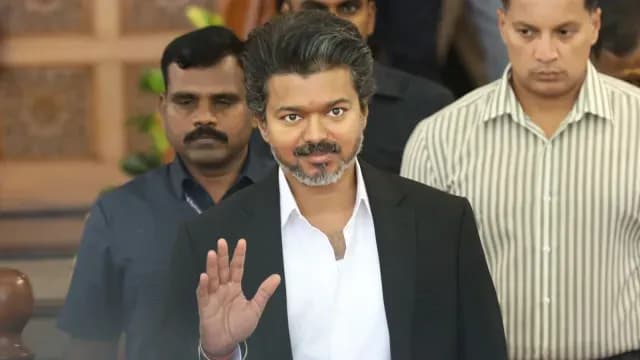
Discussions between Chief Minister C. Joseph Vijay's Tamilaga Vettri Kazhagam (TVK) and the Pattali Makkal Katchi (PMK) have intensified, with reports suggesting alliance talks and possible Cabinet representation. However, no official announcement has been made by either party.
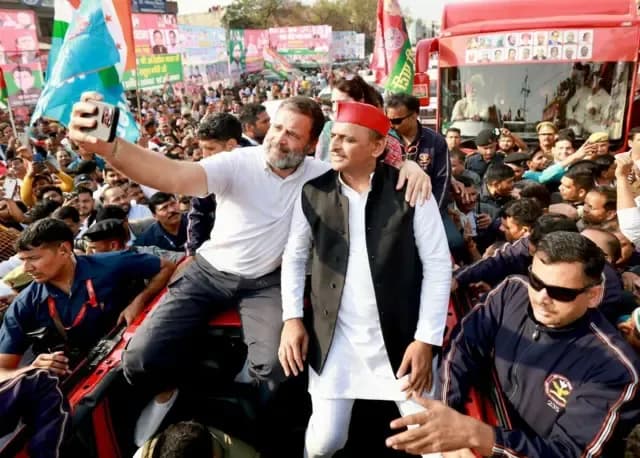
With the Uttar Pradesh Assembly election approaching in 2027, the Samajwadi Party and Congress are working to strengthen their alliance after their improved performance in the 2024 Lok Sabha elections. Political observers believe the opposition has an important opportunity, but unity and effective seat-sharing will be crucial.
By Shivani CH • 104 views
Have a question or enquiry?
Our team is here to help with general questions, partnerships, corrections and feedback.
Goa's political activity is intensifying ahead of the 2027 Assembly election as AAP and Goa Forward Party continue with their “Goa First” alliance, while reports of Congress-GFP discussions create fresh questions about the opposition's electoral strategy. The BJP is also strengthening its organisation, while the electoral-roll revision issue remains in focus.