Indian opposition leader Rahul Gandhi detained over election chief protest
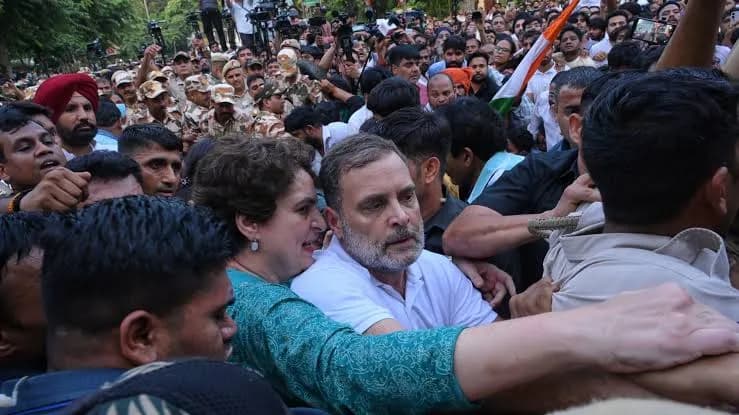
Congress leader and Leader of Opposition in the Lok Sabha Rahul Gandhi was detained by Delhi Police on October 7, 2026, during an Opposition protest demanding the resignation of Chief Election Commissioner Gyanesh Kumar.
The detention came as Rahul Gandhi and other Opposition lawmakers attempted to reach Jantar Mantar, a designated protest site in New Delhi. According to reports, the action marked the third time Gandhi had been detained within two days during protests related to the Election Commission's Special Intensive Revision (SIR) of electoral rolls.
The protests have been led by Opposition parties and other groups demanding accountability from the Election Commission over changes to electoral rolls. Opposition leaders have alleged that the voter-list revision could disproportionately affect voters supporting opposition parties.
Rahul Gandhi and Opposition Protest
The October 7 protest followed a similar demonstration on October 6, when Rahul Gandhi, Priyanka Gandhi Vadra and other Opposition leaders were detained after a protest near the Election Commission's office.
On Wednesday, Opposition lawmakers gathered in central Delhi and attempted to proceed towards Jantar Mantar. Police stopped their movement, after which Rahul Gandhi and other leaders continued their protest.
Visuals showed police taking Rahul Gandhi and Priyanka Gandhi Vadra away from the protest site. Several other Opposition lawmakers and protesters were also detained.
Gandhi said before the detention that the Opposition would proceed to the designated protest location and raise its concerns over the Election Commission's handling of the voter-list revision.
Opposition Raises Concerns Over Voter Rolls
The central issue behind the protests is the Election Commission's Special Intensive Revision of electoral rolls.
Opposition parties have alleged that the revision process has resulted in the removal of large numbers of names from voter lists and have questioned whether the exercise could affect eligible voters.
The Opposition has also demanded the resignation of Chief Election Commissioner Gyanesh Kumar and has accused the Election Commission of acting in a manner that benefits the ruling Bharatiya Janata Party.
These are political allegations made by the Opposition and have not been established as facts.
Election Commission and BJP Reject Allegations
The Election Commission and the BJP have rejected allegations that the voter-list revision has been politically motivated.
The Election Commission has maintained that the exercise is intended to clean electoral rolls by identifying duplicate, deceased or otherwise ineligible entries. The Commission has also taken steps concerning the inclusion of eligible voters who may have been inadvertently omitted.
The BJP has also rejected the Opposition's accusations concerning the electoral-roll exercise.
Protests Continue in Delhi
The October 7 demonstration was part of a series of protests in Delhi over the Election Commission's voter-roll revision process.
On October 6, Rahul Gandhi and other Opposition leaders staged a prolonged protest after their march towards the Election Commission was stopped. Delhi Police later detained several protesters, while an FIR was registered in connection with the alleged entry of some protesters into the Akashvani Bhavan premises.
The continuing demonstrations have brought the Election Commission's voter-list revision process into a wider political debate, with Opposition parties demanding greater scrutiny and the Commission defending the exercise as an electoral-roll verification measure.
Political Significance
The repeated protests and detentions have intensified the confrontation between the Opposition and the Election Commission.
For the Opposition, the demonstrations are focused on concerns about electoral rolls and the demand for the resignation of the Chief Election Commissioner. For the Election Commission and BJP, the allegations of political manipulation have been rejected.
The dispute is therefore developing on two fronts: the legal and administrative questions surrounding electoral-roll revision, and the broader political debate over the independence and functioning of India's election machinery.
Expert View
Rahul Gandhi's repeated detention has made the dispute over electoral-roll revision a prominent political issue. The key questions now involve the factual basis of the Opposition's allegations, the Election Commission's procedures for revising voter lists, and how the authorities handle continuing protests while maintaining lawful public order.
Join the discussion
Comments (0)