Goa Voter Challenges Electoral Roll Deletion After Form 8 Address Change Dispute
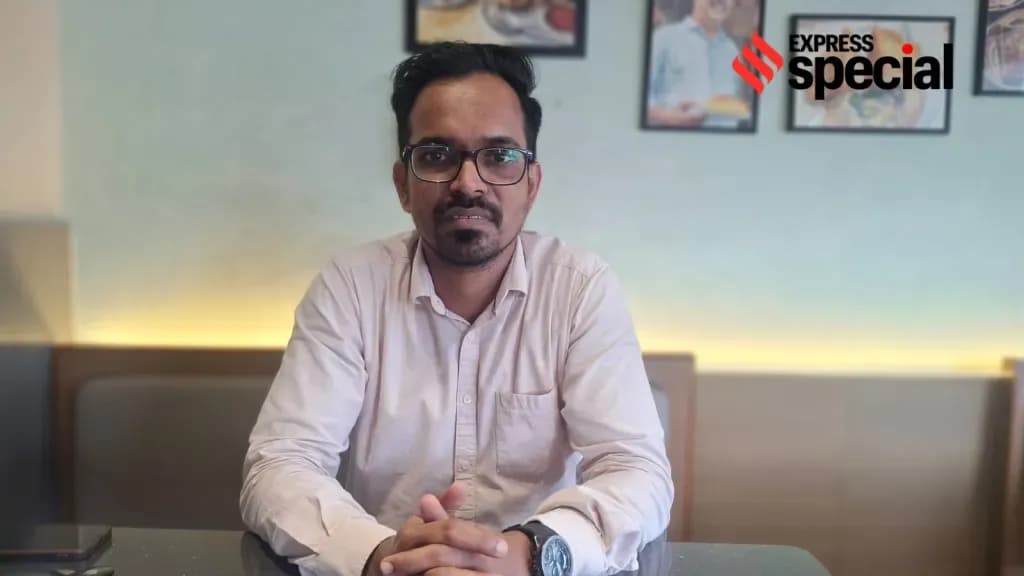
A dispute over the deletion of voter names during the Special Intensive Revision (SIR) of electoral rolls in Goa has reached the Bombay High Court's Goa Bench, after a 41-year-old resident and five members of his family found themselves off the electoral roll.
Paresh Salgaoncar, a private-sector employee from the Santa Cruz Assembly constituency in North Goa, approached the court after his family's applications to update their residential address became entangled in the SIR process.
The case has raised questions about the interaction between the Election Commission's electoral-roll software, statutory procedures and the need to protect eligible voters from being inadvertently excluded.
Six Family Members Removed From Electoral Roll
Salgaoncar and five members of his family had shifted to another residence within the same Santa Cruz Assembly constituency before the SIR exercise began.
Following the move, the family was advised by the Booth Level Officer (BLO) to submit Form 8, which is used for corrections and changes such as an elector's address.
However, problems emerged when the applications were processed.
According to the petitioners, the system could not locate their Elector Photo Identity Card (EPIC) records. As a result, officials using the ERONET system reportedly had no option to process the Form 8 applications other than rejecting them.
Form 8 Dispute Becomes the Centre of the Case
The family was subsequently informed that their EPICs had already been deleted from the electoral rolls. Since the records could not be retrieved through the system, their Form 8 applications could not be processed.
They were then told that the alternative was to submit Form 6 to get their names back on the electoral roll.
Salgaoncar objected to this solution because he was not a first-time voter. He had already been registered as an elector and was seeking only to update his address after moving within the same constituency.
He therefore argued that submitting Form 6 would require him to make a declaration that did not accurately describe his circumstances.
Salgaoncar Says He Did Not Want to Make a False Declaration
Salgaoncar's central concern is that he should not have to provide information that he believes is incorrect simply because the election software does not provide another route to restore his existing voter record.
He has said that he did not want to file a declaration meant for a new voter when he was already an elector.
His decision to approach the court was also influenced by his concern that other voters could face similar difficulties but might never approach the judiciary.
Bombay High Court Questions Election Commission
The issue prompted strong questions from the Bombay High Court's Goa Bench.
During the proceedings, the court questioned how an administrative software system could effectively prevent officials from carrying out their statutory responsibilities.
The bench also questioned the legal basis for deleting a voter's name without providing the affected person an opportunity to be heard.
The court's concern was not merely about the six members of Salgaoncar's family. It also raised the possibility that similar problems could affect other voters whose circumstances were not brought before the court.
Court Says Eligible Voters Should Not Be Left Out
The High Court stressed that the Election Commission should make every effort to ensure that eligible voters remain on the electoral rolls.
The court questioned why a Form 8 application should simply be rejected when doing so could leave an eligible voter without a valid entry in the electoral roll.
The bench suggested that applications could instead be kept pending while the authorities examined the underlying issue, rather than allowing a voter to disappear from the electoral roll because of a procedural or software problem.
Software Cannot Override Electoral Law
One of the most important aspects of the case is the court's concern over the role of the ERONET system.
The petitioners argued that the software did not provide officials with a mechanism to review or restore deleted EPIC records. This meant that even if an official wanted to address the problem, the system allegedly left “reject” as the available option for the Form 8 application.
The court questioned how an administrative system could prevent an officer from acting in accordance with the law.
The proceedings therefore raise a broader question: can a technical limitation in election software determine whether an eligible citizen remains on the electoral roll?
What Is the Special Intensive Revision?
The Special Intensive Revision (SIR) is an electoral-roll verification exercise undertaken by the Election Commission.
The objective of such a process is to update electoral rolls and ensure that voter records are accurate.
However, the Goa case highlights the need for safeguards so that legitimate voters are not removed because of procedural difficulties, incorrect records or limitations in administrative systems.
The distinction between different electoral forms is also central to the dispute. Form 8 is used for changes and corrections to an existing elector's details, while Form 6 is associated with applications for inclusion of a person as a new elector.
Why the Case Matters for Goa Voters
The case has significance beyond Salgaoncar's family because address changes are common among voters.
A person may move to another residence within the same constituency without losing eligibility to vote. If the electoral system cannot process the address change correctly, the person could potentially find their existing voter record affected.
The High Court's intervention therefore places emphasis on ensuring that procedural and technical problems do not result in eligible citizens being left outside the electoral roll.
Election Commission Asked to Explain the Process
The Election Commission has maintained that it was following the procedure applicable during the SIR exercise and that the deletions were based on information received from Booth Level Officers.
The court, however, has sought clarity on how the deletion process operated in this particular case and why the existing voter records could not be restored or the Form 8 applications processed.
The matter remains before the High Court, with further proceedings scheduled as the court examines the Election Commission's explanation.
A Wider Test for Electoral-Revision Procedures
The Salgaoncar case has turned an individual address-change dispute into a wider legal question concerning voter protection during electoral-roll revisions.
The case highlights the importance of ensuring that election procedures remain accessible to ordinary voters and that administrative software supports, rather than restricts, the implementation of electoral law.
For Salgaoncar, the issue is straightforward: he says he wanted to correct his address without making a declaration that he believed to be false.
For the Election Commission, the case presents a test of whether its procedures and systems can protect the electoral rights of eligible voters while carrying out the SIR exercise.
The Bombay High Court's observations have made clear that technical or procedural difficulties cannot be allowed to result in eligible voters simply disappearing from the electoral rolls.

Join the discussion
Comments (0)