Bengaluru SIR Protest: Dhruv Rathee, Prakash Raj Join CJP’s Abhijeet Dipke at Freedom Park
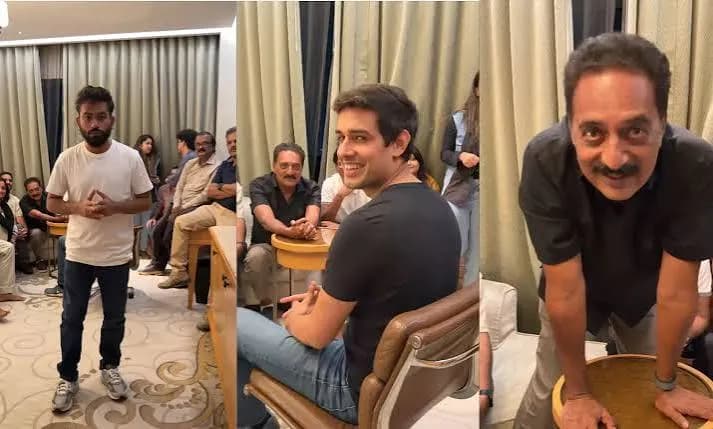
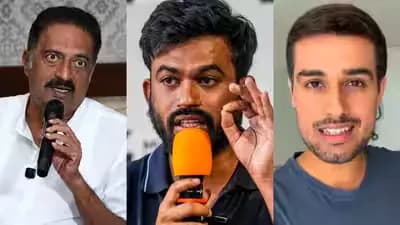
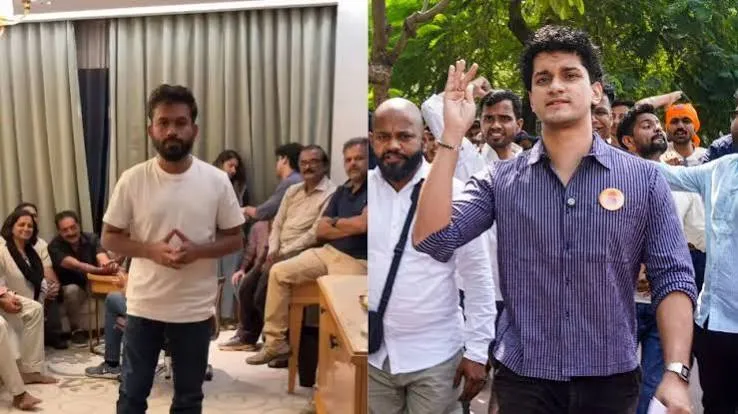
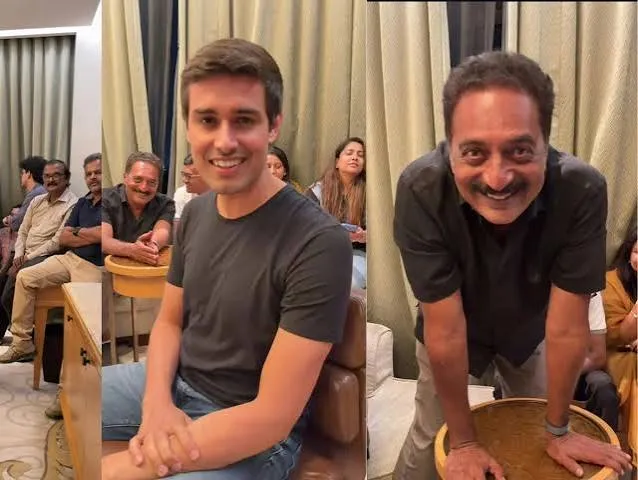
Bengaluru is witnessing a high-profile political and civil-society mobilisation on October 8, 2026, with YouTuber and political commentator Dhruv Rathee, actor-activist Prakash Raj and Cockroach Janta Party (CJP) founder Abhijeet Dipke coming together at Freedom Park over concerns surrounding the Special Intensive Revision (SIR) of electoral rolls.
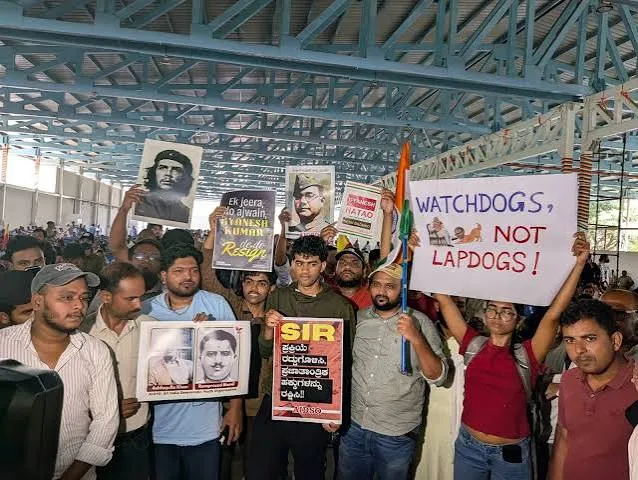
The programme combines a People’s Tribunal on SIR with a symbolic “Chappal Protest”. Organisers say the tribunal is intended to provide a platform for people who claim they were affected by the electoral-roll revision process.
The event has attracted national attention because of the combination of a newly emerged youth political movement, a prominent actor known for his public interventions on political issues and one of India’s most prominent political-content creators.
According to reports, the programme was scheduled to begin at Freedom Park with the People’s Tribunal, followed by the protest. Organisers have described the event as part of a wider campaign concerning electoral rights, voter-list revisions and democratic accountability.
Who Is Abhijeet Dipke and Why Is CJP in the Spotlight?
At the centre of the Bengaluru mobilisation is Abhijeet Dipke, the founder of the Cockroach Janta Party.
Dipke has emerged as one of the most visible faces of a youth-led political movement that initially gained attention through online satire and student activism.
According to report, Dipke is the founder of CJP and has been leading the organisation’s campaign against Chief Election Commissioner Gyanesh Kumar and what the group describes as irregularities in the electoral-roll revision process.
The movement’s unusual name itself originated from an online controversy involving the use of the word “cockroach” in relation to young activists. The group turned the term into a political identity and subsequently expanded its activities from social media into street protests.
Reuters reported earlier this month that the youth-led CJP had organised protests in Mumbai as part of a national campaign concerning alleged manipulation of voter rolls. The organisation has demanded the resignation of Gyanesh Kumar and has planned demonstrations in multiple cities.
The organisation's rise is notable because it represents a different form of political mobilisation—one that combines social media, youth participation, satire and street demonstrations.
From Student Mobilisation to Electoral Politics
Dipke’s political visibility did not begin with the current SIR controversy.
He became associated with student protests earlier in 2026, after demonstrations relating to examination paper leaks and student concerns attracted national attention.
The CJP movement subsequently expanded its campaign beyond education-related issues.
The organisation has now moved into the much more politically sensitive territory of electoral rolls and the Election Commission.
That transition has brought CJP into direct confrontation with an important constitutional institution.
Dipke has repeatedly argued that citizens must be able to question institutions and demand accountability.
At the same time, allegations concerning voter deletions and electoral manipulation remain politically contested and should be distinguished from independently established findings.
Why SIR Has Become the Focus of the Bengaluru Protest
The Special Intensive Revision of electoral rolls, or SIR, is at the heart of the current mobilisation.
The Election Commission’s electoral-roll revision exercise has generated intense political debate, particularly over questions concerning the inclusion and exclusion of voters.
CJP and other activists have alleged that eligible voters may have been wrongly removed from electoral rolls.
The Bengaluru organisers say people who believe they were affected by the revision process will be able to present their experiences before the People’s Tribunal.
Financial Express reported that the organisers are seeking the annulment of alleged wrongful deletions and restoration of previous electoral rolls, while also demanding the resignation of Chief Election Commissioner Gyanesh Kumar.
These are demands and allegations made by the organisers, not findings that should automatically be treated as established facts.
The Election Commission’s position and any official verification of individual cases remain important to understanding the broader issue.
Dhruv Rathee’s Entry Adds a Major Digital Dimension
The participation of Dhruv Rathee has significantly increased attention around the Bengaluru event.
Rathee is one of India’s best-known digital political commentators, with a large online audience built around videos dealing with politics, society, current affairs and public policy.
TIME previously profiled Rathee’s transition from travel and educational content into political commentary and described his approach as using YouTube to explain and fact-check topics that attract attention on Indian social media.
Rathee’s participation in the Bengaluru protest is therefore significant because it connects a street-level political mobilisation with a large digital audience.
He confirmed his participation through a video message and urged people to join the Bengaluru programme.
Reports said the Bengaluru appearance would be Rathee’s first public visit to the city for this particular protest campaign.
His presence could help bring the SIR debate to audiences that may not normally participate in conventional political rallies.
At the same time, Rathee is a political commentator rather than an elected representative, meaning his participation should be understood as public advocacy rather than an official political position on behalf of a political party.
Prakash Raj’s Role in the Protest
Actor Prakash Raj is another prominent public figure associated with the Bengaluru mobilisation.
Raj has been vocal about political and civic issues and has previously participated in protests concerning electoral transparency.
He announced the Bengaluru event through social media and appealed to people to attend the Freedom Park programme.
He also revealed that Dhruv Rathee would be the “surprise guest” at the protest.
Raj’s involvement gives the event a strong cultural and public-facing dimension.
His participation also reflects the increasingly visible role of actors, artists and public personalities in political and civic campaigns.
However, his presence at the protest does not itself establish the factual validity of every allegation being raised by the organisers.
What Is the ‘People’s Tribunal’?
The first major part of the Bengaluru programme is the People’s Tribunal.
Unlike a court of law, a People’s Tribunal organised by civil-society or activist groups does not have judicial authority.
Its purpose is generally to collect testimonies, document grievances and create a public record around an issue.
In Bengaluru, organisers say people who believe they were affected by SIR will be able to share their experiences.
The tribunal is therefore intended to shift the conversation from broad political allegations to individual accounts.
The usefulness of such testimony will ultimately depend on whether individual claims can be independently documented and verified.
What Is the ‘Chappal Protest’?
Following the People’s Tribunal, CJP has planned a symbolic “Chappal Protest.”
CJP co-convener Ashutosh Ranka announced the event and said the programme would also highlight concerns surrounding women’s safety.
The protest format is part of CJP’s broader use of symbolism and unconventional political messaging.
The organisation has previously used distinctive visual and social-media strategies to attract young participants.
The Bengaluru event therefore combines electoral politics, civil-society activism and symbolic protest.
CJP’s Wider Campaign Against the Election Commission
The Bengaluru mobilisation is not an isolated event.
CJP has already held a major protest in Mumbai, where Abhijeet Dipke and other members demanded the resignation of Chief Election Commissioner Gyanesh Kumar.
The Mumbai demonstration also attracted personalities from the film and entertainment industry, including Naseeruddin Shah, Vishal Dadlani and others.
Dipke has subsequently announced plans for another major mobilisation in Delhi on October 10.
The sequence of protests indicates that CJP is attempting to turn its campaign into a national movement rather than keeping it restricted to one city or state.
Why Bengaluru Is Politically Important
Holding the protest in Bengaluru carries particular significance because Karnataka has already witnessed political debate over electoral-roll revision.
The state has seen allegations concerning voter deletions and the use of Form 7 applications, with political parties demanding investigations into alleged irregularities.
The Congress government in Karnataka has also raised concerns regarding electoral-roll processes.
This means the CJP event is taking place in a state where the SIR debate already has an active political context.
The presence of Prakash Raj, a prominent public figure associated with Karnataka, adds another local dimension to the mobilisation.
Opposition Politics and the CJP Movement Are Not the Same
An important distinction is that the CJP protest should not automatically be described as an INDIA bloc or Congress protest.
Opposition parties are separately protesting against the Election Commission and demanding action over SIR.
CJP, however, is an independent youth-led political movement with its own leadership and demands.
Individual public figures may participate in the same protest without formally becoming members of CJP or joining an opposition alliance.
This distinction is important for accurate political reporting.
What Happens After Bengaluru?
The Bengaluru event is likely to be followed by further mobilisation.
CJP has already announced another major protest in Delhi on October 10.
The organisation wants its campaign over electoral-roll concerns to become a national political issue.
The next stage will depend heavily on whether the People’s Tribunal produces documented individual cases that can be independently examined.
For the Election Commission, the challenge is to maintain public confidence in the electoral-roll revision process and address legitimate questions transparently.
For CJP, the Bengaluru protest represents another step in its attempt to convert a youth-led online movement into a sustained political organisation.
For Dhruv Rathee and Prakash Raj, participation places their large public platforms alongside a street-level movement that is challenging the conduct and credibility of the electoral process.
The Bigger Political Picture
The Bengaluru protest brings together three very different forms of political participation.
Abhijeet Dipke represents a new youth-led protest movement that emerged through social media and street mobilisation.
Dhruv Rathee represents digital political commentary and online public engagement.
Prakash Raj represents the participation of a prominent cultural figure in civic and political campaigns.
Their appearance together at Freedom Park illustrates how political mobilisation in India is increasingly moving across traditional boundaries.
Political parties are no longer the only actors capable of generating national attention around political issues. Digital creators, civil-society groups, activists and public personalities can also bring large audiences into political debates.
The SIR controversy has become the latest issue around which these different forms of participation are converging.
Whether the Bengaluru mobilisation results in further political pressure will depend on what evidence emerges from the testimonies, how authorities respond and whether the campaign gains sustained public support.
For now, Freedom Park has become an important stage in the growing national debate over electoral rolls, voter rights and institutional accountability.
Join the discussion
Comments (0)