UP 2027 Politics: Opposition Sees Opportunity as SP-Congress Alliance Faces Seat-Sharing Test
Uttar Pradesh is entering an increasingly active phase of political preparations ahead of the 2027 Assembly election, with the ruling BJP and opposition parties focusing on organisation, alliances, social outreach and electoral strategy.
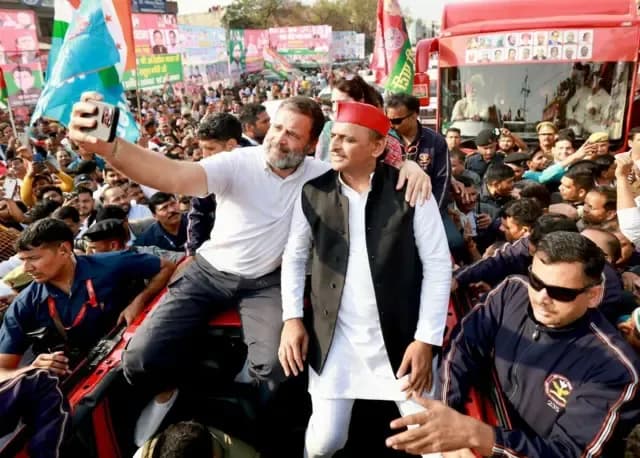
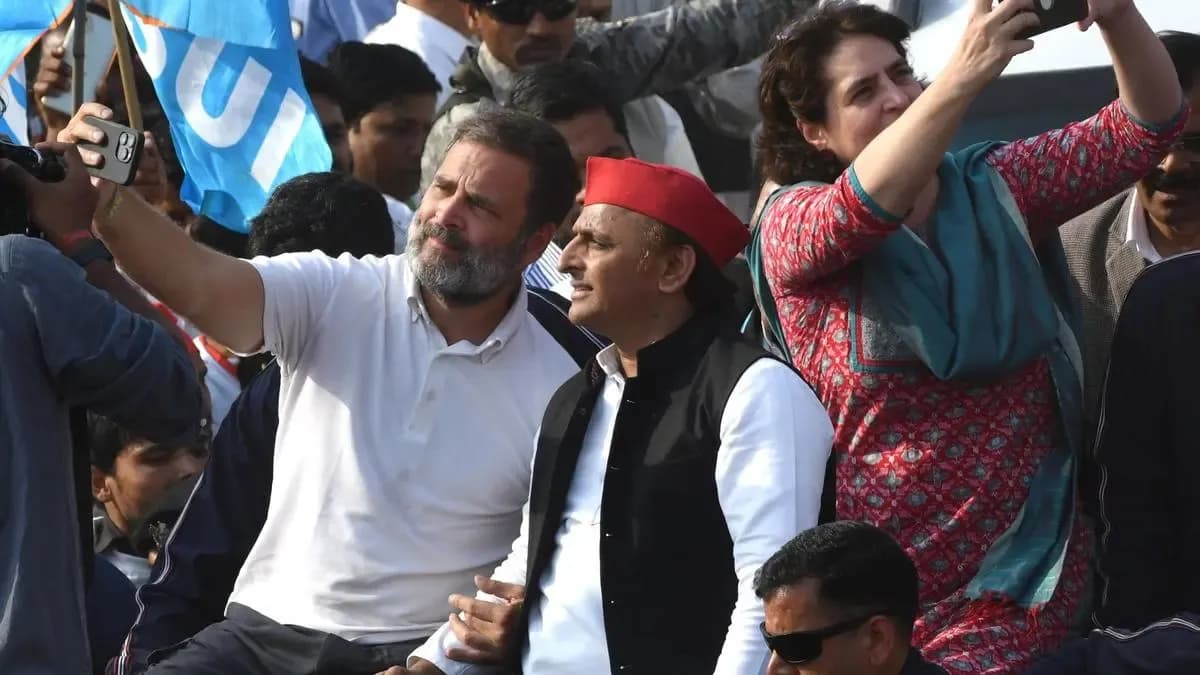
The Samajwadi Party (SP) and Congress, which contested the 2024 Lok Sabha election together in Uttar Pradesh, are again discussing their alliance for the Assembly election. However, seat-sharing remains an important issue between the two parties. SP president Akhilesh Yadav has said the alliance with Congress will continue, while indicating that seat allocation should be based on the ability to win individual constituencies.
The political significance of the alliance increased after the 2024 Lok Sabha election. The SP won 37 of Uttar Pradesh's 80 Lok Sabha seats, while Congress won six. The BJP's tally fell to 33, compared with 62 seats in 2019. However, Assembly-level electoral calculations can differ substantially from Lok Sabha results, making the 2027 contest dependent on organisation, candidates, alliances and constituency-level factors.
SP-Congress Alliance Faces Seat-Sharing Challenge
The SP and Congress are attempting to build on their 2024 cooperation, but the distribution of Assembly constituencies remains an important point of discussion.
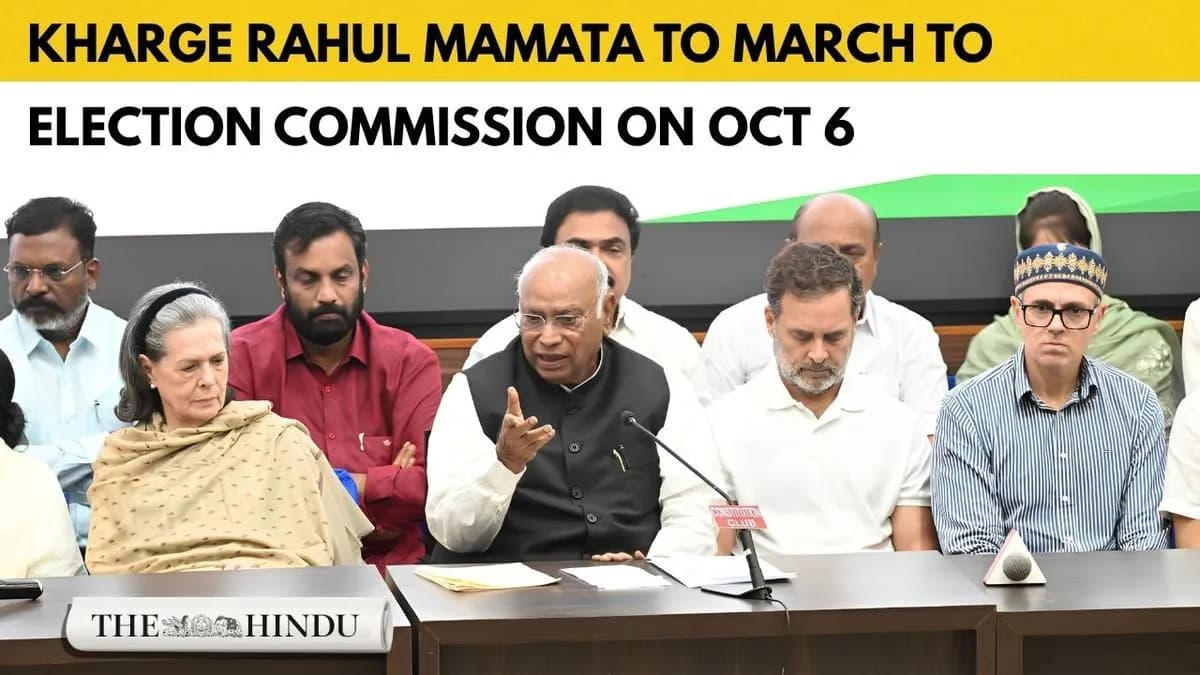
A recent report said Akhilesh Yadav skipped the September 30 INDIA bloc meeting in New Delhi while seat-sharing discussions between the SP and Congress remained unresolved. Yadav cited pre-scheduled election-related engagements, while the development generated political discussion about the alliance negotiations.
Earlier, when Akhilesh launched the SP's PDA Rath Yatra from Rae Bareli, he said the alliance with Congress would continue but that seat-sharing would be determined by "winnability."
The Frontline analysis published on September 30 also examined the difficulties facing the opposition. It noted that while the 2024 Lok Sabha results demonstrated the potential of opposition coordination, the SP and Congress still face organisational and political challenges in converting an alliance into coordinated Assembly-level voting.
BJP Continues Organisational Preparations
The BJP is also preparing for the 2027 Assembly election while focusing on several electoral contests that will take place before the Assembly polls.
On September 30, the BJP announced candidates for the remaining six of 11 Uttar Pradesh Legislative Council seats from graduates' and teachers' constituencies. The seats are scheduled for elections on October 23. The announcement completed the BJP's candidate list for all 11 constituencies.
The 11 MLC constituencies include five graduates' constituencies — Lucknow, Varanasi, Agra, Meerut and Allahabad-Jhansi — and six teachers' constituencies. The elections use proportional representation through the single transferable vote.
The BJP has described its preparations for these elections as an important organisational exercise ahead of the 2027 Assembly election. Party workers have been directed to maintain booth-level contact with voters and strengthen organisational coordination.
Yogi Adityanath's Development and Outreach Push
Chief Minister Yogi Adityanath has also increased public outreach across Uttar Pradesh.
According to an Indian Express analysis, since May, Adityanath has visited more than 44 of the state's 75 districts for development programmes involving projects worth more than ₹38,000 crore. These projects include roads, schools, hospitals, power and water infrastructure, tourism and skill-development initiatives.
On September 30, Adityanath also held a Janta Darshan in Gorakhpur, where he heard citizens' grievances and directed officials to ensure timely action on their complaints.
BSP and Smaller Parties Remain Relevant
The political equation is not limited to the BJP, SP and Congress.
The Bahujan Samaj Party (BSP) continues to maintain an independent political position under Mayawati. The Frontline analysis highlights the importance of the BSP's Dalit support base and the potential impact of smaller caste-based parties and emerging political organisations on the 2027 electoral arithmetic.
Several smaller parties remain important in Uttar Pradesh because of their influence among specific social groups. Parties associated with communities such as Nishads, Rajbhars and Kurmi Patels have previously played roles in alliance-building by larger parties.
The emergence of the Aazad Samaj Party (Kanshi Ram) and other smaller political formations also adds another layer to the opposition's electoral calculations.
Issues Likely to Shape the 2027 Debate
The political discussion in Uttar Pradesh is increasingly centred on several issues:
🗳️ 2027 Uttar Pradesh Assembly Election
🤝 SP-Congress alliance and seat-sharing
🏛️ BJP's organisational preparations
💼 Jobs and employment
🎓 Education and examination issues
👨🌾 Farmers and agriculture
🏗️ Infrastructure and development
⚖️ Governance and law and order
👥 Social justice and representation
🗳️ Electoral-roll and Election Commission issues
🤝 Role of BSP and smaller caste-based parties
What Lies Ahead?
The 2027 Uttar Pradesh Assembly election is still months away, and the final political configuration has not yet been settled. The SP and Congress continue to face the task of reaching a seat-sharing arrangement, while the BJP is strengthening its organisation and preparing for elections that precede the Assembly contest.
The 2024 Lok Sabha results provide one reference point for understanding the current political landscape, but they do not determine the outcome of the 2027 Assembly election. The eventual contest will also depend on alliances, candidates, campaign issues, voter mobilisation and constituency-level dynamics.
As political parties intensify their preparations, Uttar Pradesh is likely to remain one of the central arenas of Indian political debate ahead of the 2027 Assembly election.