Manipur Politics 2026: Census, NRC and Delimitation Debate Intensifies Ahead of 2027 Election
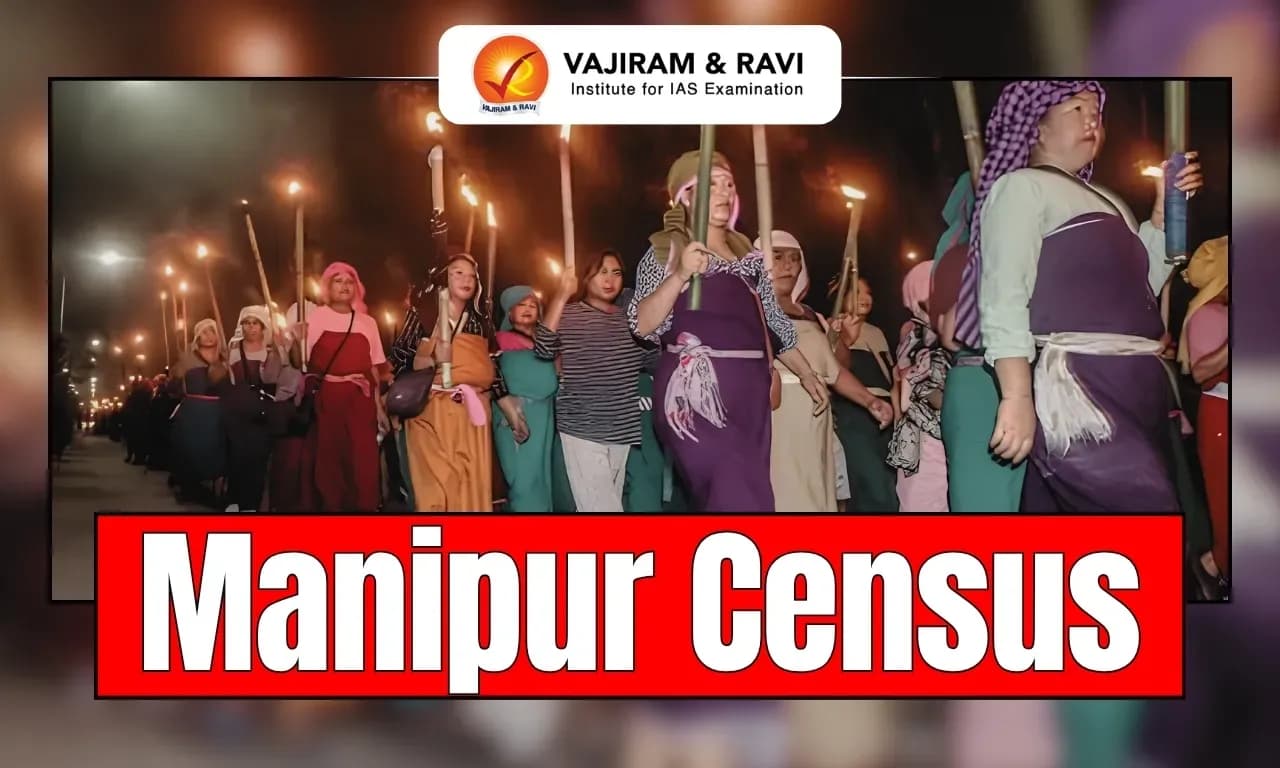
Manipur politics is entering a crucial phase ahead of the 2027 Assembly election, with the Census, National Register of Citizens (NRC), migration, displacement and electoral delimitation becoming increasingly interconnected issues.
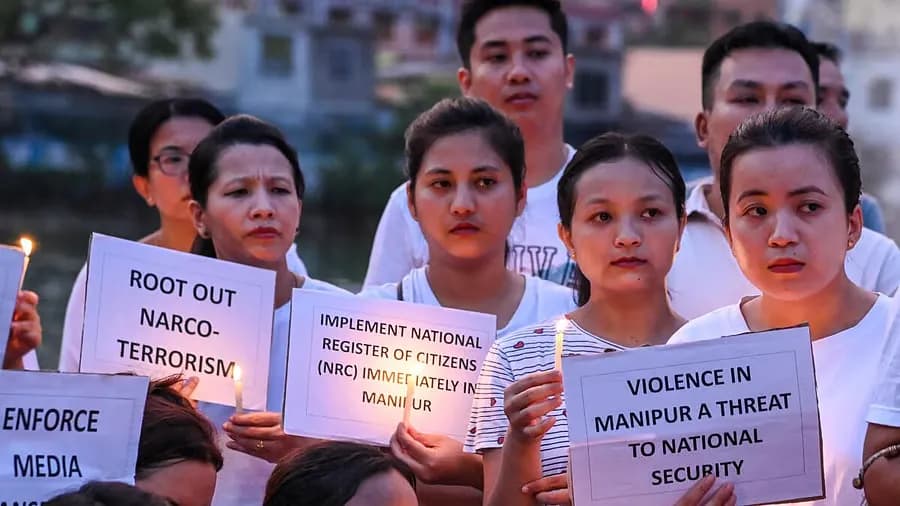
The Centre's decision to defer the 2027 Census house-listing exercise in Manipur has intensified a debate that predates the state's current conflict. Meitei and Naga organisations have continued to demand that an NRC exercise be completed before the Census, while Kuki-Zo organisations have opposed that sequence and raised concerns about citizenship and possible exclusion.
The controversy is significant because the Census, citizenship documentation and future delimitation are separate processes, but population data can have implications for political representation. At the same time, Manipur continues to deal with displacement and security concerns following the ethnic violence that began in 2023.
Centre Defers Census Exercise in Manipur
The Union government deferred the Census house-listing exercise in Manipur after a high-level meeting chaired by Union Home Minister Amit Shah on September 1.
The meeting involved Manipur Governor Ajay Kumar Bhalla, Chief Minister Yumnam Khemchand Singh and Union Home Secretary Govind Mohan. The decision followed demands that the Census should be conducted only after an NRC exercise in the state.
The decision has placed Manipur in a different position from other states preparing for Census 2027 and has brought the NRC-Census question to the centre of the state's political debate.
Why Is NRC Being Demanded Before the Census?
Supporters of the NRC-before-Census demand have raised three broad concerns: citizenship and migration, displacement caused by the conflict, and future political representation.
Civil society groups in the valley and Naga-dominated hill areas have alleged that migration from Myanmar has affected Manipur's demographic composition. They argue that citizenship should be verified before population figures are recorded.
A separate concern relates to people displaced by the ethnic conflict that began in May 2023. Meitei organisations have argued that a Census conducted while thousands of people remain displaced could reflect the effects of displacement rather than their normal place of residence.
These arguments are political and community positions; allegations about illegal immigration or its demographic impact should not be treated as established solely on the basis of population-growth figures.
NRC Demand Predates the Current Census Dispute
The demand for an NRC in Manipur is not new.
In June 2022, the Coordinating Committee on Manipur Integrity (COCOMI) and the United Naga Council (UNC) jointly demanded an NRC and a State Population Commission. The Manipur Assembly subsequently adopted a resolution supporting the demand on August 5, 2022, and reaffirmed it in March 2024.
The earlier Assembly resolution referred to differences in population growth between the hills and valley. However, those statistics by themselves do not establish illegal immigration.
The previous state government also established the Manipur State Population Commission in February 2023, giving the NRC demand an institutional dimension.
Myanmar Migration and the Border Question
The political debate intensified following the military coup in Myanmar in 2021 and fighting in Myanmar's Chin State.
Thousands of people crossed into India amid the conflict, including people belonging to communities with ethnic and family links across the India-Myanmar border. The Manipur government has linked the influx to concerns over new settlements, poppy cultivation, encroachment and demographic change.
Kuki organisations have disputed this framing and argued that Indian citizens belonging to Kuki-Zomi communities should not be conflated with recent arrivals from Myanmar.
In February 2024, the Centre also scrapped the Free Movement Regime with Myanmar, citing security and demographic concerns.
Demand for 1951 as NRC Base Year
The proposed 1951 base year has become another important part of the NRC debate.
The Campaign for Just and Fair Delimitation (JFD) has called for an NRC based on 1951 records before the Census.
Naga organisations have also linked the NRC demand directly to the Census and future delimitation, with the UNC calling for “NRC first” before Census and delimitation.
Supporters of the proposal argue that an older documentary baseline would help establish an indigenous population record.
However, the proposed cut-off is contested. Kuki-Zo organisations have argued that an old documentary requirement could create difficulties for people whose families have lived in Manipur for generations but may not possess records dating back to 1951.
Kuki-Zo Groups Oppose NRC Before Census
Kuki-Zo organisations have taken a different position on the issue.
The Kuki-Zo Council (KZC) has described an NRC-before-Census exercise as premature and unjustified. It has argued that an NRC is a national exercise and that demographic allegations should first be tested against credible Census data.
The council has also raised concerns about the India-Myanmar border communities, saying that a documentary cut-off could affect genuine Indian citizens with long-standing family connections in the region.
The disagreement therefore reflects two competing approaches: one side wants citizenship verification before population enumeration, while the other wants demographic data to be established through the Census before any citizenship exercise.
Why Delimitation Matters in Manipur
The NRC-Census debate is also connected to electoral delimitation.
Manipur has 60 Assembly seats, with 40 constituencies in the valley and 20 in the hills. The present constituency structure dates back to the earlier delimitation exercise based on the 1971 Census.
Manipur was excluded from the delimitation exercise conducted nationally between 2002 and 2008. The Centre had deferred delimitation in Manipur, Assam, Arunachal Pradesh and Nagaland amid security concerns and questions surrounding demographic data.
Consequently, the prospect of a future delimitation exercise has become politically sensitive.
Some political voices in the valley fear that new population figures could alter the existing distribution of Assembly constituencies. However, specific future seat numbers cannot be established until the legally applicable delimitation process is undertaken.
Census, NRC and Delimitation Are Different Processes
The three issues should not be treated as the same exercise.
Census:
The Census collects demographic, social and economic information about the population. It is not itself a citizenship-verification exercise.
NRC:
The National Register of Indian Citizens concerns the identification and registration of Indian citizens under the citizenship framework.
Delimitation:
Delimitation concerns the boundaries and allocation of electoral constituencies under the applicable constitutional and statutory framework.
The political controversy arises because different groups want these processes to happen in a particular sequence.
Can Manipur Have a State-Specific NRC?
The legal question of whether an NRC can be undertaken specifically in Manipur has also become part of the discussion.
Section 14A of the Citizenship Act, 1955 provides the statutory framework for compulsory registration of citizens and maintenance of the National Register of Indian Citizens by the Central government.
Therefore, the question of conducting an NRC in Manipur is ultimately dependent on decisions taken within the existing legal and administrative framework by the Union government.
The current political debate should not be confused with an announcement that an NRC has already been approved or implemented in Manipur.
Other Measures Are Also Being Discussed
The NRC is not the only mechanism being discussed in relation to demographic and migration concerns.
Other measures include:
Electoral-roll verification
Border management
Monitoring cross-border movement
Identification of foreign nationals
Biometric registration mechanisms
Demographic studies
Verification of settlement and village records
The Election Commission is also expected to undertake electoral-roll revision in poll-bound states ahead of the 2027 elections.
These processes are separate from the Census and NRC.
Security Situation Remains a Major Political Issue
The Census-NRC debate is taking place against the backdrop of continuing security concerns in Manipur.
The Centre has extended the Armed Forces (Special Powers) Act (AFSPA) for another six months from October 1, 2026. The latest notification covers the state except areas under 13 police stations across five districts. The order will remain in force until March 31, 2027, unless withdrawn earlier.
The extension means security, restoration of normalcy and the role of security forces will remain significant issues in Manipur's political debate as the 2027 election approaches.
Displacement and Rehabilitation Remain Important
The continuing displacement caused by the ethnic conflict is another major issue.
Questions surrounding the return and rehabilitation of displaced people are directly connected to the Census debate because the location of displaced populations can affect how population data is interpreted.
For political parties and community organisations, rehabilitation, security and the restoration of normal life are therefore likely to remain important alongside the NRC and Census questions.
2027 Manipur Assembly Election
Political preparations are also beginning ahead of the Manipur Assembly Election 2027.
Political parties and community organisations are expected to focus increasingly on:
Candidate selection
Electoral representation
Constituency-level mobilisation
Political alliances
NRC and Census policy
Delimitation
Security and peace
Rehabilitation of displaced people
Employment and economic recovery
The formal election schedule has not yet been announced.
What Happens Next?
The immediate political question is how the Centre and Manipur government will handle the NRC-Census sequencing issue.
The Centre's decision to defer the Census has provided additional time for discussions, while supporters of the NRC-before-Census demand continue to press for citizenship verification and a demographic baseline before Census enumeration.
At the same time, Kuki-Zo organisations continue to oppose that sequencing and have raised concerns about the possible effect of an NRC on genuine citizens.
The issue therefore extends beyond the Census itself. It connects citizenship, migration, displacement, demographic data and political representation.
As Manipur moves toward the 2027 Assembly election, the handling of the NRC demand, the deferred Census, future delimitation, security situation and rehabilitation of displaced people is likely to remain central to the state's political discussion.