Kerala Leaders Protest Hindi-Only NCW Workshop, Language Row Intensifies | Indian Rajneeti
BREAKING
Uttar Pradesh Politics Heats Up as Yogi Adityanath Targets 115 Key Seats Ahead of 2027 Assembly Polls • Rajasthan Civic Polls 2026: Voting Begins as BJP Faces Rebel Challenge • Yogi Adityanath Targets 2027 UP Elections, Says BJP Will Return With a Grand Majority
Kerala Leaders Protest Hindi-Only NCW Workshop, Language Row Intensifies
Haripriya 12 Sept 2026 3 min read 73 views
Kerala Delegation Walks Out of NCW Workshop
A political controversy has erupted after eight women legislators from Kerala walked out of a National Commission for Women workshop held in Faridabad on September 7 and 8.
The workshop, organised under the NCW's “She is a Changemaker” initiative, focused on gender-responsive governance for women legislators and brought together more than 100 legislators from across India. The Kerala delegation objected to the programme being conducted exclusively in Hindi without adequate translation facilities.
The incident has now become a major issue in Kerala Politics, with state leaders arguing that national-level programmes should accommodate India's linguistic diversity.
V D Satheesan Criticises the Centre
Kerala Chief Minister V D Satheesan strongly criticised the treatment of the state's women legislators and described the use of Hindi without translation as unacceptable at a national forum.
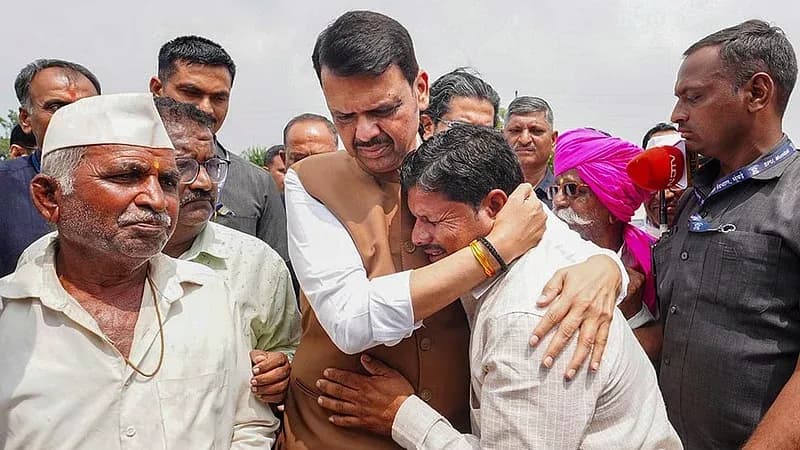
Maharashtra's decision to declare 265 talukas drought-affected has triggered questions from both ruling alliance leaders and the Opposition. While some areas represented by Mahayuti leaders have been excluded, the MVA has questioned the transparency of the assessment process.
Satheesan argued that India's constitutional framework recognises linguistic diversity and that national institutions should ensure equal participation for representatives from different states. He said national platforms should be based on mutual respect and accommodation rather than linguistic imposition.
The Congress leader's remarks have brought the controversy into the wider political debate over language and Centre-state relations.
UDF Legislators Raise Objections
The Kerala legislators who participated in the workshop reportedly protested during the event before walking out.
The programme was designed as a capacity-building initiative for women representatives and was attended by legislators from several parts of the country. Kerala's representatives objected to the absence of translation arrangements that would allow them to participate effectively.
The dispute has therefore moved beyond a disagreement over event arrangements. Kerala leaders have presented it as a broader issue involving representation, accessibility and respect for India's multilingual character.
BJP and Congress Differences Emerge
The controversy also carries a political dimension because the NCW is a national institution and the issue has become part of the ongoing debate between the Congress-led Kerala government and the BJP-led Centre.
Kerala leaders have questioned whether national programmes should be conducted in a manner that may disadvantage representatives who do not speak Hindi. The BJP and its supporters, meanwhile, are likely to defend the national body's programme arrangements and reject the suggestion that the workshop was intended to exclude participants.
The dispute shows how language policy can quickly become part of the broader Political War (opens in a new tab) between the ruling and opposition camps.
Language has historically been a sensitive political issue in Kerala and other southern states. Political leaders have repeatedly emphasised the importance of protecting regional languages while maintaining India's national unity.
The latest controversy has brought those concerns back into public discussion.
For Kerala's Political Parties (opens in a new tab), the issue offers an opportunity to reinforce their positions on federalism, cultural identity and relations with the Centre. The Congress has already taken a strong position, while other parties are expected to respond according to their political priorities.
A Wider Question of Representation
The controversy also raises a practical question about how national-level workshops should be organised.
When representatives from different linguistic backgrounds participate in a common programme, translation and interpretation facilities can help ensure that every participant can follow discussions and contribute equally.
Kerala leaders argue that such arrangements are particularly important for programmes dealing with governance and elected representatives.
The disagreement could therefore lead to renewed calls for greater multilingual accessibility at national conferences, workshops and government events.
Kerala Politics Gains a New Flashpoint
The language controversy comes at a politically significant time for Kerala. The state's political landscape remains highly competitive, with the Congress-led UDF seeking to consolidate its position after the 2026 Assembly election while the BJP continues to expand its political presence.
The dispute with the NCW gives Kerala's opposition and ruling leaders another national issue around which they can mobilise public opinion.
The controversy also highlights the continuing importance of federalism and linguistic diversity in India's political discourse.
For now, the Kerala delegation's walkout has developed into a wider political debate. Whether the Centre and the NCW respond with changes to future programmes remains to be seen, but the episode has once again placed language and representation at the centre of Kerala's political conversation.
“A fresh language controversy has emerged between Kerala leaders and the Centre after eight United Democratic Front legislators walked out of a National Commission for Women workshop in Faridabad, objecting to the exclusive use of Hindi. Kerala leaders have described the incident as a question of constitutional equality and linguistic diversity.”
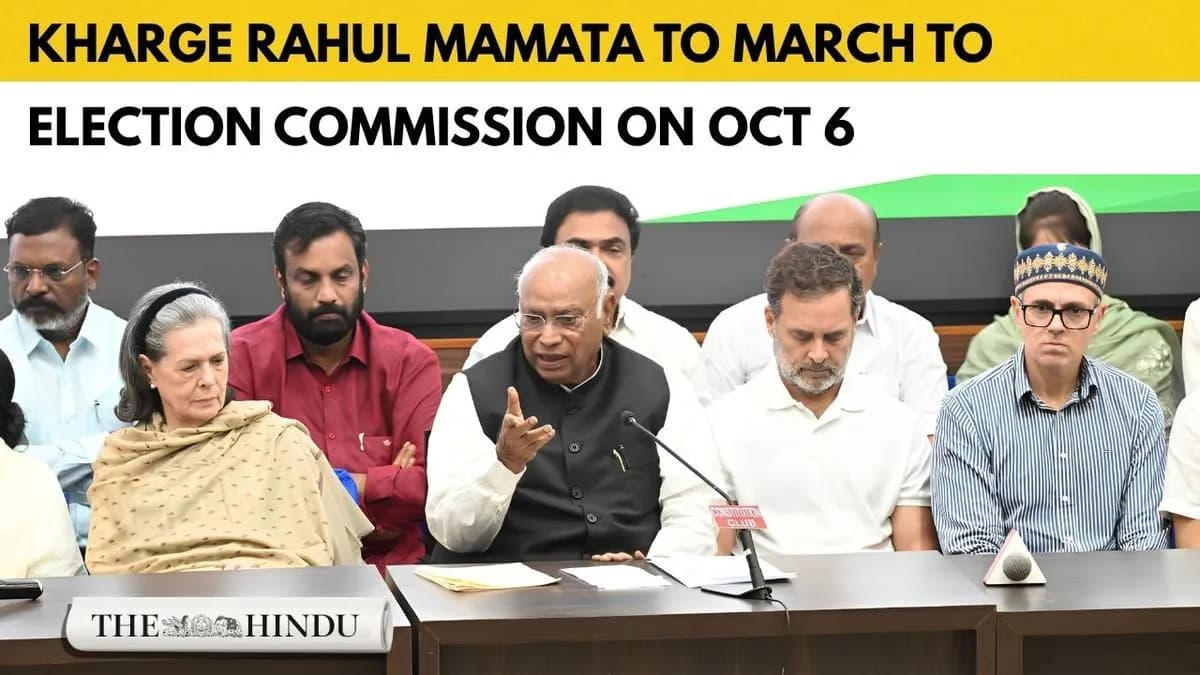
The INDIA bloc has announced a nationwide campaign over concerns related to the Election Commission and electoral processes. The Opposition plans protests, a march to the Election Commission headquarters, and a legal challenge to provisions of the Chief Election Commissioner Act, 2023.
Discussions between Chief Minister C. Joseph Vijay's Tamilaga Vettri Kazhagam (TVK) and the Pattali Makkal Katchi (PMK) have intensified, with reports suggesting alliance talks and possible Cabinet representation. However, no official announcement has been made by either party.
With the Uttar Pradesh Assembly election approaching in 2027, the Samajwadi Party and Congress are working to strengthen their alliance after their improved performance in the 2024 Lok Sabha elections. Political observers believe the opposition has an important opportunity, but unity and effective seat-sharing will be crucial.